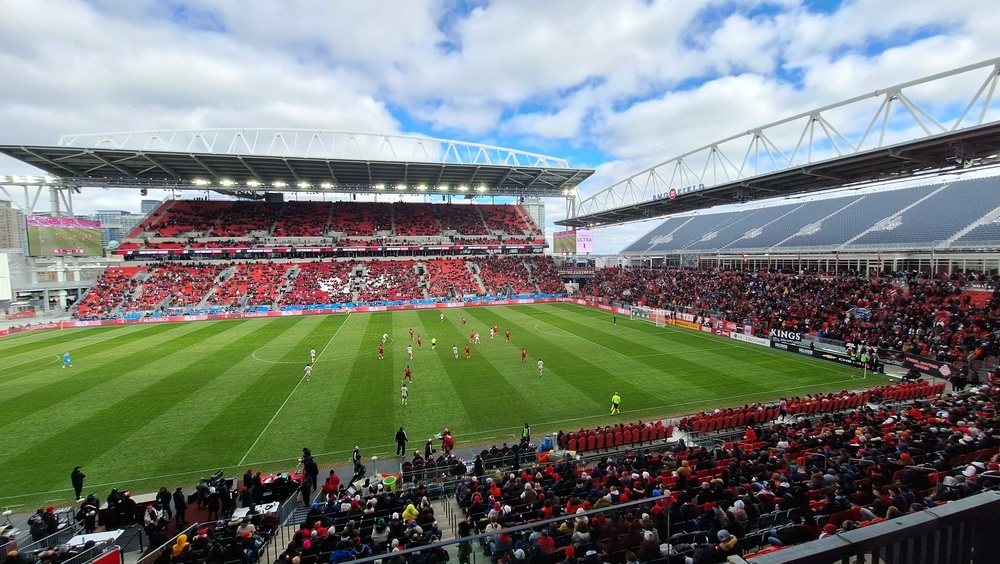



Oriana Morrison argues that the 2026 World Cup will mark a decisive break from the past: unlike 1994, foreign teams and players will face rigorous US tax enforcement, making early compliance planning as critical as performance on the pitch.
In 1994, the US hosted the FIFA World Cup with little fanfare and even less financial scrutiny.
Major League Soccer only started in 1993 as a response to the US’s successful World Cup bid, but didn’t start operating until 1996. Back then, football was still considered a niche. It was a foreign pastime beloved by Europe and Latin America. That reflected on a policy level. In 1994, the tax enforcement was lax, sponsorship structures were simple, and most teams flew under the radar. But that world no longer exists.
As the US prepares to host the expanded 48‑team World Cup in 2026 – across 78 matches and three countries – football is returning to American soil in a completely different economic landscape. There are now diverse income streams, image rights, resident/nonresident rules, and treaties across all 48 delegations. All of this requires earlier coordination. And this time, the US is paying attention.
Earlier this year, I collaborated directly with the IRS while advising leading European and South American clubs on their US tax obligations for the FIFA Club World Cup. Many were surprised to learn that they were fully taxable in the US for income earned on US soil. Some assumed there would be exemptions. Others believed enforcement would be flexible, as it had been in the past. It won’t be.
This isn’t 1994 anymore
The last time the US hosted a World Cup, there were 24 teams. In 2026, there will be 48.
That’s sixteen more delegations and payroll structures. The US tax law governing foreign athletes has been on the books since the Clinton administration. But it wasn’t being strictly enforced. That completely changed after the 2008 financial crisis. The Internal Revenue Service, the US tax authority, has become far more diligent in monitoring foreign persons earning income in the United States. That means Image rights, appearance fees, sponsorship income, and performance bonuses are now squarely in scope. There will be no special allowances for the World Cup’s romance. The US will be seeking to maximise revenue.
It’s been 30 years since the last US World Cup. Many of the people who worked on the regulatory and operational side in 1994 have since moved on, leaving minimal institutional or historical knowledge to rely on. Similarly, many national teams have not played competitively in the US for decades, in some cases, nearly a century. (e.g, Scotland, Jordan, and Cape Verde) As a result, there is limited understanding of what to expect on the ground, and teams and players need to prepare accordingly.
The world is coming, and it’s complicated
This World Cup will be the most global sporting event ever staged. Nations that never qualified in 1994 are now arriving on football’s biggest stage. There are smaller countries and emerging football nations with limited internal resources that will be navigating US tax law for the first time. Most of these countries do not have treaty protection. Many will have to face unexpected visa challenges. Geopolitical considerations are now central. Haiti qualified. Iran did not.
These dynamics matter not just politically but also operationally. The expanded format means more participation, but it also makes navigating operations and regulations more complex.
A star is born
The World Cup is where stars are born. In the same way the Olympics reveal boxing’s next great champions, like Anthony Joshua and Oleksander Usyk. The World Cup is a fortune teller of future fame in football. In 1994, an 18-year‑old Brazilian with messy hair and a gap‑toothed grin changed the trajectory of his career. Ronaldo Luís Nazário de Lima was subsequently named “O Fenômeno” due to his supranatural ability and absurd goal rate for PSV Eindhoven.
This tournament will do the same. The 2026 World Cup will write the next few chapters of not only European but worldwide football for years to come. The next generation of football stars will be born this year. Everyone is watching.

America’s football awakening
The 1994 World Cup helped give birth to Major League Soccer. The 2026 World Cup will do something far bigger. This is the moment football fully awakens the American audience. This has slowly started happening over the last decade due to pop culture influence. Ted Lasso had a massive effect. So did Wrexham and celebrity investors like Ryan Reynolds.
There is now US ownership of European clubs. Football has officially gone global. For many American fans still on the fence, 2026 will be the moment they choose a team and stay with it for life. This matters because culture and capital move together. And this World Cup is about to capture the rest of the American audience.
Let the players play
This World Cup will be extraordinary. But it will not be simple. This extended format will bring a new set of adventures for these teams and players. They will be navigating tax, visas, and residency rules. Compliance should not be a distraction for athletes preparing for the toughest challenge of their career. We need to keep administrative friction off the pitch. That is why preparation matters now.
As part of the 2026 effort, I’ll continue working with the IRS to help design a compliance process that reflects the realities of modern football, and I’ll remain available as a point of contact for national teams to ensure their practical concerns are heard and integrated.
The World Cup is coming. The game has changed. And the smartest teams will be the ones who understand that football’s biggest stage now comes with a very real financial opponent. If we get the structure right, the magic can take care of itself.
Oriana Morrison is the founder and CEO of ECNMX, a UK–US tax strategist for elite performers in sport and entertainment. She advises professional clubs and governing bodies on cross-border tax issues and is currently supporting preparations for the the 2026 World Cup, and the 2028 Los Angeles Olympics.