










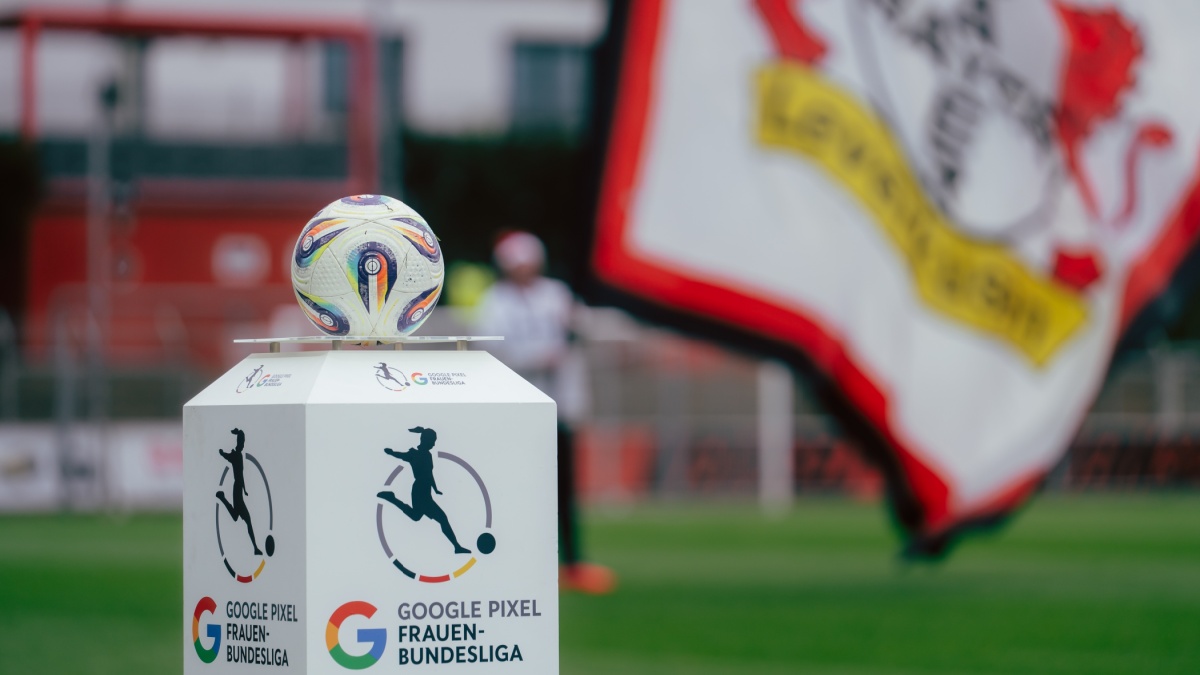
Frauen‑Bundesliga clubs could go it alone, but can independence deliver the success England’s WSL has shown?
Germany’s women’s football clubs have rejected a joint venture with the German Football Association (DFB) over issues of control.
At its inaugural general meeting on February 5, the newly formed Women’s Bundesliga FBL e.V., which represents the league’s 14 clubs, voted against entering a 50-50 partnership structure with the DFB.
Despite the federation pledging €100m in funding over eight years to support the growth of the league, FBL e.V. rejected the deal, reportedly due to who would have the final say on issues around the league.
In a statement published on Eintracht Frankfurt’s website, the club said that after “intensive and fruitful debate”, members concluded the framework proposed by the DFB for a joint venture “could not be fulfilled.”
However, the organisation is open to continuing discussions with DFB, suggesting there is still room for the pair to work together.
“Despite the fact that we were not able to find a pathway towards working together in a joint venture, the process was an important one as it served to set out the central questions and answers in a clear fashion. We will take this clarity with us into our further discussions with the DFB,” said Katharina Kiel, President of the Women’s Bundesliga FBL e.V.
“The core aspect for us is that the future of the Women’s Bundesliga needs to be shaped by what drives it in sporting and financial terms, namely the clubs. The main investments and implementations fall on them, and as such, they need clear responsibilities, significant scope to negotiate and a governance.”
How did we get here?
Germany is one of the most successful nations in women’s football, a dominance evidenced in the national team’s haul of eight European Championships and two World Cups.
However, while the international side thrived, the domestic scene struggled to keep up commercially and structurally with rapidly professionalising rivals such as England’s Women’s Super League (WSL).
Over the past year, calls from clubs for greater autonomy and a modernised league structure have intensified. In November 2025, the DFB appeared to respond, unveiling a €100m investment plan and proposing a new joint‑venture company to oversee the league.
However, in December 2025, the 14 Frauen‑Bundesliga clubs founded FBL e.V., a league association designed to take control of commercial strategy and governance, and crucially, to do so without DFB involvement.
At the time, Bayer Leverkusen CEO Fernando Carro called the move “an important milestone” for women’s football, while describing the need to proceed without the DFB as “regrettable” and “disappointing.”
Since then, negotiations have continued, but the discussions over who should ultimately lead the league’s future has remained a significant pain point.
What Germany can learn from the WSL
Germany’s clubs will be aware that England’s recent international success has been underpinned by a relentless focus on improving the domestic ecosystem.
A defining moment came in 2024, when the first and second divisions split from the Football Association (FA) to form WSL Football, an independent company responsible for running the leagues.
Nikki Doucet, appointed CEO, described the breakaway as the start of a new era built on collaboration and ambition.
“The next successful era of the women’s professional game will be built on the foundations of collaboration,” she said at launch, stressing the need to leverage the “distinctive qualities, values and principles” of the women’s game.
While stakeholders were confident the move would pay off, evidence of the impact only emerged last month when WSL Football published its first financials since leaving FA control.
In its first full year outside the FA, WSL Football generated £17.4m in revenue, tripling income through stronger broadcast and sponsorship deals, areas German clubs may feel they can improve on themselves.
However, the figures also showed an £8.2m operating loss attributed to a deliberate decision to maintain club distributions while investing in the commercial, governance and operational infrastructure previously provided by the FA.