


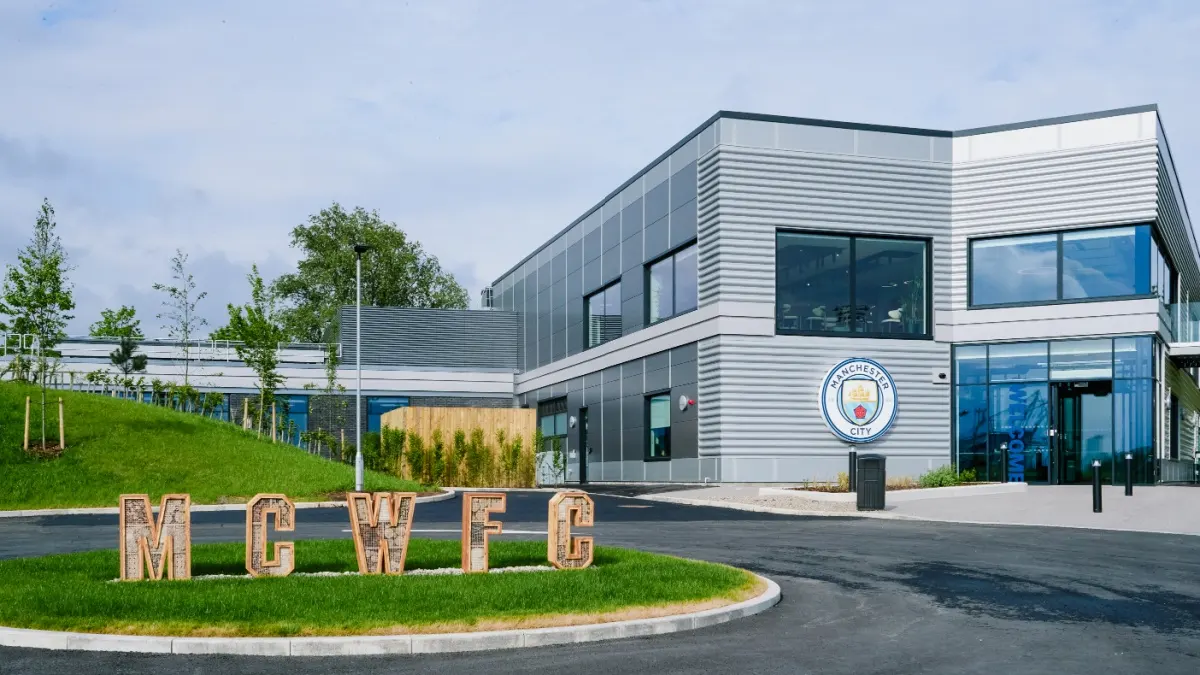
Insider Sport spoke to Manchester City Women’s leadership and players about how the club’s new £10m training facility is helping performance, player development and the future standard of the WSL.
Manchester City Women’s team won the Barclays Women’s Super League (WSL) last week. While it would be unfair to reduce their success to a single factor, the lack of Champions League football meant a lighter schedule and, crucially, fewer injuries.
However, as the club prepares for a return to European competition, they are no longer leaving player availability to the whims of the calendar.
Manchester City Women have operated as a tenant within the City Football Academy for years, sharing spaces with hundreds of boys’ academy players. Though this is quite common for women’s professional teams, it opens the door to a plethora of problems.
Emma Deakin, Director of Performance Services, recalls a recurring anomaly which plagued the squad every autumn. She said that this stumped the team as it didn’t make sense, until they realised that the spaces are shared with the men’s academy, with the boys all returning to school in September.
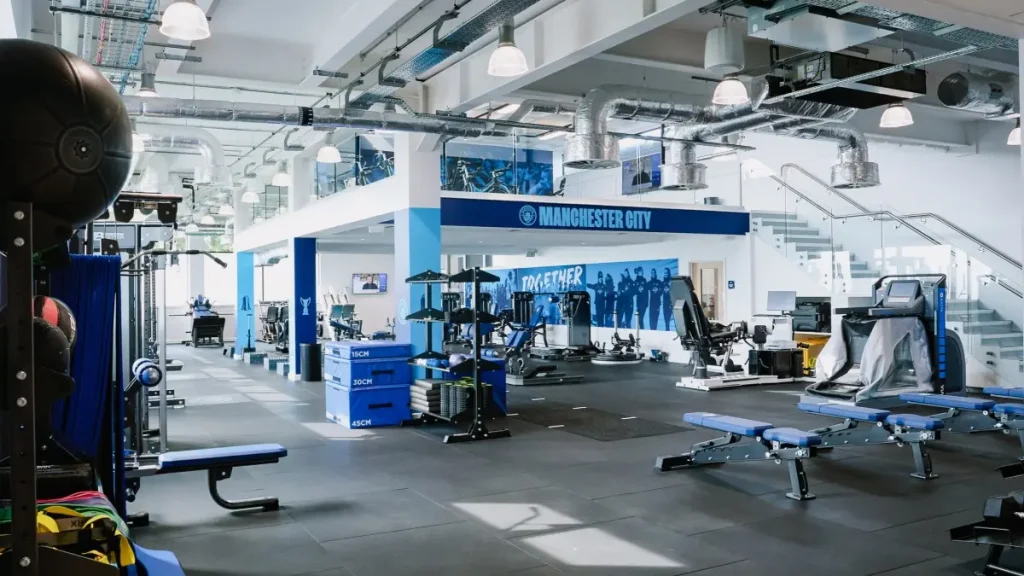
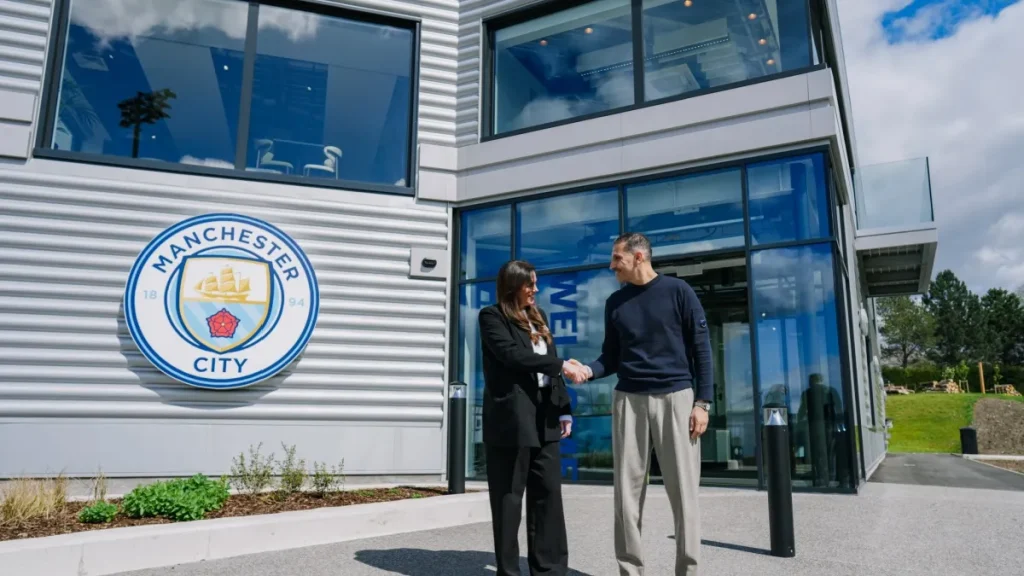
Deakin reflects on this while standing in the gym of the club’s new £10m, 17,000-square-foot training facility.
“That building and those facilities [across the road] are amazing, but it didn’t feel like a home for the women’s programme,” says Deakin. “It just felt like people were coming to work.”
The move has taken Manchester City Women from a shared-occupancy model to one of total environmental sovereignty, in which players were even involved in picking design elements.
Speaking to Insider Sport, First Team Captain Alex Greenwood notes the immediate switch in professional standards: “Maybe the food that [the academy boys] were given wasn’t necessarily the best option for us as elite women… whereas now we’re in complete control of everything that we do here. The food, the gym, it’s all ours.”
Manchester City’s supply chain sustainability
With the protection of current assets secured, the focus is now on the long-term sustainability of the club’s talent.
Charlotte O’Neill, Managing Director of Manchester City Women, sees the facility as the heart of a “winning machine” seeking to produce professional athletes at a lower cost.
“One of the benefits of higher salaries and bigger transfer fees means academies make perfect business sense,” O’Neill explains. “It’s happened on the men’s, it will happen for us on the women’s.”
To bridge the gap between grassroots and the elite level, Manchester City has implemented a “Next-Gen” professionalisation strategy within the new walls. The club has gone from having three academy teams training on evenings to a fully professional next-gen group training alongside the first team every day.
“It is a bespoke education programme, identical to what we offer for our boys. It’s about putting all the foundations in place to provide an elite, world-class sporting environment,” O’Neil tells Insider Sport.
Head Coach Andrée Jeglertz admits the transition is still a “tough step” for young players, noting that “at the moment the gap is a little bit too big.”
However, the facility acts as a bridge by housing the academy and the first team under one roof. This allows the club to standardise across teams, ensuring that when the supply chain delivers a player to Jeglertz, they are already culturally and physically ready for the WSL.
The WSL’s new standard
The design of the building is what really makes it unique, with every feature purposefully engineered to squeeze out marginal gains that could be the difference between a runner-up medal and a trophy.
The physiotherapy room features a strategic window overlooking the gym so staff can monitor players during training; the changing rooms allow the squad to spill out directly onto the pitches; and the lounge area is designed to effortlessly switch from a relaxed environment for catching up on life to a tactical analysis hub.
However, one of the key, and perhaps less flashy, parts of the building is the office space. This area houses every department of the women’s team under one roof, from the head coach’s office to media and communications.
This layout has allowed the staff to become more collaborative and familiar with one another, removing the silos that exist in shared campuses.
As Alex Greenwood explains: “There are some days over there [Old training facility] when I could go a day without seeing familiar faces because the building’s so big and there’s a lot of different moving parts… now I see everyone every single minute of the day I’m here.”
This internal synergy is becoming ever more important as Manchester City Women become a leading influence within the City Football Group (CFG) network. The women’s department has become an internal R&D lab, with Deakin noting that the flow of expertise has started to reverse.
“The thing I’ve probably been really proud of this year… is that the men’s first team are asking us for stuff,” Deakin reveals. “People in CFG coming to us is almost like the expert opinion, which is great and probably a bit of a change around from what it’s looked like historically.”
The consensus among the leadership at the clubs is that this bespoke approach will hopefully become the standard trend in the women’s game.
Personalised facilities offer a significant competitive advantage in terms of recruitment, recovery, and culture, though it remains to be seen how the rest of the women’s game will keep pace without access to the same level of funding seen at the 2025/26 WSL champions.
“I hope this is a shift for women’s football, for other clubs to push their women’s teams to have their own facilities, “ says Greenwood.
“I want our club to do everything first and we do it better than everyone, but as someone massive on growing the game and moving the game to a better place, I really hope other clubs take a look at this and go ‘let’s do the same’”.