


Manchester United is set to repay new loans at a higher interest rate than it was previously paying back, as the club posted an operating profit for Q3
Manchester United have agreed to take on $550m (£410m) in new borrowing, taking the Premier League club’s total debt above £700m.
United owed $425m (£317m) in senior secured notes due to mature on 25 June 2027. Under the refinancing, the club has issued $550m in new senior secured notes, due on 10 June 2031, which will prepay the outstanding $425m, along with accrued interest, the applicable make-whole premium, and general corporate purposes.
According to a filing with the US Securities and Exchange Commission (SEC), United will also use the new loan to repay Bank of America’s initial loan, and for “general corporate purposes”.
United had been paying 3.79% on the 2027 notes; the new notes carry a fixed rate of 5.36%, reflecting a tougher borrowing environment than when the club last refinanced this debt.
They are sold via the US private placement market to institutional investors such as insurance companies and asset managers, with Bank of America the club’s long-standing banking partner on the arrangement.
Separately, United have amended its existing $225m (£168m) secured term loan, extending the repayment date from 6 August 2029 to 10 June 2031.
Unlike the fixed-rate notes, the term loan carries a variable rate of between 1.25% and 1.75% above the secured overnight financing rate (SOFR), so currency and rate movements will affect the final cost.
United also holds a revolving credit facility (RCF), drawn down and repaid with interest on a variable rate. The RCF is primarily used for cash reserves and has a maximum borrowing cap of £400m, to which the club have already taken out £150m at the end of May.
United’s past debt and interest
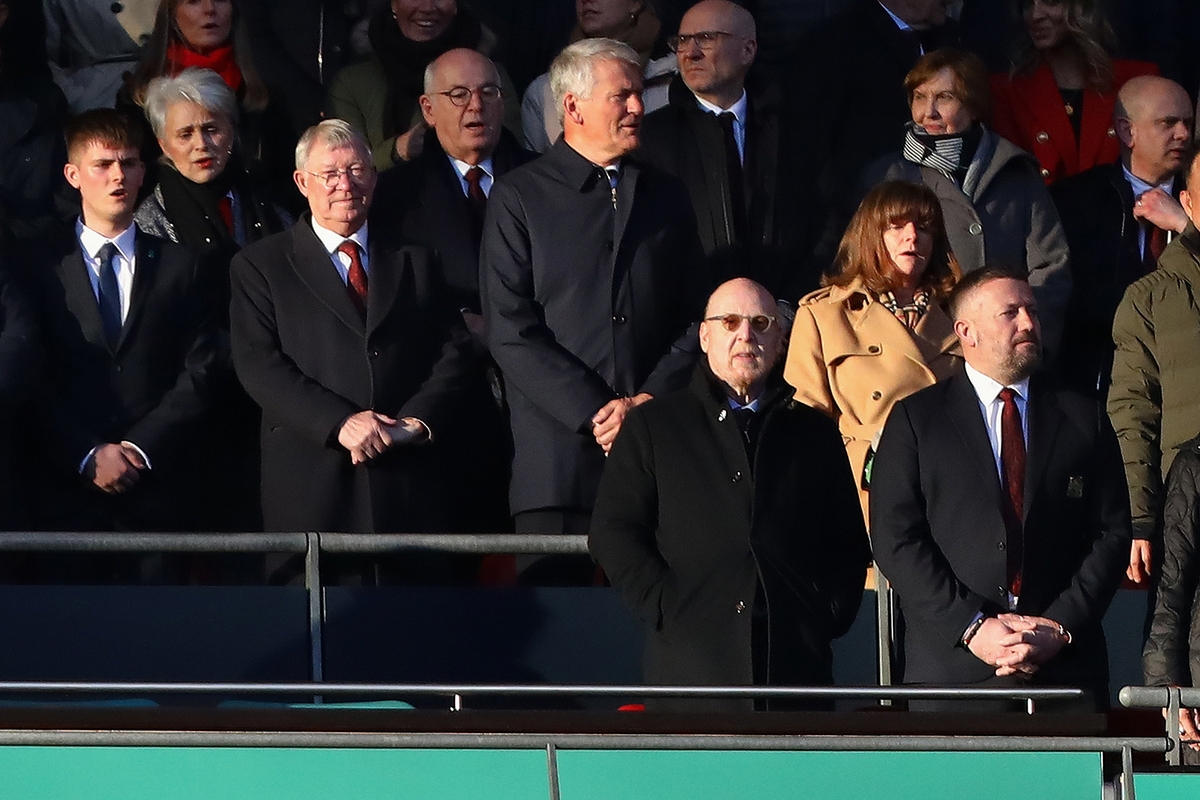
Since taking over as the owners of Manchester United in 2005, the Glazer Family, primarily run by Avram and Joel Glazer, have taken out significant sums of debt against the club.
The club was debt free in 2005, but since the arrival of the Glazer Family ownership, the club accrued a record debt of £773.3m in 2010. This is primarily due to how the Glazer’s bought the club initially.
This was primarily due to the Glazer family’s purchase agreement via leveraged buyout in 2005, meaning the club was bought on loans or borrowed money which put the club’s debt already at £604m.
The interest attached to these loans and borrowed money has also cost the club upwards of £900m and is set to rise to £1.29bn under the new terms of the loan agreement.
The most the club paid out in interest was £168m in 2010, while its most recent interest-bearing debt repayment cost £28m at the end of 2025.
How will this affect United?
United taking on more debt may be an unfortunate reminder of why fans have protested against the Glazer Family, calling for them to sell the club.
Reports emerged recently the Glazer’s were pondering selling their 51% majority stake in United despite offloading a 28% stake to Jim Ratcliffe, who now oversees the club’s football operations.
In United’s third quarter financial statement, the club generated £189.5m in total revenue, an 18% increase from the same period last year.
United also posted a near 630% increase in profit at £5.1m, year-over-year. From the nine months ending on 31 March 2026, United have recorded an operating profit of over £37m.
Omar Berrada, CEO of Manchester United, said: “We feel very positive about the club’s progress this season and the continuing positive impact of our business transformation initiatives.
“Finishing third in the Premier League and securing qualification to next season’s UEFA Champions League is testament to our men’s team’s improved form on the pitch. Michael Carrick has done an excellent job in the 17 games he has overseen and we are delighted that he will continue as Head Coach.”