


Michael Russell reveals how Man City’s Rocket League rise and RLCS showing come from a decade of selective, sustainable esports investment
Football clubs have developed a reputation for putting their names on almost anything if it promises revenue or new fans.
Modern supporters see it in partnerships that feel disconnected from the club’s roots, commercial plays dressed up as community initiatives and an overwhelming sense that football institutions are run more like global brands than local communities.
Take it from Juliet Slot, Chief Commercial Officer at Arsenal, who told a SportsPro audience in London in 2025 that Arsenal’s partnership strategy was taking cues from Amazon.
It would be easy to assume Manchester City’s presence in esports is just another example of this trend. However, Michael Russell, the club’s Head of Esports, stresses to Insider Sport that it isn’t “just a badging exercise.”
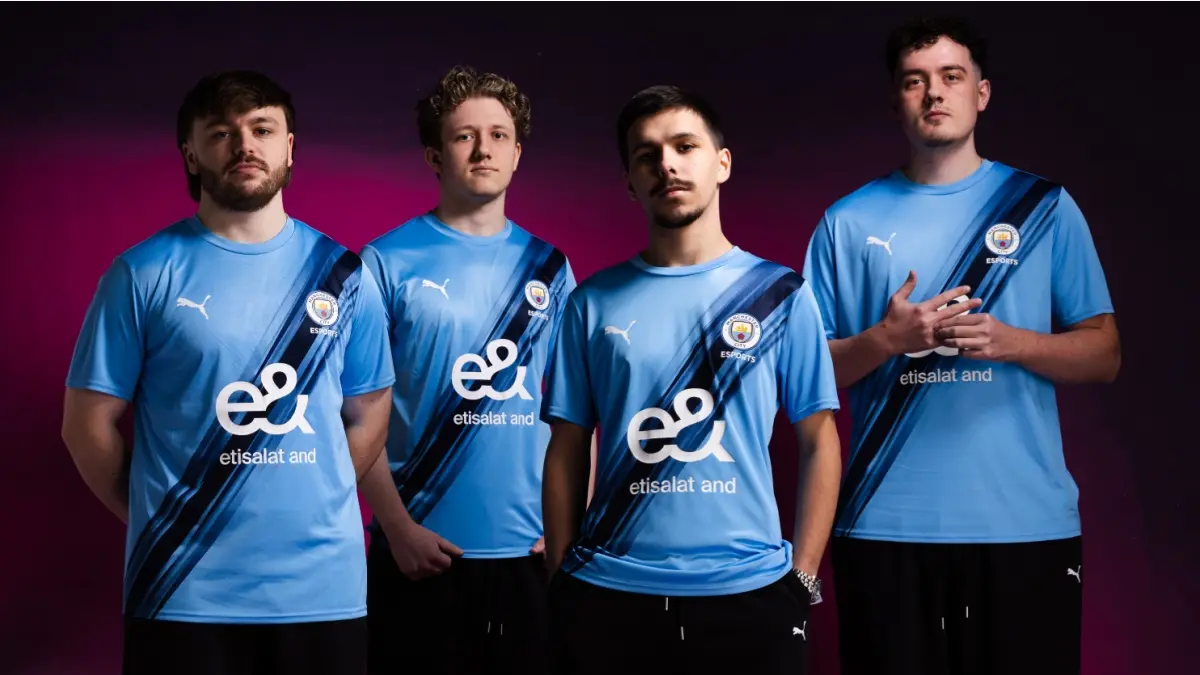
What City have built over the past decade, he says, is a genuine sporting department. Their Rocket League team’s run to the RLCS Paris Major, one of the esports’ biggest stages, is perhaps proof that it isn’t just talk
Speaking to Insider Sport ahead of the major, Russell emphasised this point, explaining that City do not license their badge to external organisations nor treat esports players as influencers hired to generate content.
Many football clubs have dipped into esports over the past decade, entering multiple titles at once before pulling investment when the commercial return failed to match the optimism of the original boardroom pitch.
Man City have taken the opposite route, opting for a slow and selective approach. They have been in esports for ten years, a lifetime in a sector defined by hype cycles, and have consistently resisted the temptation to jump into every emerging title.
“You won’t see us in nine games,” Russell says. “Our growth has to be sustainable.”
This commitment to sustainability in esports has been helped by internal expertise, with the club investing in people who understand the culture and language of each title they enter.
Russell explains that Man City has “invested in a team far brighter than I am, and who live it.”
Tom Bramham is a Rocket League native, a caster who began hosting matches on Twitch when City wanted to be present in the scene, and, as Russell says, someone who “dictates the tone because he knows the vernacular, he lives and breathes it.”
Esports is no longer an experiment
Man City’s early move into esports followed a familiar pattern, with the club starting in EA Sports’ FC title, a digital extension of the football world they already knew and a low‑risk way to test competitive gaming without straying far from the logic of the sport.
Rocket League opened an entirely different lane for City, one that felt familiar on the surface yet radically different in its demands, its culture and its competitive depth.
Russell calls it “essentially football with cars,” and the game plays exactly that way, with three‑a‑side teams moving a giant ball around a domed arena through fast, physics‑driven movement.
The concept is simple enough for anyone to understand within seconds, yet the skill ceiling is so high that players spend years refining the smallest movements, one of the reasons that has helped the game retain its audience since launching in 2015.
Its simplicity, paired with a free‑to‑play model, has created one of the largest funnels in global gaming, with Rocket League regularly attracting between 70 and 90 million monthly active players and hundreds of thousands competing simultaneously at peak times.
The game’s esports scene has matured with this growth, and the Paris Major at the end of May, played in front of 15,000 fans, showed just how big the Rocket League stage has become.
The title’s almost cult‑like following, similar to what is seen in football, has created an environment where players become stars in their own right.
Manchester City, known for having some of the world’s best footballers, took the same approach when building their Rocket League roster.
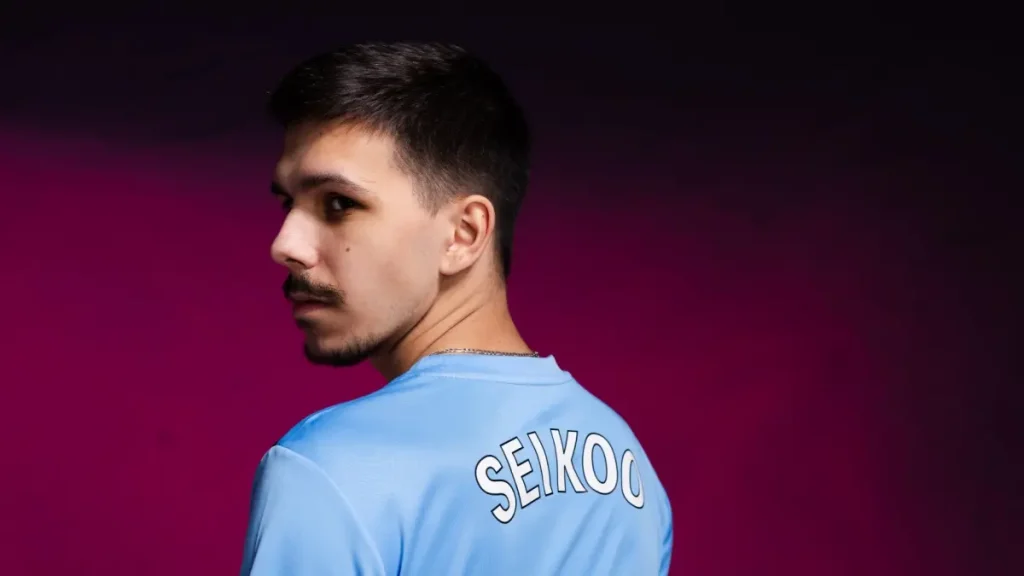
The organisation signed Seikoo, one of Europe’s top Rocket League talents, and while Russell admits he expected fans to be wearing the City kit with Seikoo’s name on the back, he stresses that the signing was purely a performance decision.
Going where fans actually are
Man City are trying to build a competitive Rocket League outfit, but it would be naive to pretend the project doesn’t have commercial motivations for the City Football Group.
When organisations enter esports, it is usually to reach new demographics. Betting firm Rivalry’s CEO Steven Salz admitted as much to Insider Sport in 2024 when he said gaming is “the ultimate top funnel to a demographic of consumer, not the be‑all and end‑all,” describing it as a way to get in front of under‑30s.
Asked whether City view Rocket League through the same lens, Russell pushes back, saying the club’s philosophy is to “go where audiences are,” and not a way to drag them toward football.
The club’s work in Roblox, its Fortnite maps and its partnership with Gen.G in Korea all follow the same principle of meeting young audiences in the spaces they already occupy.
Russell calls this a participation‑to‑fandom loop, noting that many supporters first encountered the club through a game rather than a match.
“We hear it all the time,” he says. “People saying they picked City on FIFA 19, and that was the start of it.”
Rocket League fits naturally into this idea, offering another entry point into the City Football Group ecosystem and another way for young fans to build a connection with the club before they engage with the Premier League.
If the next generation discovers football through gaming, then being present in the right titles becomes an investment in future fans, future revenue and future markets – a point that feels even more relevant with the UK considering banning social media use for under‑16s.
What comes next in Man City esports’ journey?
In his conversation with Insider Sport ahead of the tournament, Russell was optimistic about City’s chances heading into the RLCS Major – and the team delivered. A 5th–6th‑place finish and a reported $39,000 in prize money is a strong return for a debut roster and a sign that City can compete at the top end of Rocket League.
However, esports isn’t straightforward and Russell knows Man City must stay disciplined.
The industry’s pandemic‑era boom brought a wave of investment, followed by a correction as audiences returned to normal life and funding dried up. Many teams collapsed during what some in the sector have called a “rightsizing”, a reset that forced publishers and organisations to rethink their models.
Russell believes that it has already changed expectations. He says publishers now “might have to work a tiny bit harder on competitive calendars,” and that only titles with year‑round structure can support the kind of performance cycles and storytelling City are after.
This is why he promises to be selective about expansion and why competitive rhythm is the filter for any new title.
Paris gives City a sense of what this model can grow into, proving the value of a focused, sustainable approach. Looking forward, Russell sums up the next step with a simple ambition: “Continue to win. I think that’s really important.”