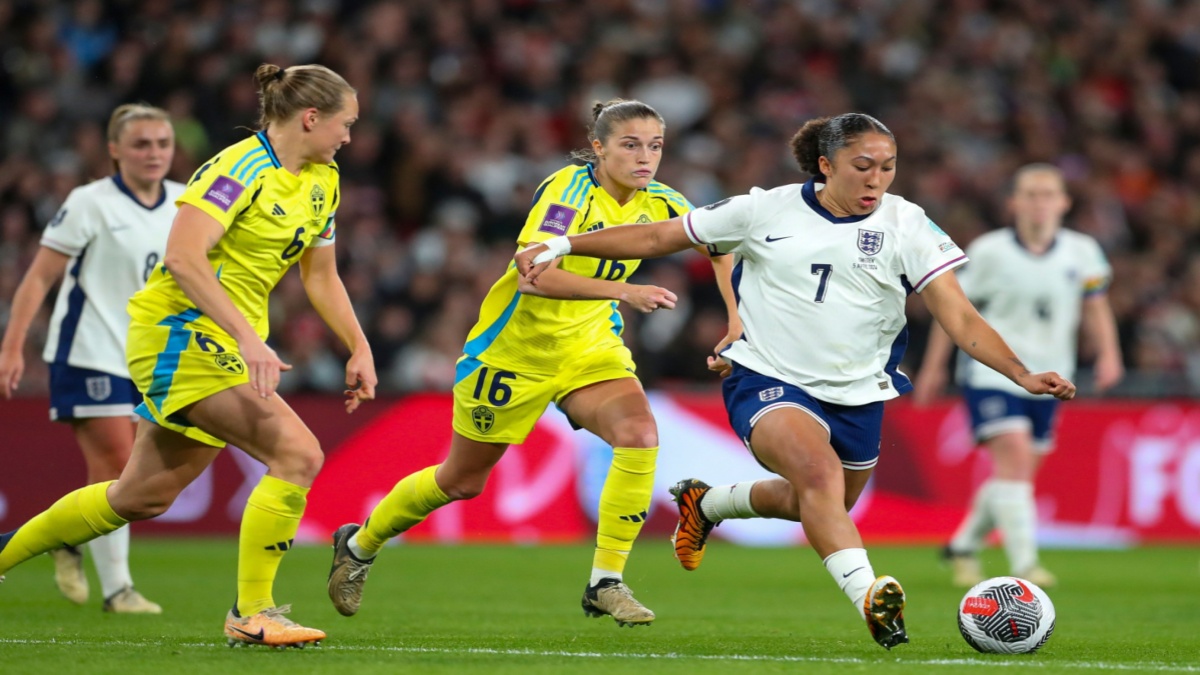



EURO 2025 has been the platform this summer to exemplify the growth of women’s football, but its digital engagement that has FotMob championing the latest growth phase.
There are certain moments in sport when fans instinctively understand they are witnessing history unfold in real time.
Sergio Agüero’s 93rd-minute winner against Queens Park Rangers in 2012 signalled the arrival of a new English football powerhouse in Manchester City. The formation of the 1992 US Olympic ‘Dream Team’ laid the foundation for basketball’s global boom. And for many in England, the UEFA Women’s EURO 2022 offered a similarly defining moment, one that transformed casual viewers into committed fans of the women’s game.
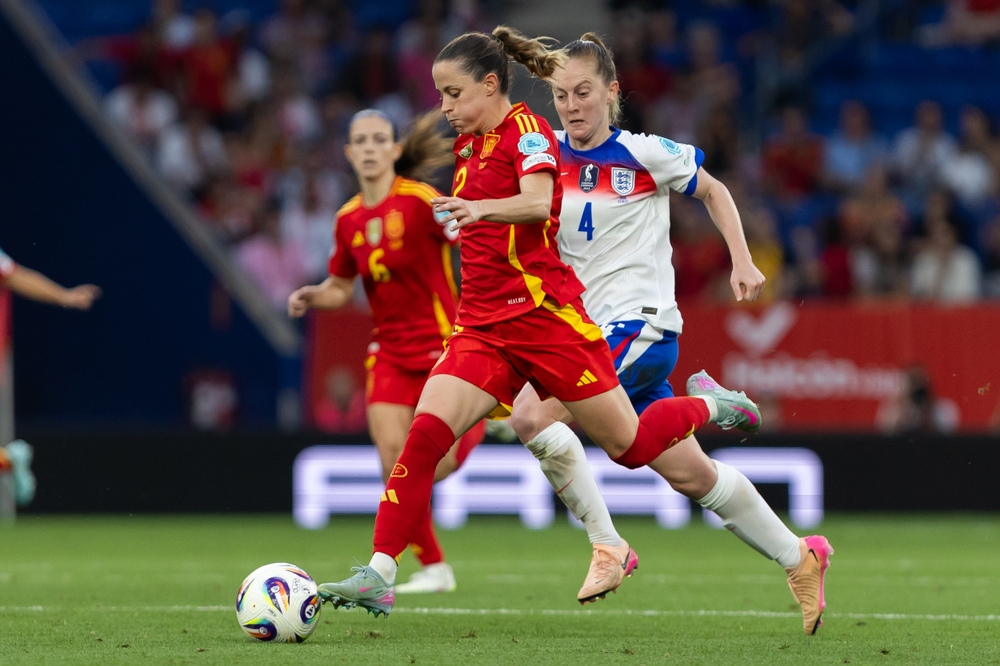
As the UEFA Women’s EURO 2025 approaches its final between England and Spain on July 27, that legacy is once again coming into focus.
According to data from a survey carried out by FotMob, more than 30% of respondents said that EURO 2022 was their entry point into women’s football, crediting it as the catalyst for a period of sustained growth in the sport across England.
That interest is holding strong. Nearly 50% (49.8%) of respondents said they plan to watch this summer’s tournament, while more than 500,000 fans have favourited the Lionesses on the FotMob app, a clear indication of long-term engagement beyond a one-off tournament.
For digital platforms like FotMob, this surge in fan interest presents both opportunity and challenge. Maintaining momentum means engaging a new generation of fans, many of whom discovered women’s football through success on the pitch, in a way that feels seamless and familiar, particularly if they came to the women’s game via men’s football.
“The Lionesses didn’t just win a trophy in 2022 – they changed the face of football,” says FotMob Head of Global Partnerships, Mike Backler. And companies like FotMob are tasked with being able to migrate fans of the men’s game, to the women’s game, in a seamless digital approach.

The online opportunities of women’s football
As the digital footprint of women’s football continues to grow, stakeholders are increasingly focused on how best to engage a new generation of fans. Speaking to Insider Sport, Curt Baker, Product Lead at FotMob, says the key lies in recognising the unique attributes of both the men’s and women’s games, and building strategies that harness the strengths of each.
“When you consider men’s football is bigger than just about anything other than music and gaming, there is a huge market for converting more and more of those fans to follow the women’s game as well,” said Baker.
Baker believes that women’s football now stands at a crucial inflection point, facing a choice between forging its own distinct path or mirroring the template laid out by the men’s game.
“I believe the biggest potential lies in carrying forward some of the things that make it unique – players being much more open and accessible for example – while also trying out new things to continue to make it distinct from the men’s game, such as World Sevens,” he said.
“I think maintaining that unique identity is important so it doesn’t become simply “more football.” And when you consider all of that – the possible audience, accessible personalities (and content potential), new formats – the potential is enormous.”
The potential is already proving dividends in EURO 2025 viewership. England’s 6-1 victory over Wales in its final group stage game averaged a viewership of 4.2 million on ITV, peaking at 4.6 million.
By comparison, the same day (13 July), Channel 5’s coverage of the Club World Cup final between Chelsea and Paris Saint-Germain averaged 1.7 million viewers, peaking at 2.4 million, despite featuring one of Europe’s top men’s sides. (These figures do not account for additional UK viewership via DAZN.)
“We want to be known for having a world-class user experience to make it easy for fans to follow along on matchday.”
While not a like-for-like comparison, the audience trend is significant. It signals that the growing digital fanbase around women’s football is increasingly converting into mainstream interest, including on terrestrial television, especially when content is freely accessible.
With players more engaged online, content more interactive, and audiences more open than ever to discovering the women’s game, the digital opportunities ahead look not just promising, but transformative.
Matching demand with technological advancements
While fans tune into UEFA Women’s EURO 2025 on television, many are simultaneously immersed in a parallel digital experience: checking live statistics, tracking group tables and revisiting historical results.
“The biggest change is that the level of live match data coverage we can access has improved considerably,” explains Baker.
“We’re always pushing our live match data partners to deliver improved coverage for the women’s game, and our coverage of EURO 2025 is on par with the best data we have for the men’s game – including live xG data, shot maps, and player ratings powered by hundreds of Opta stats.”
With advanced stats like expected goals (xG) now part of the everyday football fan’s vocabulary, data once reserved for scouts and analysts is being reimagined for casual consumption. A new generation of fans expects context and insight at their fingertips.
“We want to be known for having a world-class user experience to make it easy for fans to follow along on matchday,” says Baker. “When we talk to users about why they’ve stuck with us for years, ease-of-use is overwhelmingly the top reason.”
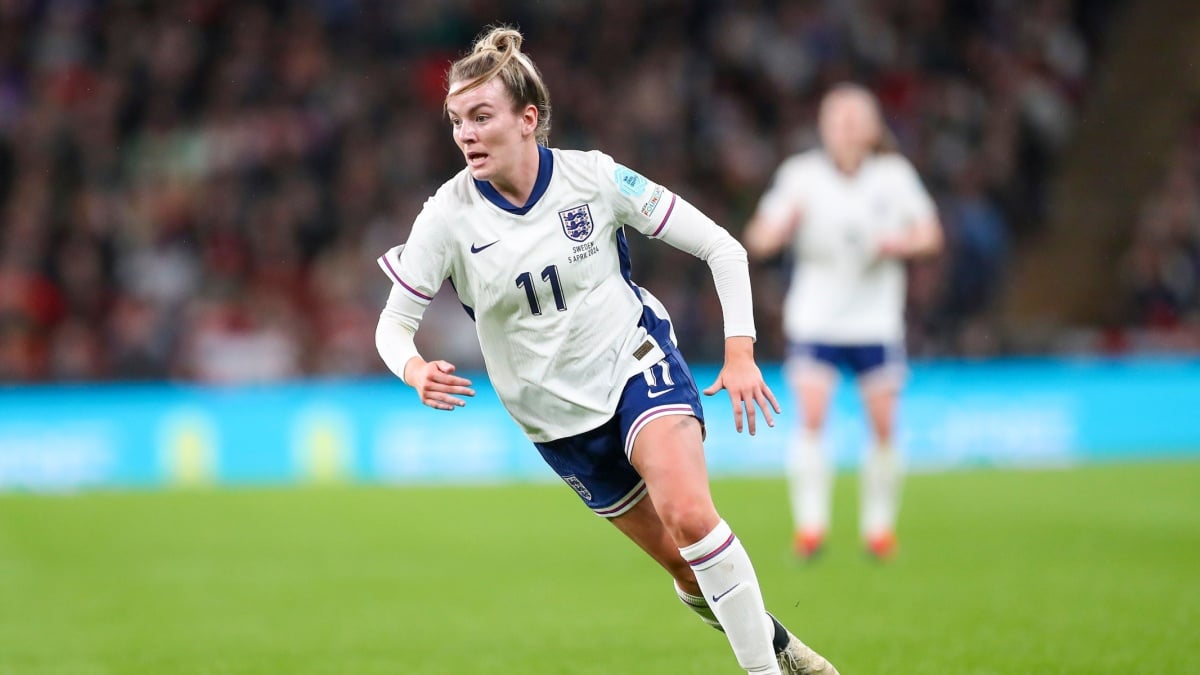
FotMob’s user journey is designed to guide fans deeper; whether that means discovering a star like Lauren James or exploring Alexia Putellas’ legacy. For new fans still finding their footing, accessibility and intuitive design are crucial to building long-term engagement.
“We know there will be a lot of new fans following the Lionesses this summer. Making it easy for the next new wave of women’s football fans to get up to speed and follow along is how we can drive growth,” says Baker.
Interacting with fans
But the digital experience extends beyond match statistics. Fans also want to participate, and gamification remains a powerful way to do just that.
Building on the popularity of Premier League Fantasy and NFL’s Fantasy Football, FotMob introduced a new EURO 2025 predictor game, enabling fans to forecast results and compete with friends.
“We’ve had a popular tournament predictor for years, but we wanted to create something that drove more regular engagement throughout (EURO 2025), and frankly, would be more fun to play with friends,” says Baker
The new format is part of a broader push to keep users engaged throughout the summer. Baker confirmed FotMob sees the predictor as a long-term engagement tool that could be extended across future competitions.
Meanwhile, FotMob has also leaned into email as a high-performing engagement channel, launching a dedicated women’s football newsletter in partnership with Girls on the Ball.
“It’s an important part of our strategy to keep users engaged throughout the summer, and we think it’s a platform that we can utilise across other competitions as an ongoing part of the FotMob ecosystem,” says Baker.
Is social media a hindrance?
While email and app engagement provide safe, structured pathways for fans, social media presents a more complex landscape. FotMob uses social media strategically, mostly to frame key matchday moments and provide context, rather than as a primary channel.
Baker explains they use social media to “bookend matchdays” and provide context before kick-offs and analysis post match, reflective of its analytical approach.
But there are darker realities to navigate. Despite the overwhelming growth of women’s football, players continue to face abuse online.
The Head of Sport England recently wrote to UK national broadcast regulator OFCOM regarding a “deep concern” in relation to the “recent wave of racist and sexist abuse” targeted towards English women footballers during EURO 2025.
One high-profile target was Jess Carter, who received racist abuse on social platforms despite England’s strong performance in reaching a third consecutive major final. A joint statement seen by BBC Sport condemned the behaviour as “abhorrent and unacceptable”.
The situation reflects a sad but persistent truth: while Women’s Super League (WSL) clubs have made enormous strides, some resistance remains entrenched, especially on unregulated or poorly moderated social media platforms.
Still, the trajectory is undeniable. With data-rich platforms, interactive fan tools, and a growing base of engaged supporters, EURO 2025 has underlined once again the power of digital to drive the sport forward.
As England prepares to face Spain this Sunday in a rematch of the EURO 2023 final, all signs point to digital engagement reaching new highs, offering both a challenge and an opportunity for those leading the sport’s online evolution.
September 15 will see SBC organise a ground breaking charity football event in Lisbon. Make sure you get the chance to see some of the most legendary names in football by securing your ticket today at https://www.legendscharitygame.com/