


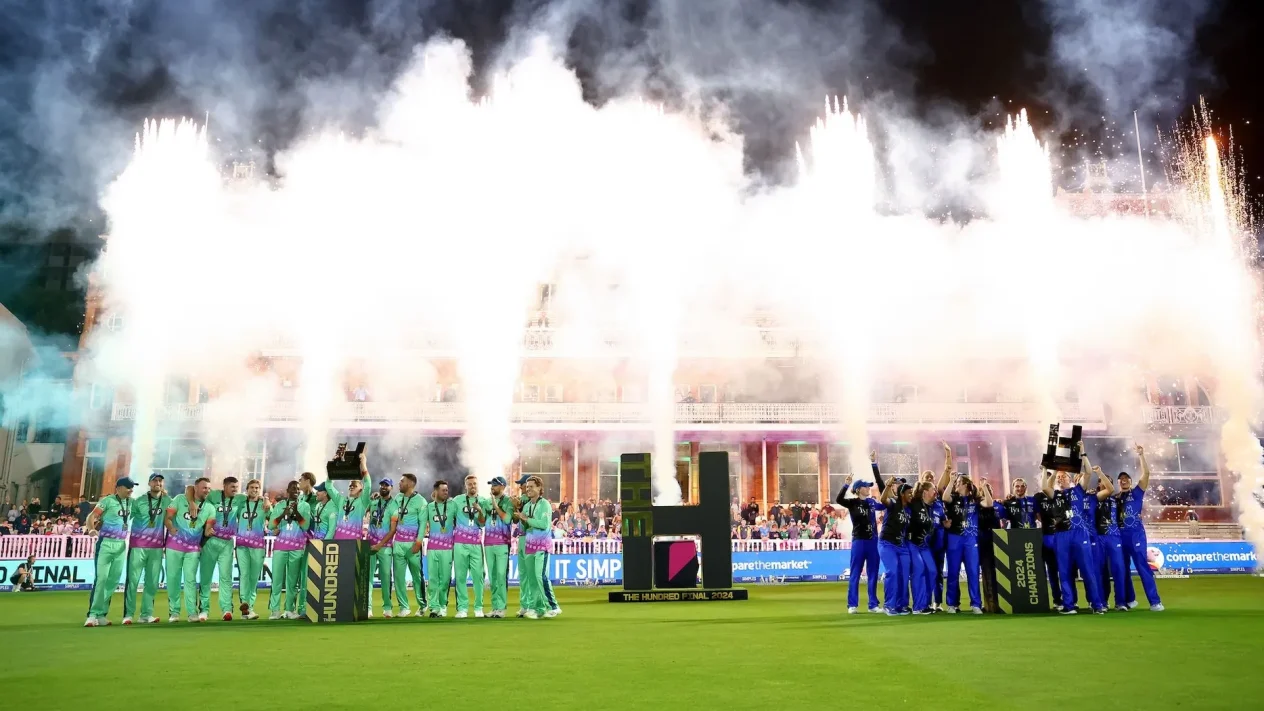
The ECB’s landmark franchise sales for The Hundred inject global capital into English cricket — but they also raise long-term questions about control, culture and the balance between private investment and public responsibility.
The England and Wales Cricket Board (ECB) has finalised a landmark set of franchise agreements for The Hundred, securing more than £500m in investment from eight strategic partners.
While this represents a major commercial breakthrough, it also raises long-term questions about the ECB’s role as steward of the English game.
Six of the eight deals are now complete. Investors include Sun TV, RPSG Group, Reliance, GMR Group, Knighthead Capital and Washington Freedom, with stakes ranging from 49% to full ownership.
Although the ECB retains full ownership of The Hundred itself, including control over player drafts, commercial rules and scheduling, operational control of the teams will pass to the new franchise investors from October.
Total team valuations now exceed £975m. More than £50m of the proceeds has been ringfenced for grassroots cricket, with the remainder distributed across the professional counties. A new board will also be created for The Hundred, bringing together representatives from the ECB, team investors and host clubs. This board will oversee key commercial and strategic matters.

ECB Chair Richard Thompson described the milestone as a turning point for cricket in England and Wales. He said franchise investors would bring global expertise, fresh capital and help unlock future potential.
“This investment will not only fuel the competition’s growth but also channel transformative levels of funding into our professional counties and grassroots game,” he added.
However, the scale and structure of these deals will likely spark debate. How much influence will these investors have over the direction of the competition? What will The Hundred will come to represent within the wider identity of English cricket?
Global capital and local identity
Much like the Indian Premier League, The Hundred is now home to franchise owners with extensive global sports portfolios.
India’s RPSG Group, which owns Lucknow Super Giants in the IPL, has taken a 70% stake in Manchester Originals. Sun TV, owner of Sunrisers Hyderabad, has acquired 100% of Northern Superchargers. GMR, the joint owner of Delhi Capitals, now co-owns Southern Brave. Reliance, the business behind Mumbai Indians, is set to become part-owner of Oval Invincibles.
This influx of Indian capital reflects a broader trend across global sport, from US investment in IPL franchises to cross-ownership in football. The ECB’s model is more complex. While it retains overall governance, it has handed over operational control to investors.
This structure could come under pressure if owners begin pushing for changes to the format, fixture schedule or commercial terms.One of the most symbolic deals is the 49% stake in London Spirit acquired by Tech Titans. This marks the first time in 238 years that Marylebone Cricket Club (MCC), guardian of Lord’s, has partnered with an external investor. Nikesh Arora and Egon Durban, who lead the consortium, called the partnership a winning combination. They pointed to Lord’s global appeal and The Hundred’s family-focused audience.
The governance gap
The ECB has repeatedly emphasised that it will retain control over core aspects of the league, including structure and format. However, the formation of a new joint board introduces a shared governance model that could blur the line between commercial ambition and regulatory responsibility.
At present, The Hundred remains a short-format, centrally governed competition. Yet franchise owners are financially motivated to grow fanbases, sign top talent and maximise revenue. These priorities could create pressure to adjust salary caps, overseas player limits or the competition window, particularly if the league aims to compete more directly on the global stage.
The IPL has succeeded under a similar model, but its teams were designed from the outset as commercial franchises. The Hundred, by contrast, was launched with a different mission. Its goals included attracting new audiences and growing the domestic game, particularly for women and young people.
So far, there has been little public detail about how these franchise deals will impact women’s teams. While the investments were framed at the team level, it remains unclear whether operational budgets, marketing plans and resourcing will be equally distributed across men’s and women’s squads. Several of the new owners have limited familiarity with the structure of UK domestic cricket, which raises further questions about gender equity.
Is this a sustainable transformation or another short-form experiment?
The ECB is clearly placing a long-term bet on private capital as a route to sustainability. For years, it has struggled with fragmented domestic structures, under-resourced counties and a demographic challenge in growing the sport’s reach. In this context, the financial backing of global investors offers a powerful opportunity.
There are early signs of success. The Hundred has broken domestic attendance records, delivered strong women’s viewership and drawn more diverse audiences. However, the competition has also faced criticism. It was introduced as a new format layered over an already congested domestic calendar. Some argue it has duplicated what the T20 Blast already offers, with disruption that outweighed its benefits.
The new wave of investment raises the stakes. If the ECB can maintain strategic control while helping The Hundred grow, the competition could become a truly global-facing, sustainable flagship for English cricket.
If it fails, The Hundred risks following the path of other short-format ventures: big on ambition, light on long-term coherence.