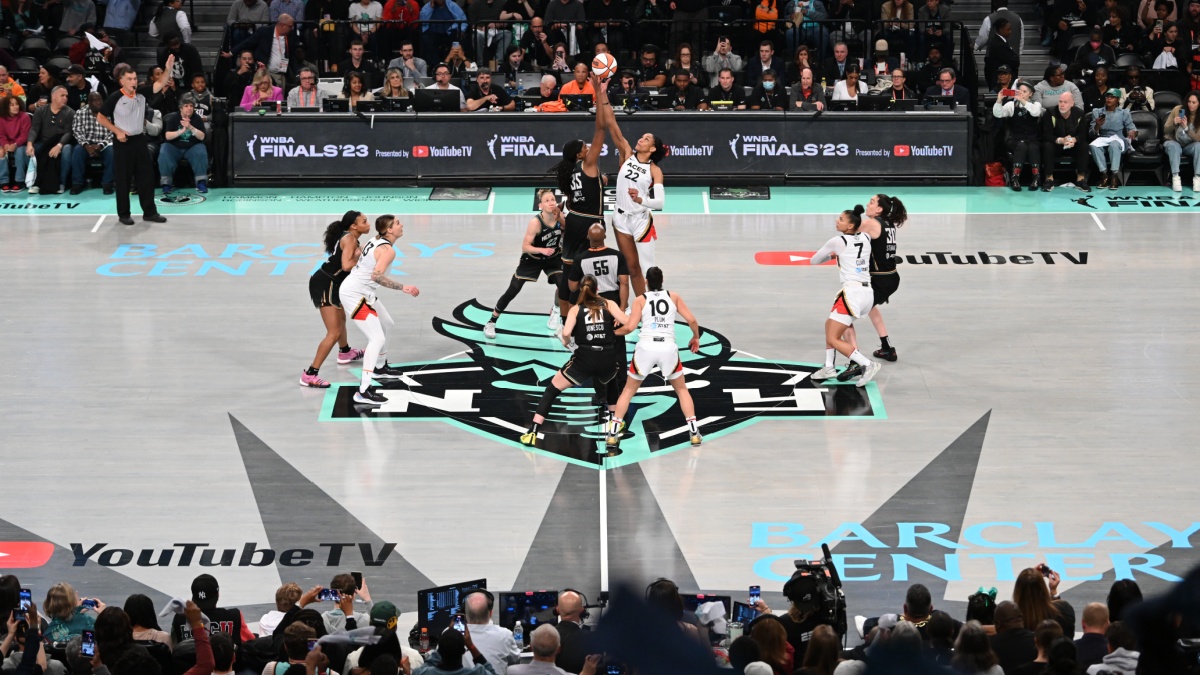



America’s women’s basketball league is growing up fast. Its pay politics are trying to catch up.
As most American sports fans start obsessing over the NFL playoff picture, America’s women’s basketball league is facing a dramatic fourth-quarter moment of its own.
On the final night of November, the WNBA could flick off the lights. A temporary truce between the league and its union expires at 11:59 pm EST on November 30. While another extension is certainly possible, so is a painful lockout.
The core argument is no longer if players deserve a raise – that debate has been decisively won in the court of public opinion and, increasingly, in the surging broadcast rights market. The fight is over structure: Should pay bumps be delivered through a league decree, or should they be hardwired to the league’s booming revenues?
The union’s demand is simple to state, yet thorny for the league to concede. They want a defined share of ‘basketball-related income’, an arrangement that is standard across men’s leagues. The current system relies on a fixed salary cap with minimal annual increases, plus the promise of bonuses if the league hits aggressively optimistic revenue targets.
Historically, those targets have remained theoretical.
The league counters that its costs are also ballooning – charter flights, expansion efforts, and an enlarged media calendar – and that flexibility is what’s needed to protect what is still, they argue, a delicate business.
The Numbers, Briefly
Top WNBA salaries currently max out in the high $200,000s, with minimums starting in the mid-$60,000s. Each team’s total salary cap hovers just above $1.5 million.
After a year defined by record crowds, booming merchandise sales, and unprecedented mainstream attention, those numbers feel jarringly small. They’ll look smaller still starting in 2026, when a wave of much richer national TV deals kicks in across multiple networks and streaming platforms.
This timing is the players’ great advantage. The powers that be can no longer credibly claim the WNBA’s growth is just a flash-in-the-pan celebrity spike. The franchise is betting on more games, wider distribution, and multi-year, multi-million dollar deals with eager sponsors.
Outside Options, Inside Leverage
Perhaps the most disruptive development in women’s basketball is happening outside the WNBA bubble.
A new cluster of rival or complementary properties—short-season, player-led, and backed by venture capital—has emerged to monetize the traditional offseason. Some are now offering six-figure cheques for a few weeks’ work and a domestic schedule that completely bypasses the traditional, brutal grind of a winter spent overseas. A handful are even dangling seven-figure amounts to its biggest stars.
None yet pose a fatal threat to the WNBA’s primacy. But they all threaten its monopsony, its unchallenged status as the sole buyer of elite talent.
This shift changes the dynamic at the negotiating table. For decades, the league could rely on the fact that an elite player’s best financial option was to hopscotch between the WNBA and leagues in Europe or Asia. Now, credible dollars exist right at home.
The “Plan B” market doesn’t need to poach entire rosters to change the arithmetic; it only needs to successfully bid up the top of the talent pyramid, setting new, higher reference prices for everyone else.
The Charter Question
The issue of travel has become a highly visible point of friction.
After years of embarrassing rows over players being forced to schlep through commercial airports, the league finally introduced full-season charters. It was absolutely the right call for player performance and welfare, but it carries a real, hefty price tag.
The union wants those flights written permanently into the CBA, ensuring professional standards are non-negotiable, rather than left to the commissioner’s “whim.” The league, meanwhile, wants a recognition that the significant bill is real.
Both cases are credible. The live question is what that cost should ultimately do: restrain salaries, or accelerate growth? Fewer delays mean fresher legs, better games, and ultimately, better television – which drives revenue.
What a Revenue Split Would Actually Do
A percentage-of-revenue model is less romantic than it sounds; it is fundamentally an agreement to share risk. When revenues slow, the salary cap does too. But when a bumper media cheque lands, players feel the impact immediately.
Owners would lose some year-to-year control but would gain long-run predictability and crucial labour peace. Crucially, a true split forces transparency. It’s one thing to ask athletes to blindly trust an internal financial target; it’s another to let external auditors define the total pot of money and apportion it automatically.
Opponents fret about volatility: they say women’s sport is still in a discovery phase, and smoothing cash flows is paramount. But the WNBA’s volatility today runs mainly one way – up. If the league genuinely believes in its own growth story, a floating cap tied to revenue is a feature, not a bug.
Politics and Optics
The public mood has decidedly shifted. When stars wear “Pay us what you owe us” shirts and the crowds roar “Pay them!”, it is more than just theatre.
Sponsors, highly sensitive to the cultural weather, take keen note. So do broadcasters, who are now chasing the female audience with the zeal they once reserved for cord-cutters.
The WNBA’s leadership deserves credit for nurturing this moment and for betting on expansion when it still felt risky. The players deserve equal credit for creating a prime-time product worth televising.
Both sides are, in a sense, right. And that, of course, is what makes genuine compromise so difficult.