











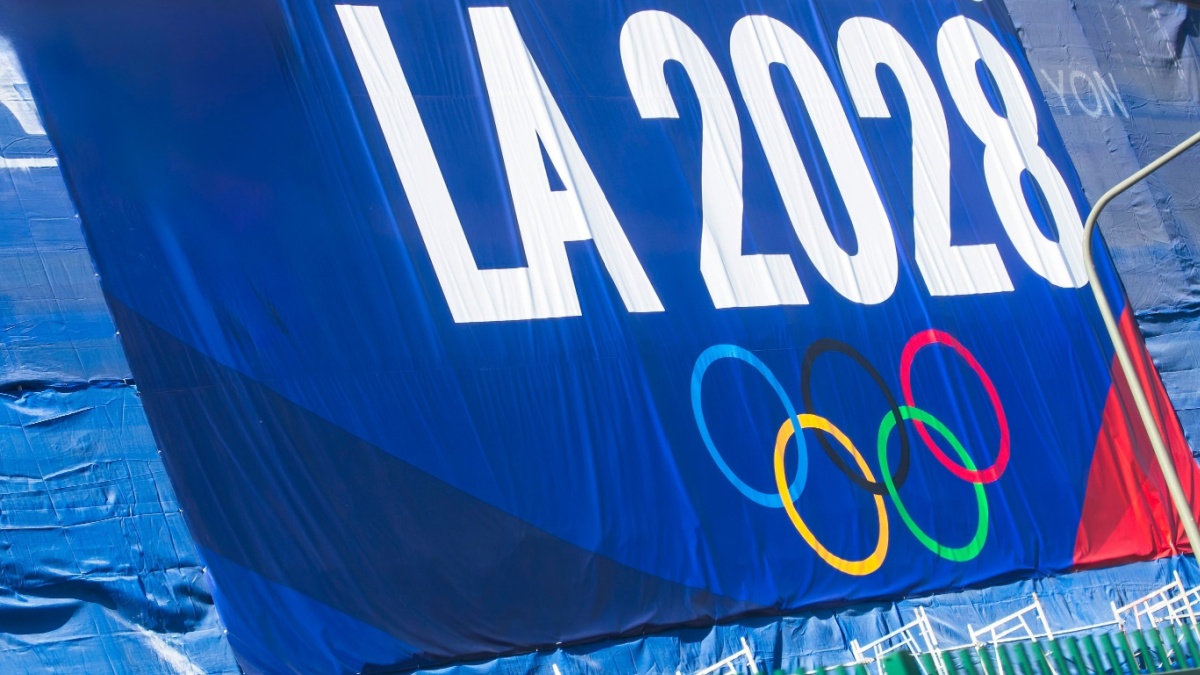
The Enhanced Games is changing the rules of sport and the Olympics only have Los Angeles 2028 to show they can still compete.
It has become very apparent to me that the sporting world is scared of the Enhanced Games. And to be honest, I think it should be.
For those who haven’t been following the story, the Enhanced Games is essentially an Olympic-style competition where athletes are allowed, even encouraged, to use performance enhancers.
Founded in 2023 by Australian entrepreneur Aron D’Souza, the concept has already drawn attention, and investment, from big names including Donald Trump Jr., Peter Thiel and Balaji Srinivasan.
Former Olympians like swimmer Ben Proud and sprinter Fred Kerley have signed up, attracted by guaranteed pay which the Olympics has failed to deliver. Put simply the competition reels in elite athletes with better pay, enhances their capabilities even further, and aims to deliver spectacles which traditional sport struggles to consistently offer.
Unsurprisingly, the idea of sanctioned performance enhancers has upset a lot of people. I even opened my inbox this morning to find an op-ed from the International Sports Press Association condemning the Enhanced Games.
According to the publication, these are “pharmacy-based games, which also promise an elixir of long life,” and they see them as “the perfect calling card for those who want to get their hands on sports to make money gambling with the health of others.” They argue “this isn’t about being overly conservative and even a little old-fashioned; rather, we need to defend educational values, which are also the foundation of civil society.”
I’m not entirely sure what the International Sports Press Association thinks it’s proposing, but the reality is the Enhanced Games is happening whether you like it or not. Complaining, crying and railing against the competition won’t change that. Athletics needs to dry its eyes, stop feeling sorry for itself and start coming up with ideas which are entertaining and commercially ambitious.
You see, the Enhanced Games understand something the IOC sometimes forgets and that is spectators want entertainment, drama and a sense that anything could happen. They promise to put on a show built for the casual fan who struggles to engage with athletics today, which let’s be honest without records being smashed by entertaining athletes like Usain Bolt… It is boring.
History shows also shows athletics is desperate to commercialise, but more often than not it has failed. A recent example is Grand Slam Track (GST), which launched in 2024 by four-time Olympic champion Michael Johnson. GST aimed to modernise track and field, offering prize money, star-focused events and fan engagement.
However, only three of four planned meets took place, the Los Angeles finale was canceled, and by December 2025 the league had filed for Chapter 11 bankruptcy. Top athletes, including Sydney McLaughlin Levrone and Gabby Thomas, are still owed six-figure sums. Investors pulled out, attendance was comically bad and it faced more operational challenges than the Fyre Festival. GST was meant to be a showcase for commercialised athletics, but it became a cautionary tale that athletics can’t commercialise what it already has and expect to reach the same levels as other sports like motorsport, football and basketball.
Athletics needs a new path and the Enhanced Games is offering one. Its approach does not rely solely on sponsorships, merchandise and broadcast rights. It leans on big pharma and tech companies to develop and enhance drugs and technology which make athletes faster, stronger, and more entertaining. Those advancements can then be commercialised, sold to fans, or applied more widely.
I am not saying it is over for the Olympics, that would be foolish. Its history and cultural significance still give it a chance, but that chance has a deadline of Los Angeles 2028.
LA28 has already started pushing the commercial envelope. For the first time, venues can have corporate naming rights, there is more emphasis on private funding and brands are securing physical spaces early to tell stories and create experiences.
This is a strong start, but the Olympics can no longer rely on prestige, tradition or moral authority alone. Audiences now want alternatives which are faster, flashier and better funded. The IOC must embrace innovation, push commercial limits and deliver entertainment which can rival the spectacle promised by the Enhanced Games. If it does not, viewers, sponsors and more athletes may start looking elsewhere.
LA28 is the Olympics’ last real chance to get it right. It must prove the Games, even after a century of history, can still feel relevant, thrilling and commercially ambitious.