


















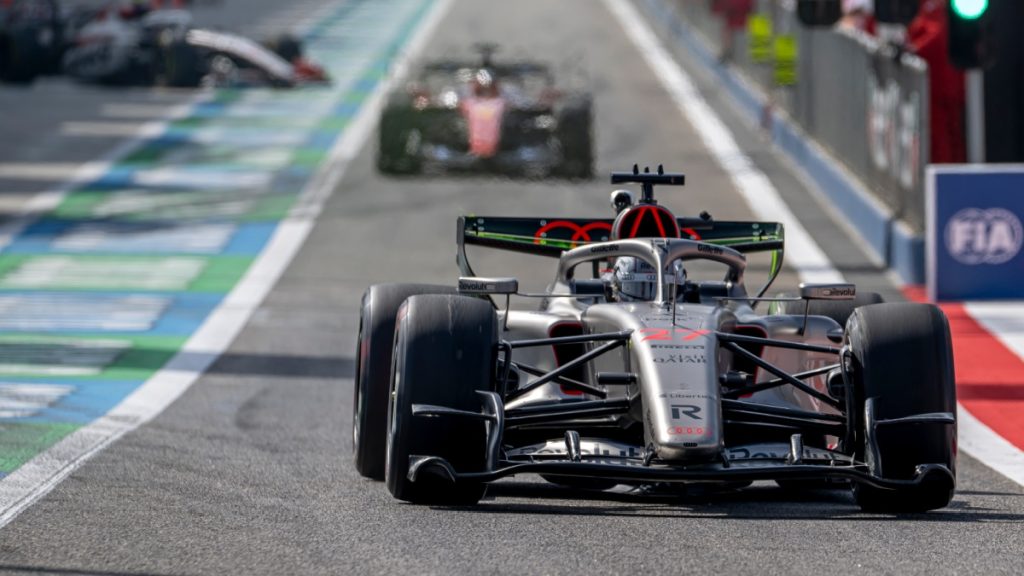
Luc Jolly explains how bp is developing sustainable, high-performance fuel for the Audi Revolut F1 Team and why it is so important to Formula 1’s 2026 season.
Audi’s long-awaited entry into Formula 1 has finally arrived, and while there is never an easy moment to join the grid, the 2026 season promises to be one of the most competitive, defined by sweeping regulatory changes and a renewed focus on sustainability.
A key component of these regulatory changes is fuel, with new FIA rules mandating a reduction in lifecycle emissions and requiring teams and suppliers to rethink how performance is achieved within stricter parameters.
As Audi’s official technology partner, bp has approached this challenge by developing a completely new racing fuel from the ground up, which meets sustainability criteria while still delivering the marginal gains that define success in F1.
Speaking after the season-opening Grand Prix in Australia, Luc Jolly, Fluid Development and Trackside Team Lead, discusses the complexities of fuel-engine co-development, the realities of working under new regulations and how bp is approaching one of the most significant technical changes in the sport’s history.
What’s been the hardest part of creating a 2026 spec sustainable fuel that still delivers top level performance?
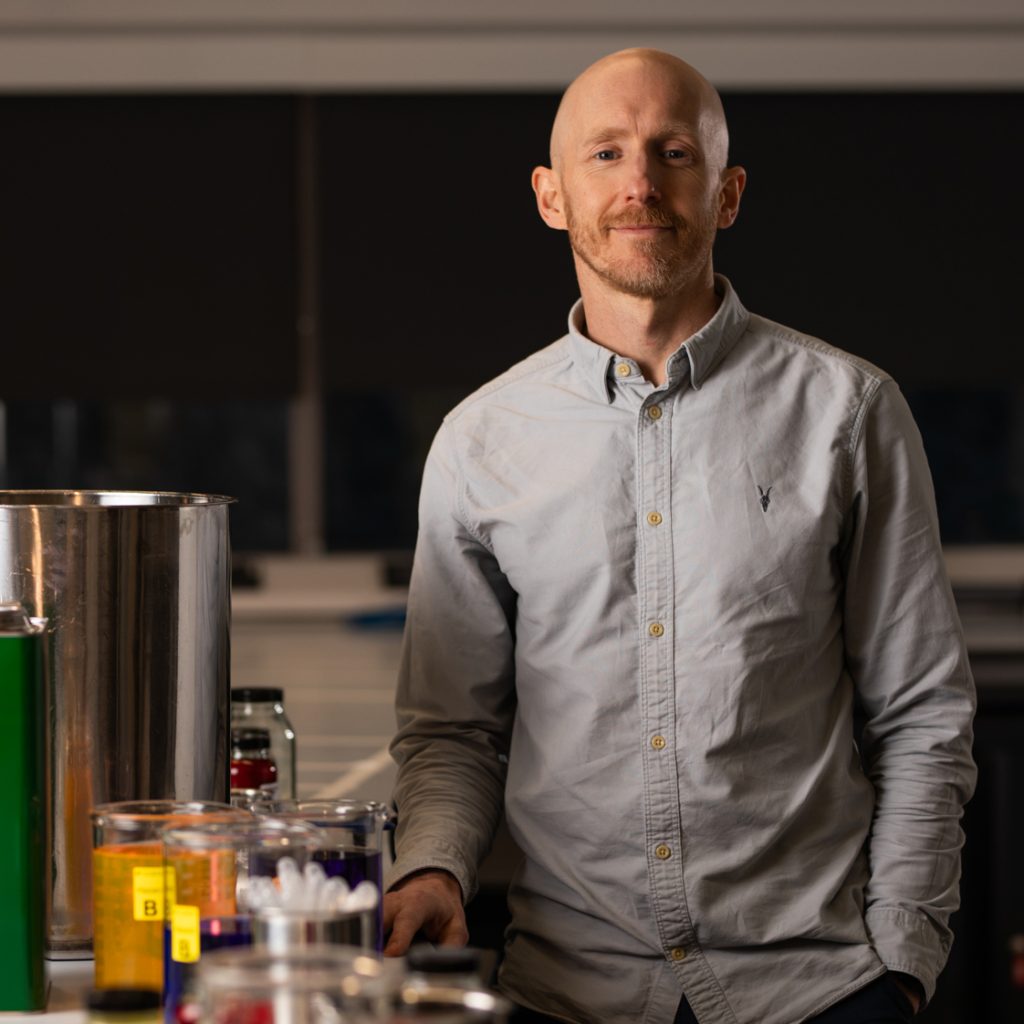
This season’s regulatory changes have certainly posed a technical challenge; however, it is one we have welcomed and enjoyed!
The identification, development and sourcing of high-performance fuel components and molecules that meet the FIA’s stringent criteria for 2026 has probably been the most challenging part of that process, but it is also where bp’s expertise in advanced fuel componentry and supply chains has really come to the fore.
In the early stages of development, we had to be flexible and build our own picture of what the Audi F1 power unit responded well to, which involved both theoretical modelling and empirical learning in equal measure. While we were testing and learning from this, we also had to ensure everything that was tested and used could be sustainably sourced.
It was a challenge because it was like we were trying to hit a moving target as the engine developed rapidly; the situation was constantly evolving.
How closely do bp’s engineers work with Audi’s power unit team on fuel–engine co-development and how has that partnership functioned day-to-day?
The short answer is really closely.
This is truly a co-engineering project and partnership. Since the start of the development of the new Audi F1 power unit, bp has been embedded as the technology partner, co-engineering fuels alongside Audi Revolut F1 Team’s engineers.
Our technologists are regularly onsite at Audi’s Neuburg facility, conducting extensive fuel performance testing and analysis since 2022. The teams work extremely closely, with shared processes and constant interaction, which enables fast learning and shared understanding.
After testing hundreds of blends, what did you learn about where performance gains still exist under the new fuel rules?
The fuel has always been a critical performance factor for F1 – optimising the blend with the combustion system for each specific power unit is critical in terms of achieving maximum performance. 2026 is no different in that respect, it just had the added challenge of existing within the new FIA regulations.
Since mid-2023 the bp motorsport technology team has developed over 400 pilot fuel samples for the 2026 racing season and tested 200 of those in the Audi F1 power unit to create bp Ultimate Racing.
In total, nearly a quarter of a million litres of bp test fuel has been delivered so far to the Audi development facility in Neuburg, Germany. Our extensive testing has highlighted that even small changes in blend composition can deliver measurable performance gains.
Why was partnering with Audi so important for bp, and how does it position you for F1’s next era?
The Audi Revolut F1 Team partnership offers a global platform to showcase bp’s distinctive strengths in technology, innovation and partnerships.
With Audi’s engineering talent and bp’s technical expertise in fuels, this partnership brings together complementary strengths, and while there’s a lot still to learn, it gives us a strong foundation as we develop into F1’s new era.
How do you see the role of fuel suppliers changing as efficiency and sustainable energy become so important to the 2026 regulations?
The 2026 regulations have brought about one of the biggest set of changes in the history of F1, and that includes significant changes to the fuel regulations; however, fuel has always been an incredibly critical part of the puzzle for F1 engines and our main goal remains the same: to enable maximum potential from the power unit through developing the best fuel possible.
For 2026, an enhanced challenge was to optimise the blend for maximum performance while also meeting demanding new sustainability requirements.
This placed a greater emphasis on raw material access, production processes, and alternative chemistry – all of which required very creative thinking. For bp, this is where our strong technology partnership excels, as our focus is purely on delivering the best performing fuel for the Audi Revolut F1 Team that meets these new, highly complex regulations.
As fuel becomes more decisive for performance, how do you handle the added pressure on bp’s contribution?
Pressure is part of top-level motorsport. It comes with the territory, and it’s something our team is used to and motivated by.
We have entered this partnership understanding the high stakes of top-level motorsport, and our long-standing history of winning together with Audi in other motorsport series, including Le Mans and the World Endurance Championship, gives us a shared understanding of this ultra-competitive environment.
We have a team of experts who are constantly learning, optimising and trying new methods to improve our processes and the performance of the fuel. Pressure and responsibility are natural parts of our day-to-day and it motivates us to deliver the best possible results for the Audi Revolut F1 Team.
Audi will hope to get the best fuel available from the deal, what does bp aim to achieve with this partnership?
As an incredibly competitive and technologically advanced sport, F1 is constantly pushing teams and their partners to the limit.
While bp Ultimate Racing has been designed specifically for this year’s Audi Revolut F1 Team, the same group of bp fuel technologists are assessing the technical insights gained from this programme for their potential to inform future innovations in bp Ultimate road fuels for our everyday customers.
F1 is the ultimate showcase of bp’s fuel development capability, showing we can develop the best possible fuel for any application.
From a technical standpoint, what does “sustainable fuel” actually mean and where do you see the biggest limitations today?
To meet the FIA regulations, the fuel must achieve lifecycle greenhouse gas emissions savings relative to a fossil-derived petrol comparator of at least 65%. These were the set parameters that we needed to work within and so that is exactly what we have done.
While I can’t reveal exactly what our formula is, I can say that we assessed raw materials from all three of the categories allowed under the new regulations: non-food biomass, municipal waste and Renewable Fuel of Non-Biological Origin (RFNBO), which is what people generally understand as an e-fuel.
The FIA appointed a third-party independent body to review the entire supply and production chain end-to-end, from the feedstock sourcing right through to blending and the lifecycle emissions of the final fuel. Everything has to be within these new regulations that the FIA has defined.
We view these regulations not as limitations, but as a significant technical challenge that we’ve enjoyed responding to. Our main focus is entirely on delivering the best performing fuel for the Audi Revolut F1 Team that meets these stringent requirements, leveraging bp’s expertise and technology partnership to maximise learnings within these new parameters.
The opening Grand Prix in Melbourne was both promising and informative for us as a team. We look forward to continuing to evolve, develop and progress alongside the Audi Revolut F1 Team throughout the season ahead, and into future seasons.