


Rob Stull explains the move to Ninja-style obstacle racing and what it means for Modern Pentathlon as it prepares for LA28.
Modern Pentathlon is undergoing the most dramatic reinvention in its 112‑year history. After the controversy of Tokyo 2020 and pressure from the International Olympic Committee (IOC) to modernise or risk being dropped, the sport has swapped horses for Ninja‑style obstacle racing and embraced a format designed for TikTok, arenas and a new generation of fans.
Pentathlon has struggled for mainstream visibility in the past, but it hopes obstacle racing can bring millions of participants, a grassroots culture and a ready‑made youth audience.
Speaking to Insider Sport ahead of LA28, UIPM President Rob Stull discusses what’s at stake, the tension between heritage and innovation, and why he believes obstacle racing could turn Pentathlon into one of the highlights of the next Olympic Games.
The full interview is available below.
Modern Pentathlon has undergone one of the most radical transformations of any Olympic sport. Do you see the introduction of Ninja-style obstacle racing as a reinvention, or a rescue mission, for the sport’s future?
I would define this change as a natural evolution. Evolution has been at the core of Pentathlon ever since Baron Pierre de Coubertin created it in 1912, as we have always adapted to stay relevant to the era. This latest innovation is simply our most significant turning point yet, we are taking the traditional DNA of the sport and optimising it for future generations.
When fans from around the world tune in to the Olympic Games in LA28, we expect the reaction to be transformative. The wave of young people wanting to engage with Ninja-style obstacle racing will be unprecedented. We’re ready to capture the imagination of a new generation and build a modern, youth-oriented, global community.
What makes Obstacle racing the right fit for today’s fans, and how confident are you that it will resonate with a mainstream audience?
Obstacle racing is the perfect fit for today’s fans because it is the fastest-growing urban sport in the world, specifically designed for a generation that lives for high-impact, short-form content. By aligning with modern trends on platforms such as TikTok and Instagram, we are creating a product that blends high performance with pure entertainment. Thousands of fans in sold-out arenas, with live DJs creating an electric atmosphere.
Our confidence in this resonance isn’t just based on intuition; we’ve got the data to back it up. A YouGov poll of 1,500 US citizens revealed that 45% of Generation Z and 41% of Millennials are more likely to tune into the Olympic Games if they feature a Ninja-style Obstacle race. This level of interest from key demographics proves that the demand is already there.
The potential for online engagement is enormous. By bringing this format to the global stage, we are tapping into a pre-existing global obsession with obstacle-based challenges and taking it to the next level.
You’ve spoken about building ‘the show’, turning Modern Pentathlon into a product that creates stars. What does this look like in practice, and how different will the LA28 experience feel compared to previous Games?
While Paris 2024 and the historic site of Versailles provided an iconic and unforgettable conclusion to a major chapter of our sport’s history, LA28 represents a total evolution. Los Angeles is the entertainment capital of the world and I cannot think of a better stage for the next generation of Obstacle racing stars to be born. And there’s no doubt we’ll be leaning into that Hollywood energy to ensure the athletes become the stars of the show.
In practice, the LA28 experience will feel vastly different from previous Games, defined by a high-octane blend of urban culture and fast-paced sports entertainment. This shift takes our sport into entirely new territory, moving away from traditional presentation to a product that is fan-centric and adapted for a global audience.
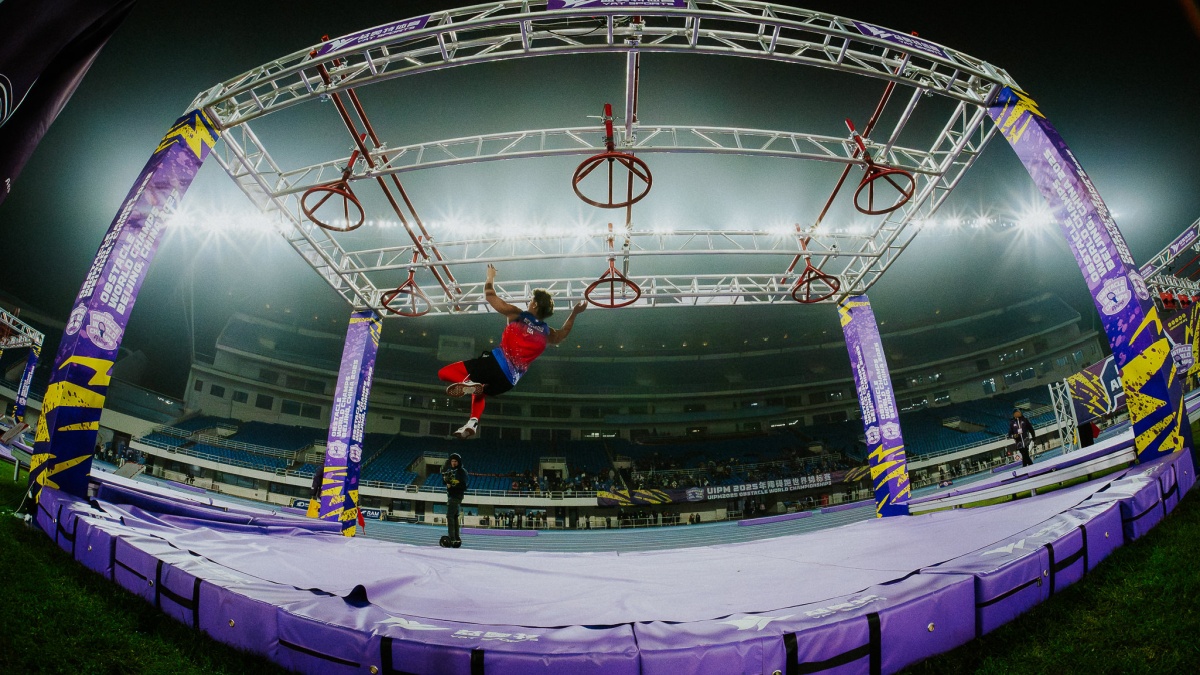
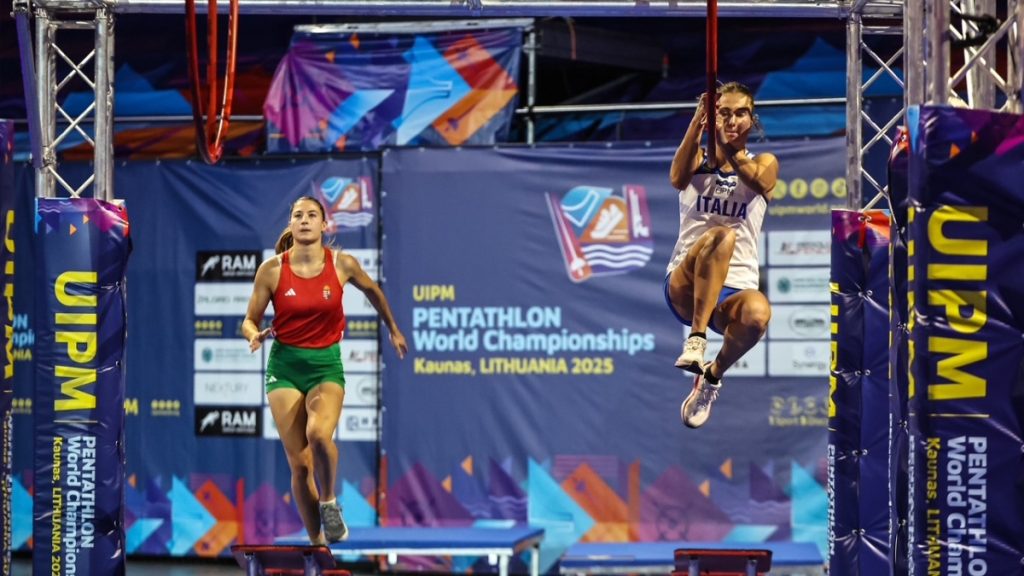
We have already seen a glimpse of what this new era can deliver, thanks to the high-energy competition and electric atmosphere inside the Zalgiris Arena in Kaunas, one of Europe’s biggest basketball venues, during the UIPM 2025 Pentathlon World Championships.
That arena-style intensity is exactly what we are bringing to the Olympic stage to transform Pentathlon into a premier sports entertainment product fit for today’s fans. The flexibility of our new format means we can help organisers find the right indoor and outdoor solution, and we can also take the sport to iconic backdrops.
Some traditionalists may argue that Modern Pentathlon risks losing its identity. How do you balance honouring the sport’s heritage with the need to modernise and stay relevant?
The phrase “Heritage & Innovation” has been in UIPM email signatures for a decade. And it was never just a slogan, it was the cornerstone of a strategy. We lived this balance long before it was trendy, and it is now time to move that philosophy from the footnote to the headline.
While some debate “heritage versus future,” Pentathlon sits comfortably in both, uniquely bridging the gap between eras. We don’t see this as a choice between our past and our future, but as a deeper commitment to our DNA. By embracing innovation, we are fulfilling Coubertin’s original vision of the “complete athlete” – mentally and physically strong and supremely adaptable.
We know perceptions can linger in the past, with some still seeing an older version of our sport, unaware of its radical transformation. But as we get closer to bringing in millions of new fans and participants, people will realise we are already delivering the “future Games” format today.
What does the UIPM-FISO integration unlock commercially, competitively and politically that neither organisation could achieve alone?
The unification of the Pentathlon and Obstacle communities marks a historic milestone. This collaboration lays a path to the creation of the world’s largest multi-sport federation, effectively bridging Olympic tradition with the massive global appeal of Ninja and OCR.
By integrating World Obstacle (FISO), we are building a clear, unified pathway for millions of young athletes, moving from local gyms and parks to UIPM global competitions and even the Olympic Games. This integration scales our reach to an unprecedented level, offering sponsors an opportunity to partner with the most innovative sport in the Olympic Movement. We are talking about game-changing growth in broadcast reach, social media engagement and long-term Olympic relevance.
How do you plan to convert obstacle racing’s grassroots following into Olympic fans, and potentially into Modern Pentathlon athletes?
The beauty of Obstacle racing is that it already lives where the next generation is: in our city parks, local gyms, and across digital media. We don’t need to reinvent the wheel, we just need to build the bridge. By integrating Obstacle into the Olympic programme, we are validating the passion of millions of weekend warriors and high-level obstacle athletes, showing them that their discipline now has the ultimate sporting prize of an Olympic medal.
To make this a reality, we are working hand-in-hand with our National Federations to ensure Pentathlon is more accessible than ever before. Of course, our recent integration with FISO will only help accelerate these efforts, creating a singular pathway for athletes to move from local obstacle events straight into the Olympic pipeline.
Moreover, we have launched a series of educational initiatives and tools, including our Global Obstacle Club Map, bringing visibility to a growing network of almost 300 training centres and gyms. It gives athletes at every level, from the ninja enthusiast to the elite pentathlete, a clear map of where to train, how to compete, and how to chase their Olympic dream.
With LA28 only two years away, what are the biggest risks or unknowns that keep you up at night as you prepare to debut a new Olympic discipline?
I often say, only half-jokingly, that my biggest concern is not having enough seats in the stadium! Pentathlon is consistently one of the first sports to sell out at every Games. Los Angeles will fuse urban culture and sport entertainment and we will be right at the sharp end of that showcase. I honestly believe we’ll be one of the hottest tickets in town.
If LA28 is a success, what does Modern Pentathlon look like in 2032?
As I’ve said, I can’t think of a better place than LA for Obstacle racing to make its Olympic debut. Whether watching live from Sepulveda or online, when young fans witness this captivating sport, we know that millions of young people around the world are going to want to give it a try.
While our focus is on making LA28 a breakthrough success to demonstrate the power of this new format, I have no doubt that this momentum will act as a giant springboard heading into Brisbane 2032, with a thriving Obstacle racing scene already in place in Australia. They are going to love it too.
Want to hear more stories like this? Check out the new SBC Media YouTube Channel, the new home of all things multimedia at SBC, where our team deep-dives into the biggest stories from across the sports betting, iGaming, affiliate and payments industries.