


Insider Sport spoke to Be Your Best CEO Andreas Olsen and Le Havre Technical Director Michael Bunel about how cognitive training technology can deliver returns where it matters.
Football clubs are run like businesses in every sense, focused on squeezing out every last drop of value from every cog which keeps the sport running.
At an industry event last year, Arsenal Chief Commercial Officer Juliet Slot spoke about the club’s ambition to take cues from e-commerce giants such as Amazon, where efficiency and conversion are placed on a pedestal.
In this kind of environment, a phrase which has made its way from tech boardrooms into football is becoming increasingly familiar: return on investment (ROI).
Clubs and their partners now measure success through ticketing platforms, merchandising ecosystems, CRM performance and digital engagement, as though the ‘beautiful game’ can be understood through a commercial stack.
Some traditional supporters may hold the opinion that this mindset has burrowed into football like a worm in a fresh apple, the kind of hidden rot which quietly spreads and eventually turns the whole thing bad.
However, there is still a truth that clubs can’t ignore. The most decisive return on investment in football is still winning matches.
Applying commercial logic to performance
Football clubs which understand this are using the same logic of measurement and optimisation on the training ground. If commercial departments are built around finding marginal gains in revenue, performance departments are now being asked to do the same. A key area for this is in decision-making, scanning and perception.
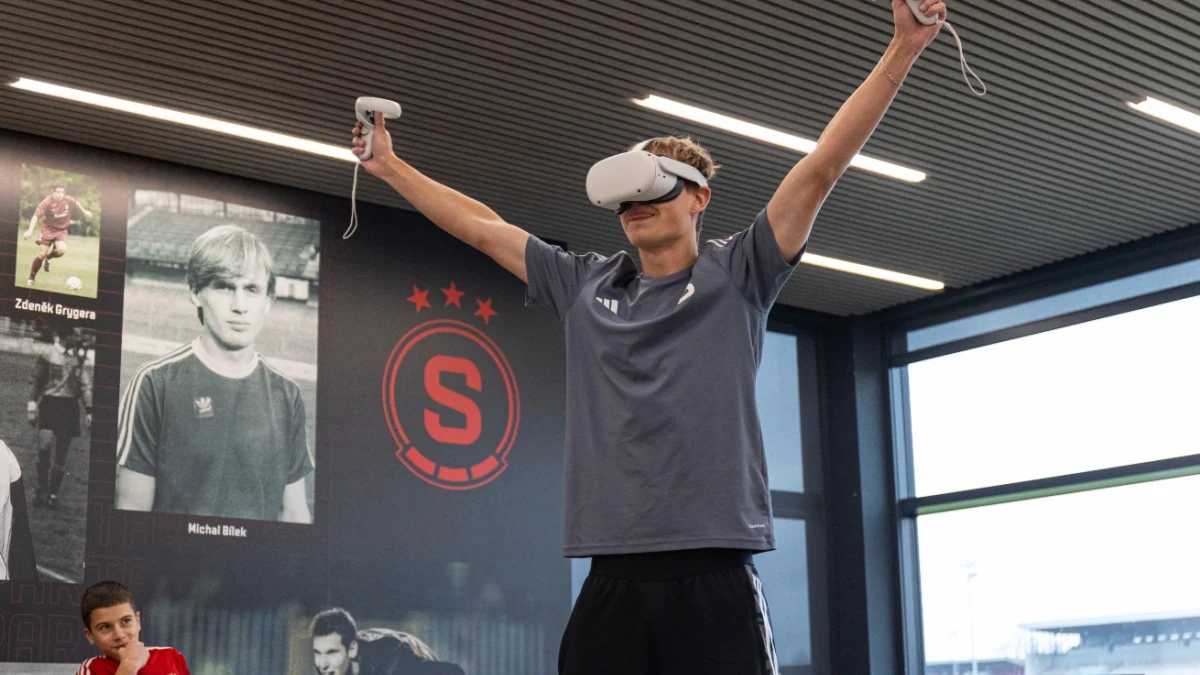
This has resulted in clubs adopting new technologies, such as Be Your Best, a football VR training platform designed to improve how players read and process the game. Talking to Insider Sport, CEO Andreas Olsen traces the origins of the platform back to research into football cognition and an observation about elite players.

“Since our very humble beginnings where we kind of started off with research helped by Geir Jordet, one of the most prominent researchers in the world in football cognition,” Olsen explains. “He understood that the players that made the best decisions on the pitch were the players that scanned the most on the pitch.”
This idea became the foundation of the product, linking decision making directly to visual behaviour. Olsen points to players such as Frank Lampard, Xavi and Andrés Iniesta as examples of individuals who appeared to process the game differently.
“This is not something Lampard was born with,” Olsen says. “He is born with a good brain, but he isn’t born with the ability to be a good scanner on the pitch. He has kind of developed this through training.”
However, one challenge is that training environments are limited in how often they can reproduce match intensity, especially in terms of cognitive load. A player may only touch the ball a handful of times in a full match, which restricts opportunities to repeatedly train decision making under pressure.
“You should be in a match-like environment while you train this,” Olsen says. “You see the pressure coming, you see the patterns, you see the runs, and then you kind of develop this skill of taking in that information quickly and then making the decision even before you get the ball.”
To achieve this without increasing physical load, the platform uses simulation to replicate game situations at scale, with the aim being not to replace on pitch coaching, but to complement it.
And the approach appears to be gaining traction, as Olsen tells Insider Sport that the platform is now used by close to 10,000 players across more than 80 countries, in addition to over 100 clubs in academy and first team environments.
In true technological fashion, Be Your Best is already eyeing up improvements to its product.
“We are developing even more from not just focusing on the cognitive performance aspect,” Olsen explains, “but also moving on to match analysis and using our skill of transforming football into a 3D simulation.”
This allows clubs to reconstruct matches digitally and view situations from multiple perspectives, removing the fixed camera limitations of traditional video analysis which has traditionally been used.

From adoption to performance impact
While the theory behind the tech is important, Olsen stresses that the real challenge is adoption inside elite environments which tend to be naturally cautious about new performance tools.
He describes a familiar pattern across clubs, where new systems are rarely adopted from the top down, but instead filtered through performance and sports science departments before spreading gradually through academies and first teams.
This progression is usually ignited by what he describes as “healthy skepticism”, with clubs, in true business fashion, requiring proof through trial periods and measurable impact before investing.
“The first important thing is that they need to have buy-in from the people that are actually the trusted people within the club,” Olsen says. “And in order for them to get the buy-in we would do like a two to four week trial where they test it with actual players.”
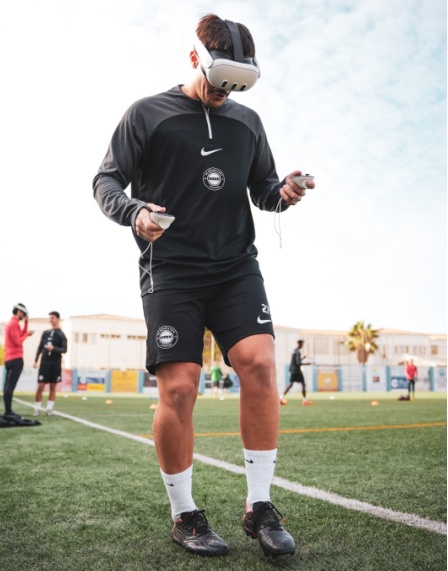
Once a club decides to leap, the focus switches to impact, looking at whether improvements in scanning behaviour translate into outcomes on the pitch. Insider Sport spoke to Michael Bunel, Technical Director at Le Havre, a club which has recently started to use Be Your Best.
“We have been using the programme for 2 months so it is hard to precisely measure the improvements,” he explains. “Yet, I can definitely assert that the players are now aware of the importance of scanning on the field.”
Bunel highlights what he calls the “critical scan”, the repeated checking of space and movement before receiving the ball, as an area where many players fall short despite technical ability.
In his view, the issue is not execution but timing, with players often reacting too late to information that was available earlier in the action.
“I can slow down the pace of the ball to improve their critical scan,” he says, describing how controlled repetition allows players to recognise and correct habits which are often invisible during a 90-minute match.
The tech is also being used by injured players, who are using the system to preserve cognitive engagement with the game during recovery.
The real football return is on the pitch
While clubs continue to invest heavily in commercial infrastructure, the most valuable asset on the balance sheet is still the players.
It is those assets which determine whether revenue grows or stalls, because performance on the pitch is what everything else follows.
“It’s not about me saying buy our product. It’s more about me saying to the clubs, you have to pay attention to what’s going on around so that you’re not left at the train station because things are going to move really, really fast.
“Players are still going to become good by doing what they’ve done before, but if you lose out on that marginal gain that technology can give you, then you might lose out on the big run.”