




Brazilian lawmakers are considering tighter restrictions on sports betting advertising amid concerns over gambling addiction and consumer harm.
A public hearing hosted by Brazil’s Sports Committee on 8 July saw researchers, gambling addiction specialists and health professionals debate the risks posed by sports betting and online gaming advertising.
Excessive exposure to sports betting and other gambling advertising campaigns has been identified as a factor that could contribute to the normalisation of the practice, increase the number of gamblers, and intensify problems such as gambling addiction and indebtedness.
Federal Deputy Saulo Pedroso (PSD-SP), author of the hearing request and President of the Sports Committee, stated that the volume of advertisements represents a movement contrary to the purpose of the regulation, which seeks to protect families. According to him, the campaigns should focus only on raising awareness among users, without encouraging the practice.
Pedroso is also the author of Bill No. 1,212/2025, which aims to prohibit the dissemination of advertisements and disclosures related to the sector.
Experts discuss avenues for advertising betting
According to Leonardo Carriço, a psychiatrist specialising in behavioural addiction and gambling disorder, the current gambling landscape in Brazil resembles the period when cigarette advertising was still permitted in the country. He stated that the constant exposure to sports betting ads in broadcasts, as well as on social media, minimises Brazilians’ perception of the risks associated with the activity.
“The blatant exposure in sports and in all other social spheres ends up producing the impression that it is a 100% normal activity, free of risks,” Carriço pointed out.
Furthermore, the expert stated that there are approximately 1.4 million users diagnosed with gambling disorder in Brazil, and about 11 million exhibit risky behaviour.
Researcher Kelly Noronha added that the losses are evident in the Unified Health System (SUS), in Psychosocial Care Centres (Caps), in social assistance, and in the growth of family debt. She questioned whether the government is actually profiting from the activity or if it is “transferring a much larger bill to society,” arguing that the debate should go beyond tax collection.
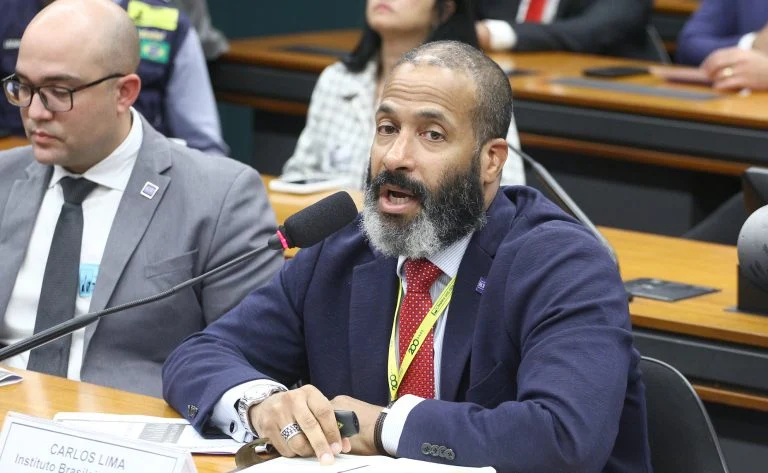
While Letícia Ferraz, Executive Director of the Laboratory for Human Rights and New Technologies (LabSul), emphasised that advertising should be informative and conscious, rather than simply being taken off the air, Federal Deputy Luiz Lima (Novo-RJ) argued that gambling advertisements should follow rules similar to those applied to the tobacco sector.
According to Carlos Lima, President of the Brazilian Institute for Responsible Gaming (IJBR), a total ban on advertising could strengthen the illegal market, which still represents about 50% of the sector in Brazil. The executive emphasised that the restrictive measures only apply to licensed companies that operate in accordance with current legislation, and this could direct users to clandestine platforms.
SPA recognises advertising control as the main challenge
During the meeting, Fabio Macorin, Deputy Secretary for Prizes and Betting at the Ministry of Finance, acknowledged that controlling online betting advertising is among the sector’s main challenges.
The SPA representative highlighted that legislation already establishes restrictions on gambling advertising campaigns: “It is prohibited, for example, to pressure the user to bet immediately, with messages such as ‘bet now’ or ‘enter now’. It is also forbidden to suggest that gambling is a financial solution, including promises of enrichment, full recovery of losses, social benefit or debt settlement.”
Ministry of Health comments on debt and suicide
Gabriella Boska, coordinator of the Department of Mental Health, Alcohol and Other Drugs at the Ministry of Health, highlighted that gambling addiction is a public health problem. She stated that 75% of patients present other disorders and emphasised that indebtedness represents an important factor associated with the risk of suicide.
According to her, messages like “play responsibly” and “activate alerts”, as seen in some sports betting campaigns, may not be effective in situations of psychological distress and may end up transferring the responsibility for controlling behaviour onto the player.
This article originally appeared on SBC Noticias Brasil, Insider Sport’s sister publication, on 9 July 2026.