



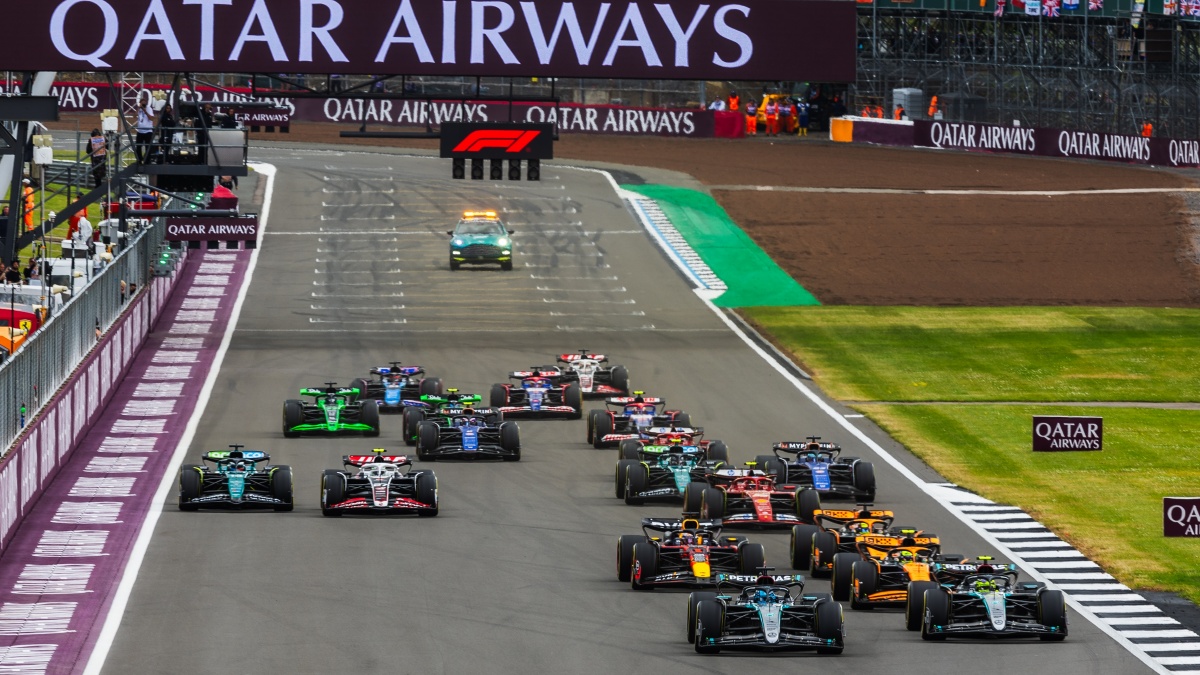
As the US and Gulf states turn Formula One into a strategic industrial asset, Oriana Morrison writes that Britain risks surrendering the engineering cluster it built unless this week’s Budget delivers clear tax, visa and R&D signals to keep teams, talent and capital on home soil.

Formula 1 (F1) is no longer a niche sporting product, but one of the world’s most valuable high-performance industries currently enjoying a global economic moment. Team valuations have surged. Races are multiplying. Tech and media giants like Netflix, Apple, and Andretti-Cadillac are investing. The sport now lives at the intersection of engineering, capital, policy, and culture. And yet, at the precise moment F1 is becoming a global powerhouse, Britain – the country that built its engineering backbone – is losing ground.
As a UK/US tax specialist advising drivers, teams, and sponsors, I see the shift in real time. The talent is still here. The supply chain is still here. But the policy environment no longer is. The UK has allowed one of its most globally competitive sectors to drift.
The upcoming UK Budget on November 26 is a critical inflection point. F1 is no longer just a matter of national pride; it is a test of whether Britain wants to stay competitive in the next generation of high-value industrial clusters from advanced engineering to AI-integrated mobility.
F1 isn’t Just Sport. It’s STEM.
British policymakers still treat F1 like a luxury pastime – fast cars, celebrities, and weekend spectacle. That view is outdated. F1 is one of the most advanced R&D ecosystems on the planet. It fuels innovation in aerodynamics, materials science, AI-assisted engineering, battery systems, and mobility design. Those breakthroughs spill directly into wider sectors, from aerospace to energy. It’s one of the last great STEM clusters we haven’t yet hollowed out.
We don’t need a Grand Prix to compete. We need policy. UK tax law offers little incentive to keep motorsport here. Skilled-worker visas are hard to obtain. R&D credits have been gutted. IP protections are inconsistent. HMRC audits are more aggressive – not to foster growth but to claw back revenue. It signals hostility to capital and frames competitiveness as a problem to solve rather than an advantage to nurture. In a sport where milliseconds matter, capital goes where it’s welcomed. Right now, that isn’t Britain.
Capital Follows Clarity. The UK Offers Neither.
Capital isn’t sentimental. It goes where governments make long-term commitments, where policy is predictable, and where high-performance sectors are treated as strategic assets rather than convenient political targets. The US and Gulf states understand this. They offer dedicated visa routes, investment incentives, and clear long-term frameworks. Britain does not. There are no visa pathways for specialist motorsport talent. No strategic incentives for long-term capital. No coherent treatment of IP, R&D, or cross-border structures.
People aren’t relocating to the US or the Gulf for the sunshine. They go where capital is anchored, because talent follows capital. Britain once understood this – that’s why clusters like Silverstone and Brackley exist. They employ thousands of engineers and specialists. That’s not just an F1 team; it’s a microeconomy. Lose the cluster, and you don’t just lose podiums. You hollow out entire regions.
The U.S. Isn’t Building a Team. It’s Building an Economy.
America is not merely expanding its presence in F1; it is building an economic ecosystem around it. Ten years ago, America didn’t host a Grand Prix. Today it has three – Austin, Miami, and Las Vegas – with credible talks of a fourth. But the real shift isn’t the races. It’s the infrastructure.
The US treats F1 the way it treats defence tech and aerospace: through vertical integration. The Andretti-Cadillac partnership is not a vanity project. It is an industrial strategy. It links elite motorsport engineering with the American automotive sector, with American manufacturing capacity, with American branding, and soon with American broadcasting dominance. The Apple TV deal is part of the same architecture. It turns F1 into a high-value export of American media infrastructure, giving the U.S. influence not just over how the sport is watched, but how it is monetised and scaled. America is building economic leverage around the sport – distribution, talent development, sponsorship, manufacturing – not just a team.
Britain has not grasped this. The US doesn’t treat F1 as sport. It treats it as strategy. That’s why it’s winning.
F1 Is Filling the Gap Boxing Left Behind
For decades, boxing supplied the U.S. with something no other sport could: raw unpredictability, unscripted personalities, and moments of peak cultural theatre. Tyson Fury belting out power ballads in Las Vegas. Eddie Hearn delivering insults with Shakespearean flair (if Shakespeare was from Essex!). Press conferences that blurred the line between sport and performance art. It worked because it felt authentic – chaotic, imperfect, and entirely unsanitised.
When boxing sold itself to Saudi Arabia, that authenticity evaporated. The sport became too polished. Today’s productions are slick but sanitised. Audiences lost the drama, and American audiences were left orphaned. Formula One filled that void. Its drama, characters, and high-stakes narratives found a perfect home on streaming and social platforms. “Drive to Survive” didn’t manufacture a fad; it moved straight into the space boxing abandoned. Streaming platforms saw the gap. Investors saw the scalability. And America’s media infrastructure did the rest.
The Budget Must Choose: Compete or Concede
F1 employs tens of thousands of people across the UK. It drives exports, advanced manufacturing, engineering, media, and world-class R&D. It is not a niche pastime. It is part of the country’s economic engine. And yet we head into this Budget with no motorsport industrial strategy, no foreign-capital plan, no visa route for elite technical talent – just more audits, more uncertainty, and less trust.
What’s worse is the belief in Westminster that ignoring industries like this somehow delivers social justice. It doesn’t. It strips away opportunity. If you push high-value engineering offshore, you don’t create fairness – you create fewer options for the young people who want careers in STEM, advanced manufacturing, or motorsport. Those jobs won’t stay and wait for better politics. They will move, and once they move, they don’t come back.
If Britain wants to keep the global prestige it earned, it needs a Budget that actually backs the sectors where we are still world-leading. Clear tax rules. Real R&D incentives. Infrastructure investment. Visa pathways that attract, not repel, global talent and global capital. The choice is simple: support the ecosystem, or watch other countries take it piece by piece.
Oriana Morrison is the founder and CEO of ECNMX, a UK–US tax strategist for elite performers in sport and entertainment. She advises professional clubs and governing bodies on cross-border tax issues and is currently supporting preparations for the the 2026 World Cup, and the 2028 Los Angeles Olympics.