


By taking exclusive rights to the 2026 World Baseball Classic in Japan, Netflix is testing a country-specific live-sports play in one of the world’s most fragmented and valuable baseball markets.
Netflix will stream every game of the 2026 World Baseball Classic (WBC) in Japan, its first live sports event in the market and a notable move into one of the country’s most valuable sports properties.
The 20-team tournament runs from March 5-17, 2026 with first-round games in Tokyo, San Juan, Houston and Miami; Japan are the defending champions. The deal puts a national, event-based baseball property inside a general entertainment subscription for the first time in Japan, rather than across a patchwork of broadcasters.
Professional baseball’s foundations in Japan remain strong. After the pandemic-era trough, Nippon Professional Baseball (NPB) attendance set a new record in 2024, with the league announcing 26.59 million for the regular season, surpassing the previous high in 2019.
The 12-team structure (Central and Pacific Leagues) still underpins robust local sponsorships and community ties, while the WBC provides the quadrennial stage that mobilises a national TV audience: Japan–Korea averaged a 44.4 rating during the 2023 edition, the best WBC game rating recorded in any country.
The on-field product is evolving too. In early August 2025, local news outlets reported the Central League had confirmed it will adopt the designated hitter from 2027, ending a decades-long rules split with the Pacific League and likely nudging roster construction and offensive profiles in a more uniform direction.
A fragmented rights landscape meets a single-subscription tournament
NPB’s media environment is unusually decentralised by global standards. Clubs control home-game rights, producing a mosaic of terrestrial, satellite and streaming deals. Pacific League clubs additionally pool inventory through Pacific League Marketing’s PERSOL Pacific League TV (PLTV), an owned-and-operated service that aggregates live games from the six PL teams.
Alongside domestic NPB output, international baseball has become more visible. Amazon’s Prime Video carried the 2025 MLB Tokyo Series in Japan and is now distributing a broader slate of MLB games in-market via SPOTV’s Prime Video Channel, underscoring the pull of Japanese stars on global platforms.
Against that backdrop, Netflix’s exclusive WBC carriage stands out as a short, nationally resonant tournament delivered in one place, within an existing entertainment bundle, rather than spread across multiple windows and distributors.
Why the WBC fits Netflix’s live playbook
Netflix’s recent live forays have focused on high-impact “appointments” rather than season-long rights.
In the US, Netflix has a three-season agreement for NFL Christmas Day games through 2026, and since January 2025 has streamed WWE’s Raw live in multiple major markets under a long-term deal. Both illustrate a tilt toward culturally prominent, time-specific properties that create short bursts of mass reach and advertising inventory without the operational weight of a full domestic season.
The WBC offers a similar profile in Japan with concentrated dates, guaranteed local interest in Samurai Japan, and storylines anchored by crossover talents who bridge NPB and MLB. The format (47 games over less than two weeks) also lends itself to a defined production footprint and predictable peak-load planning.
Infrastructure and the fan economy
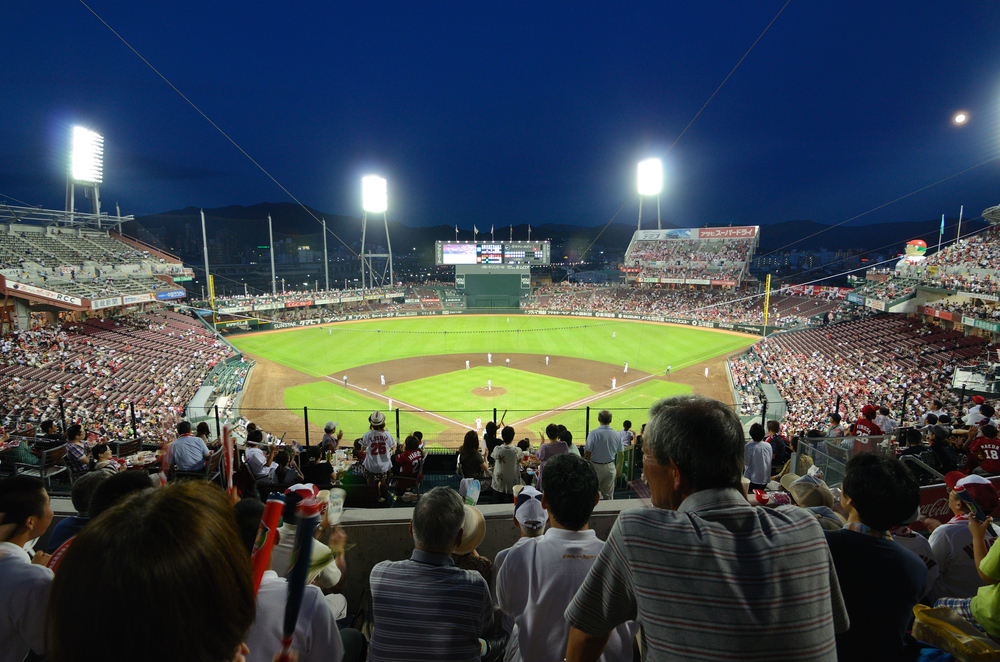
Ballpark investment has modernised parts of the domestic product. The Hokkaido Nippon-Ham Fighters’ ES CON Field Hokkaido anchors the “F Village” district, designed as a year-round destination with hospitality and non-matchday spending streams. The club’s owner, NH Foods, has reported multi-million footfall across the wider site since opening in 2023, emphasising ballpark-as-precinct economics.
That physical capital sits alongside a rights market still adjusting to digital consumption. PLTV continues to aggregate one half of the league; DAZN, J SPORTS and GAORA retain slices; terrestrial broadcasters rally around tentpoles such as the Japan Series; and global platforms increasingly orbit major moments – MLB’s Tokyo Series and, now, the WBC on Netflix.
Competitive and operational questions
Nevertheless, two issues will frame the run-in to March 2026.
First, distribution mechanics. How will Netflix positions WBC access vis-à-vis its ad-supported tier, and how will it localises production?
Second, technical scale. The platform has handled huge live audiences for NFL Christmas games and WWE launches, but concurrency around Japan-team WBC fixtures will provide a different profile of domestic peak demand.
Between now and the first pitch, the key signposts are likely to be production announcements from Netflix and WBCI/MLB, any additional commercial integrations around the Japanese feed, and the extent to which rival streamers counter-program with domestic NPB or MLB inventory.
The Central League’s DH transition also remains the structural change to watch inside the domestic game as rights partners will likely reassess style-of-play and recruitment effects over the medium term.