


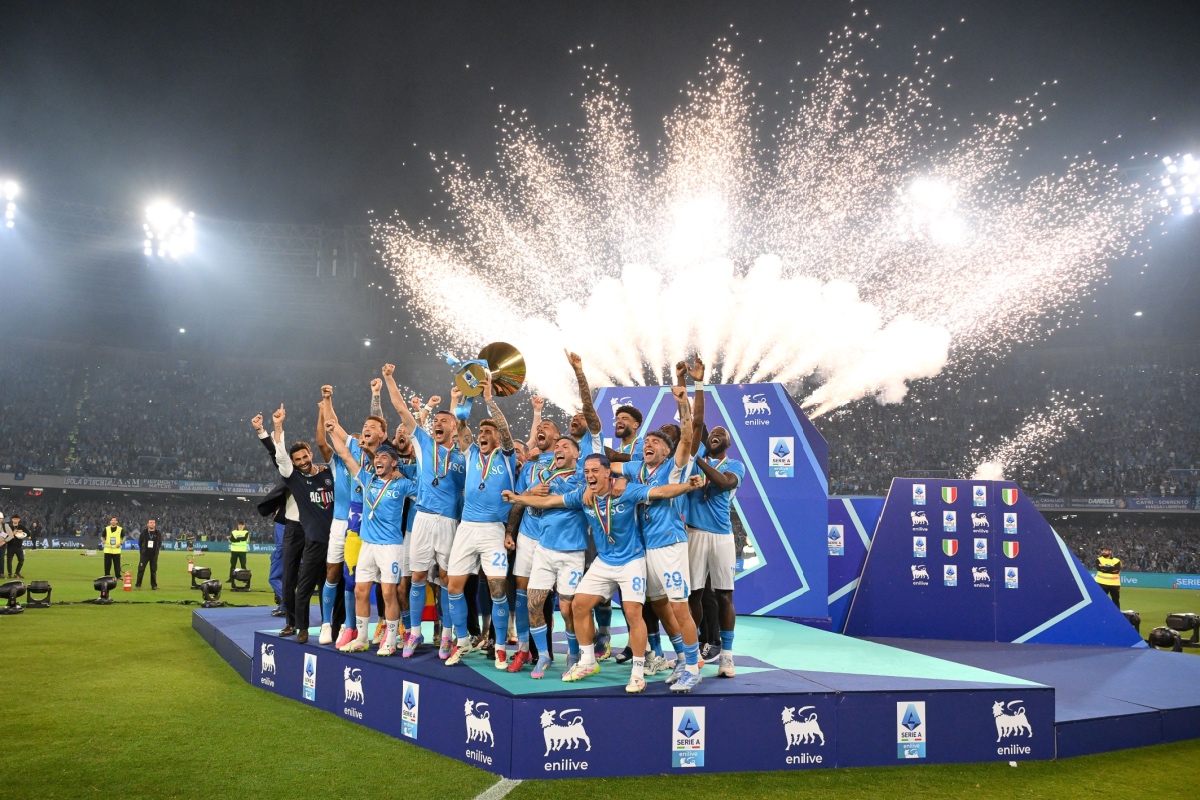
With piracy causing a major headache for European football leagues and major broadcasters, Sportian’s AI could be the answer.
Serie A’s partnership with Sportian has unveiled the first year results of its efforts to stamp out piracy of league matches, blocking more than 4,500 piracy attacks per matchweek.
Sportian, the sports division of technology firm Globant, detected weekly piracy attacks of Serie A fixtures with the use of Piracy Guard. The service successfully detected and blocked these illegal broadcasts through AI-driven detection tools.
Piracy Guard uses AI and human expertise for real-time monitoring to identify and remove any unauthorised streams seen across social media, illegal websites, and other digital platforms.
This was strengthened through Serie A’s partnerships with social media platforms Meta (Facebook and WhatsApp), TikTok and YouTube to directly remove infringement content.
“As sports piracy becomes more sophisticated, the need for proactive strategies and global collaboration has never been greater,” said Pablo lo Giudice, Product Manager for Piracy Guard at Sportian.
“Serie A offers some of the most exciting entertainment in sports, and attempts to steal its IP have been significant, but through this partnership we are staying one step ahead. Italian football gave the world catenaccio – the system of world-class defense – and we’re bringing that same energy to keep piracy out of the game.”
Protecting valuable revenue
Sports broadcast rights have soared to record heights in recent years and are a vital source of revenue for European football clubs.
SportBusiness found in a report in December 2024 the total value of global sports broadcast rights has reached $60bn (£49.5m).
Across Europe’s top five major football leagues, the Premier League’s four-year deal is worth $9bn (£6.7bn), La Liga’s is worth $5.7bn (€4.95bn), Bundesliga’s is worth $5.6bn (€4.48bn), Serie A’s is worth $5.2bn (€4.5bn), whilst Ligue 1 have ventured into a new direct-to-consumer (DTC) streaming subscription model.
While Sportian’s Piracy Guard solution has reduced the rising amount of illegal streams of Serie A fixtures last season,
Serie A CEO Luigi De Siervo revealed the league still lost $345.3m in revenue last season due to piracy.
At the time, De Siervo stated piracy was damaging Italian grassroots football and its youth academies to such an extent that the talent pipeline to the national team had stagnated.
Nevertheless, Luisella Fusco, Media Operations & Broadcast Director at Lega Serie A remains optimistic about the future of further protecting the league against piracy and its broadcast revenue stream.
“Through our partnership with Globant Sportian, we’ve taken further steps to protect the investment of our licensees and ensure fans access matches through legal channels,” he said.
“Piracy remains one of the greatest threats to the sustainability of football, and we consider it part of our responsibility to lead the fightback and protect our sport for future generations.”
Piracy: A European worry
The concerns regarding the rise of football piracy is not just happening within Italy, but across Europe.
The new Ligue 1 DTC streaming service, Ligue 1+, was born out of the collapsed domestic broadcast rights deal between the French league and DAZN, who highlighted concerns regarding the league’s efforts to stomp out illegal streams of its Ligue 1 broadcasts last season.
Sky Managing Director, Jonathan Licht, recently spoke at a Premier League launch event over the “real concern” of piracy and believes it has been “normalised” to the point where it has now put them in danger of losing large amounts of customers.
La Liga has also adopted the services of Sportian to combat piracy. Javier Tebas, President of La Liga, stated in June the Spanish league loses €600-€700m per year due to illegal streams.
But La Liga has been proactive in its fight against piracy. The league participated in Operation Kratos, which allowed La Liga to carry out IP blocking of illegal broadcasts. Tebas also revealed it had reduced piracy by 60% in Spain after adopting a similar AI-driven model to Serie A.
With Serie A and La Liga using AI to fight back against piracy, how long will it take for widespread collaboration from football leagues, big tech companies and AI companies to significantly reduce the revenue lost due to illegal broadcasts?