



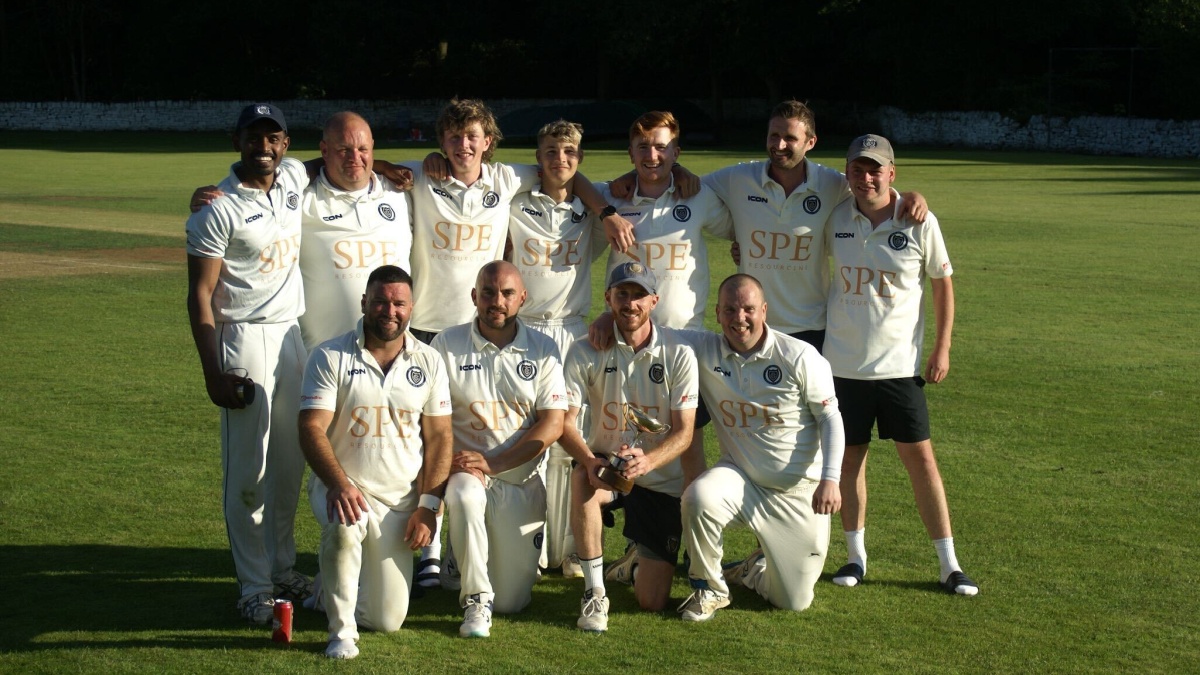
In this regular series, Insider Sport speaks to volunteers at Old Glossop Cricket Club to uncover what goes into sustaining grassroots sport, who these people are beyond the game, and what drives their dedication.
There are few things head groundsman Jamie Kay enjoys more than a perfectly striped pitch. So much so, he even bought a Hoover to recreate the effect on his AstroTurf at home.
“It sounds really, really strange to say this, but cutting grass is something that I’ve always liked,” he tells Insider Sport.
At Old Glossop Cricket Club, his stripes are more than aesthetically pleasing as his work keeps the pitches playable and safe, describing the quality of the pitches as the “bread and butter” of the cricket club.
From football to the square
Believe it or not, Kay’s biggest passion wasn’t always cutting grass. In fact, it wasn’t even cricket.
Growing up, his main hobby was football. He played at several clubs including Manchester United, Wolverhampton Wanderers, Liverpool, and Stockport County before injuries saw him move to lower leagues, reaching the FA Vase final with Glossop North End at Wembley and even playing in China.
After his football career, Kay started playing cricket at Woodley Cricket Club, where he had spent much of his youth watching his brother play. It was here that he discovered groundsmanship and began learning the craft under Lloyd Hayes.
He also completed a formal course which covered the essentials such as repairing an end, scarifying a wicket, preparing a pitch and squaring off the square. Kay recalls thinking that it wasn’t as complicated as it looked, but the real challenge came in applying it consistently.
He describes the early days as a steep learning curve, constantly checking in with Lloyd for advice. In his words, commitment is key. “It’s not just a case of, oh, I’ll do this and leave that. You’ve got to be committed. If you’re not committed, you’ll just get rubbish wickets,” he says..
Now, each week is planned and full on. Kay works five days a week, with a rotating pattern. One week he finishes work at two in the afternoon, the next week at half past nine in the evening.
When he moved closer to Old Glossop, then-chairman Den Lane approached him with an offer to take on the square. “It was an offer I couldn’t really turn down… it’s something that I love,” Kay says.

On his early-finishing days, he arrives at the ground after work and spends one to two hours cutting the outfield, preparing the wicket, or marking the lines. If there’s a game on a Monday, he returns on Tuesday to repair the track, ensuring it is playable for the next match.
Fridays are the most important, with around three hours spent cutting, rolling and marking the square ready for any matches over the weekend.
All of this is coordinated through a WhatsApp group named “The Square”, which includes captains, vice-captains, the chairman, the women’s captain and junior coordinators. Even with weather interruptions, he stays on top of covers, germination sheets and track repairs, keeping the pitch in the best condition possible.
The small wins are what make the long hours worthwhile. He finds quiet satisfaction in seeing a match played on a pitch he has looked after and hearing appreciation from those around the club.
“Looking through the leagues last season, Old Glossop had the most runs scored on the ground,” he says. “It’s shown that I did a good job.”
Challenges on and off the pitch
Even with these wins, the job is far from easy. Matches pile up every weekend, with additional midweek games, leaving little time for the square to recover.
This highlights a common dilemma at grassroots clubs. Old Glossop, like many others, is driven to make the club as successful as possible. Current chairman George White explained how a thriving junior section is key, supported by national initiatives from the England and Wales Cricket Board (ECB).
Kay, however, stresses the limits of the square. “There is only so much a cricket square can take and you can only prepare so much of a cricket square in a season for it to keep working the way that it works,” he says.
On top of this, Kay was recently diagnosed withKennedy’s disease, a rare motor neurone condition. He first noticed twitching, slurred speech and difficulty swallowing while away in France in June 2024, where he later proposed to his wife.
Subsequent tests confirmed the diagnosis. He now attends sessions at Salford and London hospitals, takes medication and participates in Professional Footballers’ Association (PFA) medical trials to manage symptoms such as cramps and fatigue.
Despite the physical challenges, the routine of the cricket ground provides focus and therapy.
“If I have a bad day at work, I know I can come to the cricket club, sit on the outfield, put my headphones on and just cut stripes into the grass,” Kay says.
At the moment, he adapts his workload depending on how he feels, sometimes focusing on the outfield and leaving the square until he has the energy to do it to the high standard he expects of himself..
“It’s just me and my Spotify whilst I’m sitting doing what I need to do,” Kay adds. “It’s something that’s helped me massively. I think if I do not do the ground next year, it’ll be a big eye-opener to realise what do I do with my time. If I’m not doing the ground, how do I focus my energy on something else?”
The support of grassroots cricket
As he looks to the future, Kay re-evaluating how to manage his workload with regard to his role at Old Glossop. He says he has already spoken with chairman White and will take some time at the end of the season to see whether there is a need for him to step back.
He says he’d like to come to an agreement with the White around the number of games played on the square and if more could be played away, or whether there is a need for someone to take over some or all of his responsibilities.
Kay acknowledges walking away from the role would be hard as the cricket ground is not just a job. “There were times I thought about walking away… but then I’d get back on the mower,” he says.
It is a reminder that while people are needed to sustain grassroots clubs they sustain the people behind them.