


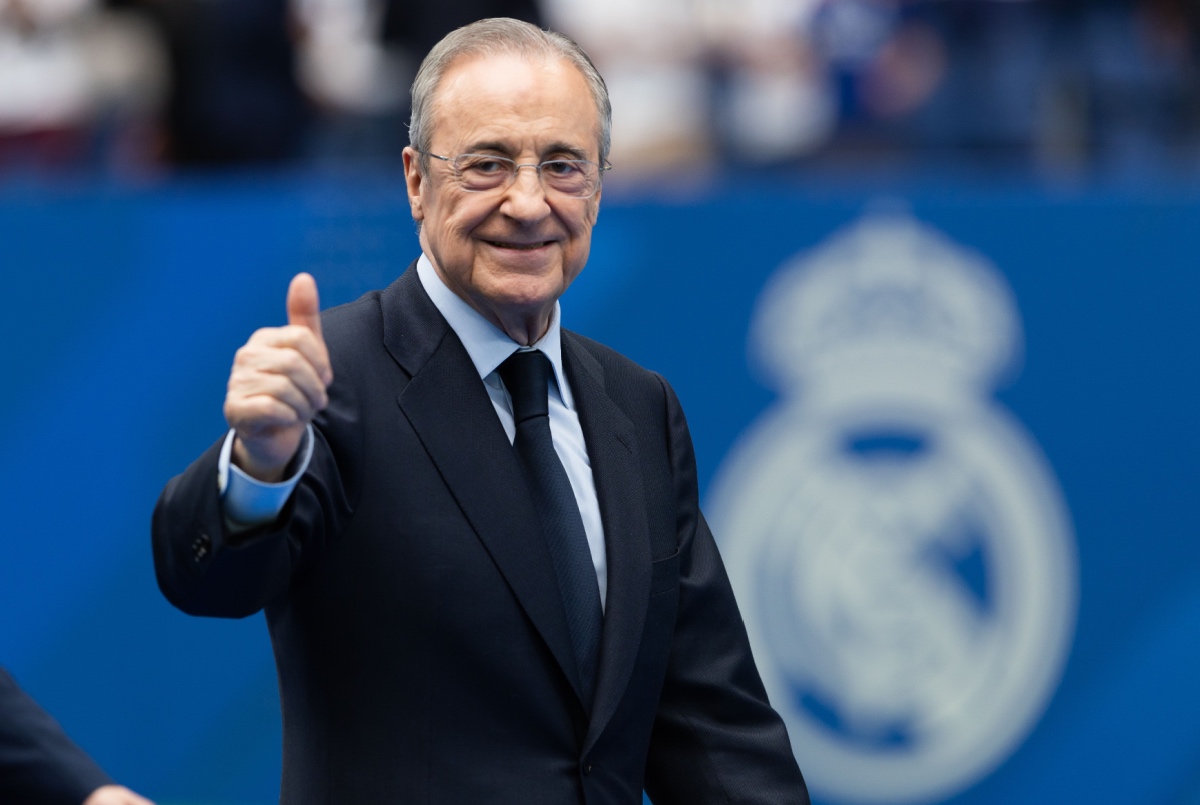
Football’s biggest club, Real Madrid, has been owned by its members since it was founded in 1902, but President Florentino Pérez could soon change that.
Real Madrid could be about to embark on a landmark change to its ownership structure by seeking external investment.
A report from The Athletic revealed Real Madrid President Florentino Pérez first raised the idea of seeking funds from outside investors during the club’s annual general assembly last year.
While he floated the potential of holding a referendum for external investment, sources close to the matter told The Athletic that Pérez intends to flesh out new details during the next general assembly, likely in November 2025.
A proposal has already been raised, splitting the ownership model of Real Madrid into two separate entities: one side handling football operations and the other handling business operations.
Another reported proposal includes the adoption of the Bundesliga’s ‘50+1’ ownership model, which mandates clubs in Germany for members to hold a majority ownership (51%+) but does allow outside investment.
If Los Blancos were to hand a stake in the club to outside investors, the report maintains that the full controlling ownership of Real Madrid would be under the control of the socios.
The move would be a historic shift in ownership in Madrid, not only because of the size of the club both at home and internationally, but also because it is one of only four La Liga clubs who are owned by its members: FC Barcelona, Athletic Club and Osasuna being the other three.
Why now?
One of the primary reasons Pérez has contemplated seeking outside investors is due to the growing financial might of the Premier League and some of its sovereign wealth fund-owned clubs, such as Manchester City and Newcastle United.
Real Madrid’s President has continually prioritised protecting the ‘socios’ ownership model but more recently, he has spoken on how this holds back the club from financially competing in the transfer market.
While this has not deterred the club from signing some of football’s biggest names such as Kylian Mbappé and Jude Bellingham in recent years, Pérez believes Real Madrid are at a disadvantage when it comes to freely injecting money into the club for transfers.
The enforcement of La Liga’s Financial Fair Play (FFP) rules have also meant the club have had to carefully manoeuvre the rules’ squad cost limits. Real Madrid have not broken FFP rules recently, rivals FC Barcelona have come dangerously close to missing out on registering new players due to the right restrictions.
Pérez laid out these beliefs during the 2024 annual general assembly, where he first proposed the idea of outside investment.
This also comes off the back of Real Madrid becoming the first football club to post back-to-back $1.167bn (€1bn) turnover in revenue in 2023 and 2024. This was attributed to the new renovations to the Santiago Bernabeu, which has hosted several non-football events, such as Taylor Swift’s ‘Eras’ tour.
What’s next?
According to multiple sources, Real Madrid’s socios and club advisors Clifford Chance and Key Capital Partners have been mapping out potential elements of what a potential shareholder-led ownership model may look like.
There have been discussions surrounding breaking the ownership model into a football and business operation, which would enable the socios to focus on the football aspect while the business arm can venture into new commercial opportunities.
However, The Athletic cited this could cause concern with Spanish corporate tax law.
There was also an option for socios to either hold or sell a share in the club, but this was quickly dismissed. The report also highlighted there could be issues arising to potential stakeholders having a say on coach hirings/firings, as well as player transfers, which will be likely dismissed by the socios who operate this.
Despite all these outside investment tasks, Pérez has always maintained he wants the control of Real Madrid to lie firmly with the socios, but he is also thinking about the financial longevity of the club in the long-term.