


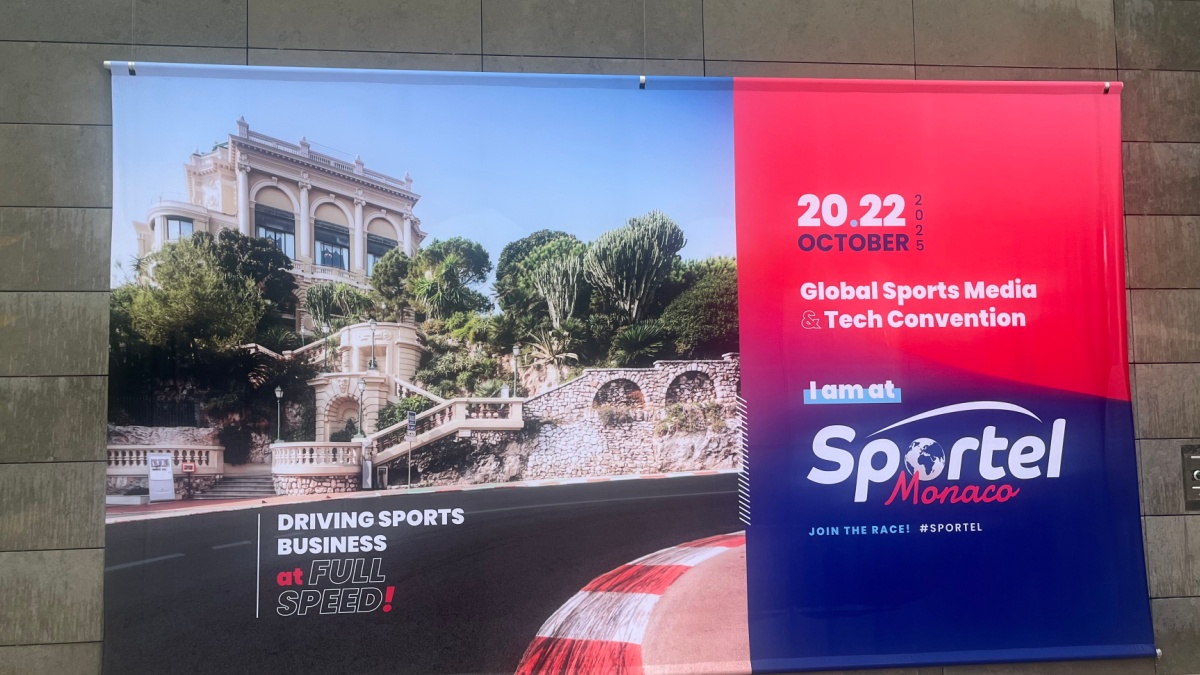
Insider Sport is on the ground at SPORTEL Monaco, providing you live coverage for the next two days. Expect insights from industry leaders engaging in conversations around broadcasting, investment, AI and much more.
17:00 – Full time called (for now)
We have reached the end of day one at SPORTEL Monaco. It’s been a day full of major names from across the world of sport and plenty of lively conversations on where the industry is heading.
Key themes have emerged throughout the day, including new ways to monetise content and harness AI for deeper fan engagement, as well as the big question on everyone’s mind: has F1 made the right call by choosing Apple for US broadcast rights?
We’ll have to wait to see how that story unfolds, but you won’t have to wait long for more coverage. Insider Sport will be back tomorrow with more updates, insights and quotes from the ground in Monaco.
Thanks for following along, see you tomorrow.
— Kieran
16:15 – Trust, archives and monetisation
The final session of day 1 at SPORTEL may have been late in the day, but it offered plenty of insight.
Calros Silva, President at Anthem Sports and Entertainment, Min Joo Kim, Head of International Business Development at K League, and Craig Caruso, VP, Sports Media and Commercial Partnerships at Vertione joined moderator Lowell Conn, President of Protocol Group to explore how sports properties are balancing trust, exposure and monetisation.
Caruso opened with a clear message on what truly matters to rights holders:
“What is the one thing rightholders value more than revenue? Trust.”
He argued monetisation and reach aren’t mutually exclusive, adding “you can effectively monetise your media while maximising your exposure and reach.”
Later in the discussion, Min Joo Kim shared how K League built a central archive hub not just to preserve history but to create new business opportunities and enrich fan experiences through storytelling. Silva emphasised the value of using archives as foundational revenue.
15:30 – AI’s role in fan engagement
AI is often met with scepticism, with conversations usually focused on job losses or hidden motives. However, at SPORTEL, the spotlight was on the positive potential of the technology, especially when it comes to fan engagement.
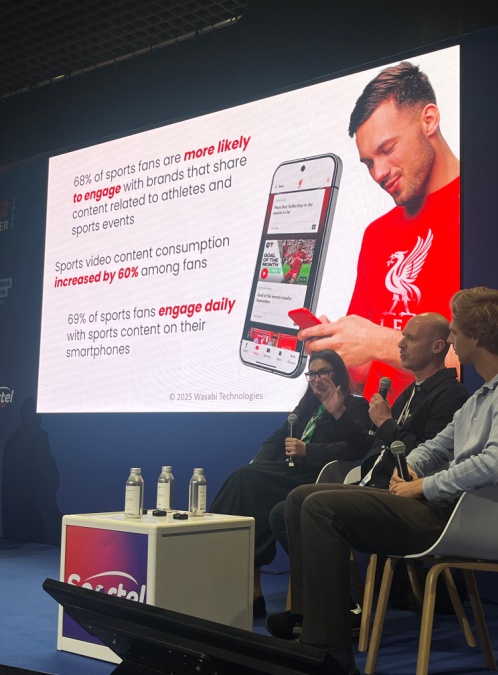
Matthew Quinn, VP of Media at Liverpool FC, outlined how the club is using AI to enhance operations and deepen connections with supporters. “It comes down to three things: people, process and technology,” he said. “If you create an environment where employees can think freely… then you get that magic.”
Liverpool’s partnership with Wasabi has already transformed how it archives and tags decades of content, making it instantly searchable and easier to activate. However, Quinn is most excited about enabling fans to become storytellers themselves.
“User-generated content is huge, but it’s also untapped,” Quinn said.
Quinn told the audience to imagine AI linking fan-shot videos to key match moments, creating hundreds of perspectives of the same goal.
Insider Sport spoke with Quinn and Mike Welts, CMO of Wasabi, about the partnership and the future of AI in sport. Stay tuned for that story in the coming weeks.
15:00 – What point is the streaming journey at?
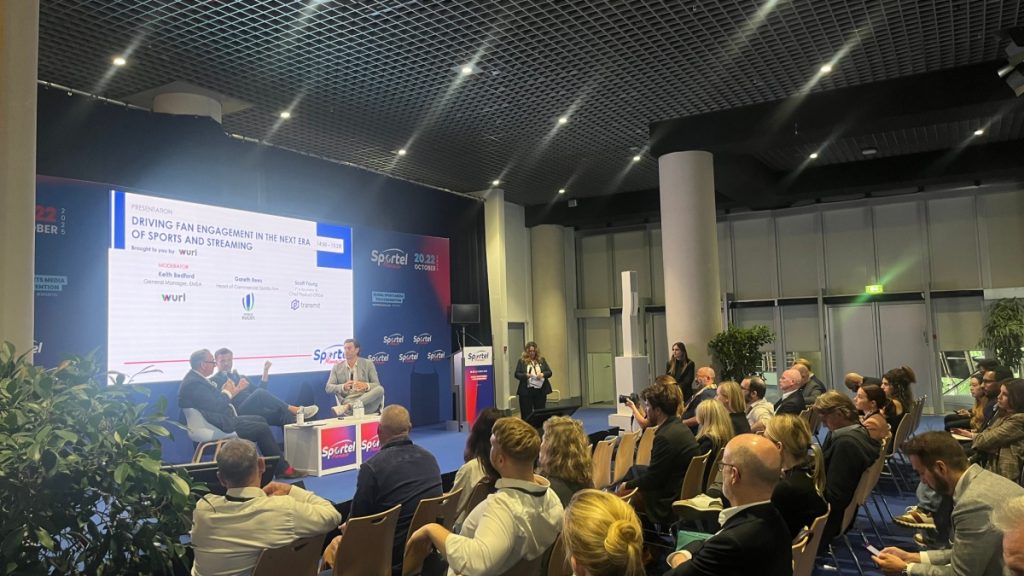
Keith Bedford, General Manager EMEA at Wurl, led a panel with Gareth Rees, Head of Commercial Distribution at World Rugby, and Scott Young, Co-founder and Chief Product Officer at Transmit.
The consensus? Streaming has moved past the “pipeline” stage and the focus now is on commercialisation, particularly through in-content advertising.
Young pointed out many European sports are continuous formats, which don’t leave much space for traditional ad breaks. However, there are natural moments of downtime where ads can slot in without disrupting the viewing experience.
Young revealed it’s now possible to deliver personalised adverts based on key match moments. For example, if Ireland score against New Zealand, Irish fans could see celebratory ads, while All Blacks fans get something entirely different.
A glimpse of how streaming is becoming smarter and more targeted…
14:30 – Personalisation in focus
Andreas Kaeshammer, Head of Football at Infront, picked up the conversation by zeroing in on Gen Alpha, the next wave of fans. He explained they already boast $300bn in spending power. “This is the first generation that’s had a selfie at birth,” he noted, emphasising the need to use technology to speak their language and stay relevant.
LFP also said personalisation for younger audiences means building longer-lasting relationships. Though this isn’t just for younger fans, personalisation can be for older demographics too. One example? Ligue 1’s Sunday night data-rich match broadcasts, which skip commentary and focus on stats and interactive features.
14:15 – Ligue 1’s streaming move
Cyprien Castanedo, Head of Media Platform and Innovation at LFP Media, shared insights into how Ligue 1 is rethinking its relationship with fans.
Following challenges with media rights, the league recently launched its own direct-to-consumer platform, Ligue 1+, marking a major shift in how fans access French football.
Castanedo said the focus now is on understanding and using audience data effectively. “We’ve gone from not knowing who the audience is to knowing everything. Now the question is, what do we do with it?”
14:00 – The second half kicks off
We’re back after lunch and the afternoon opens with a panel on live sports, specifically how personalisation and fan experiences are evolving.
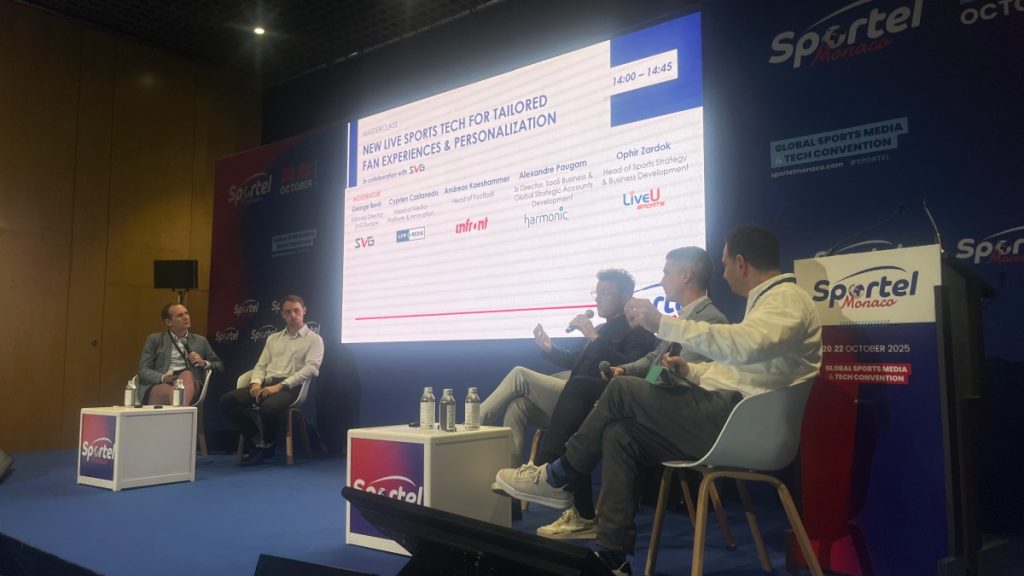
Before diving into the future, Alexandre Paugam, Senior Director at Harmonic, set the stage by highlighting the role of cloud technology in powering today’s live sports experiences. “Cloud gives you scalability,” he said, but also warned that it is not flawless and plans need to be in place for when things go wrong.
Ophir Zardok, Head of Sports Strategy at LiveU Sports, noted that more broadcasters are moving production to the cloud, pointing to their work with EuroLeague, which runs pre-match shows from host cities directly to HQ in Barcelona.
13:30 – How Liverpool and Wasabi Are Redefining Digital Engagement
It wouldn’t be worth coming all this way to SPORTEL without speaking directly to the experts behind some of the biggest moves in sports media.
I’m just preparing my notes ahead of my interview with Matthew Quinn, VP of Media at Liverpool FC, and Mike Welts, CMO of Wasabi. The pair have been partnered since 2022 and in that time Liverpool has earned the title of the Premier League’s most-engaged club, using AI to make nearly a century of archive content instantly searchable for fans around the world.
I’ll be asking about how Liverpool has put digital at the centre of its fan strategy, how AI is transforming storytelling and what’s next for both sides in terms of emerging tech and fan engagement.
Make sure you’re signed up to the Insider Sport daily newsletter so you don’t miss the full interview when it drops in the coming weeks.
12:45 – Big names, big presence at SPORTEL
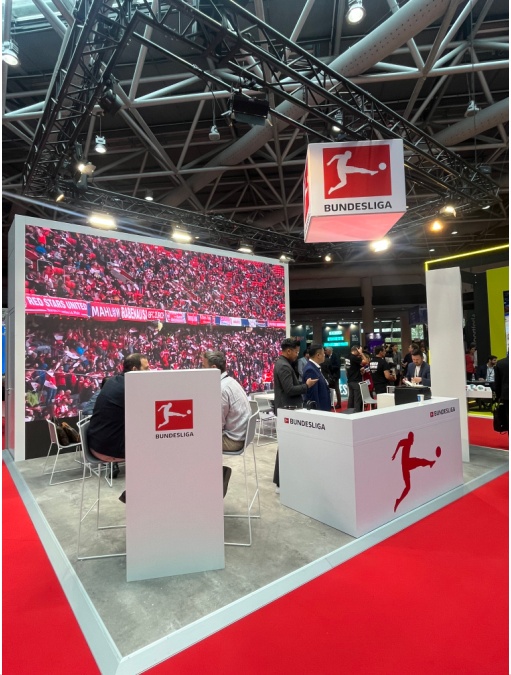
It may be lunchtime at SPORTEL, but the exhibition floor is still buzzing. Walking through the venue, it’s impossible to miss some of the biggest names in global sport, from Bundesliga and Ligue 1 to MLB, ESPN, Sportradar and ITF, all showcasing their latest projects, rights offerings and tech innovations.
The scale and variety of the booths reflects just how global and competitive the sports media and technology landscape has become. Deals might not be completed on the lunch break, but plenty of conversations are continuing.
12:00 – Investors, disruption and sovereign wealth
As the conversation turned to investment strategy, Martin outlined why sport remains such an attractive bet: “It offers diversified revenue streams – media rights, ticketing, host fees, sponsorship.”
On the growing role of sovereign wealth funds, Agaoua said they enable long-term projects but warned of potential risks around agility and alignment. Martin agreed that their scale can be both a strength and a challenge, but noted they’ve added real momentum to the market.
Agaoua pointed to the growing demand for engagement from investors, while Townsend stressed the need for sports to “own the entire digital economy” to maximise value.
“The disruption happening now won’t destroy, but it will rebalance,” said Agaoua.
11:30 – Where does the next $1bn come from?
Set with the task of answering this question are three CEOs. Djamel Agaoua of Kings League, John Martin of Professional Fighters League and Danny Townsend of Surj Sports Investment.
Martin kicked things off by noting that the pool of potential media rights buyers is bigger than ever. “It used to be four or five broadcasters, but even those companies are fragmenting,” he said. “There’s never been a better time to be in sport, but not everyone will win.”
Agaoua added that disruption is driving new opportunities: “Younger audiences consume sport differently. Investors love moments like this. It’s a chance to build something new.”
10:45 – Inside OKTAGON MMA
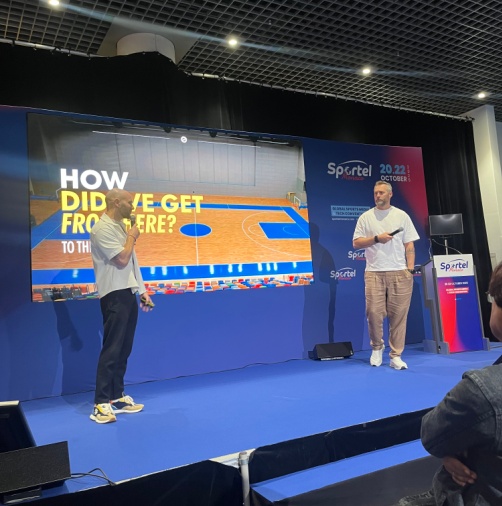
OKTAGON MMA has become a powerhouse in European combat sports. Over the past 12 months, the promotion has generated 2.3 billion social media impressions.
What started as a small organisation, once not even allowed to hold events in Germany, has now grown to sell out football stadiums, with 60,000 fans packing Frankfurt for their biggest night yet.
Co-owners Pavol Neruda and Ondrej Novotny took the stage to share their story of rapid growth and what makes their model different.
“We recognise UFC as the king,” said Novotny. “But what we create better than anyone else is athlete stories.”
One example the pair shared is Alina Dalaslan, now one of Europe’s fastest-rising female fighters. Her journey from working as a security guard to fighting in front of tens of thousands of fans. Novotny also revealed that MMA has become the third most engaging sport in Germany, behind only the Bundesliga and the NBA and even ahead of F1, which he joked about after the earlier panel.
10:00 – Everyone’s talking about YouTube
YouTube’s influence in sports broadcasting has exploded in recent years. Just this year, channels like The Overlap and That’s Football secured Bundesliga rights.
Sporting organisations are increasingly using YouTube to grow fanbases and engage younger demographics. However, what does this shift mean for free-to-air TV?
Glen Killane didn’t mince his words:
“There’s a huge role for YouTube, but the biggest problem is we’re paying for rights, and they’re not. My issue is they’re not coming to the party and putting money on the table. They haven’t shown willingness to pay real money… it doesn’t really cut it.”
Louisa Clark shared a different angle, confessing she was the person who put Jake Paul on TV in the UK.
She explained YouTube can unlock new fans, new formats and help sports survive, but stressed it’s not just “user-generated content” anymore.
Peter Bellamy, Chief Revenue Officer at Deltatre, added a practical view: “Capturing data insights is still very limited, so we see YouTube as complementary. And there’s a lot of content on the platform that sport properties don’t necessarily want to be aligned with.”
9:30 – Is Apple a good place for F1 in the US?
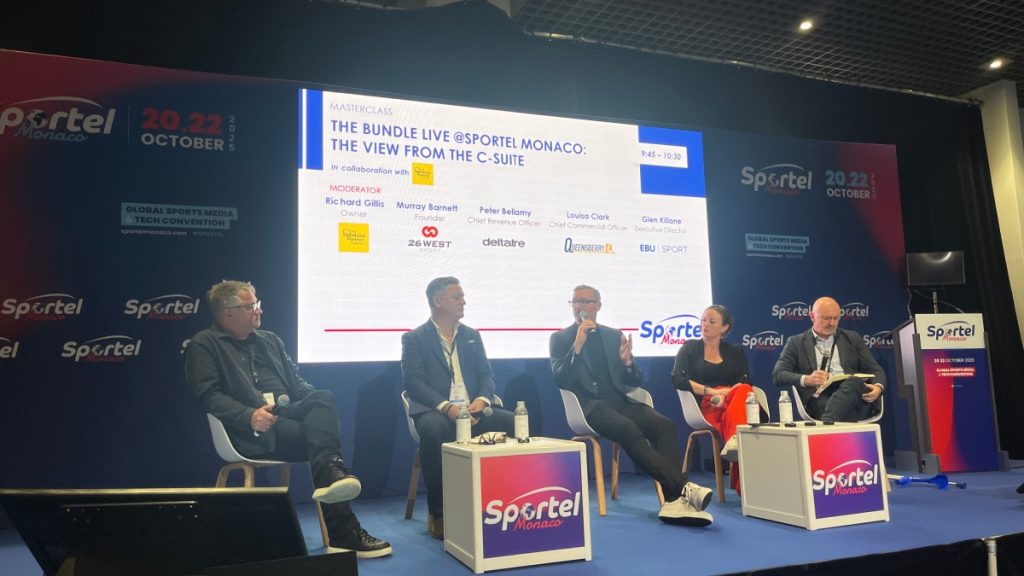
The first panel began by discussing the year’s top stories, including Apple‘s recent acquisition of US F1 rights for the next five years. Murray Barnett, Founder of 26West Sport, analysed the deal, highlighting the significant risk for F1 due to an initial reduction in visibility compared to the previous ESPN agreement.
Glen Killane, Executive Director at EBU, suggested ESPN‘s loss of rights was due to a perceived lack of commitment to F1, calling Apple’s move “very sensible.”
Louisa Clark, Chief Commercial Officer, drew parallels with Queensberry’s shift from TNT Sport to DAZN, another subscriber model. She emphasised an agreement with Apple doesn’t mean F1 can’t gain more attention through other platforms, such as Netflix’s Race to Survive documentary.
09:00 – Touchdown at Sportel Monaco
Good morning readers, I’m Kieran O’Connor and I will be giving you live, instant reactions from the event. I was caught in the rain this morning, but I am not letting that dampen the mood as we are minutes away from the first panel.