


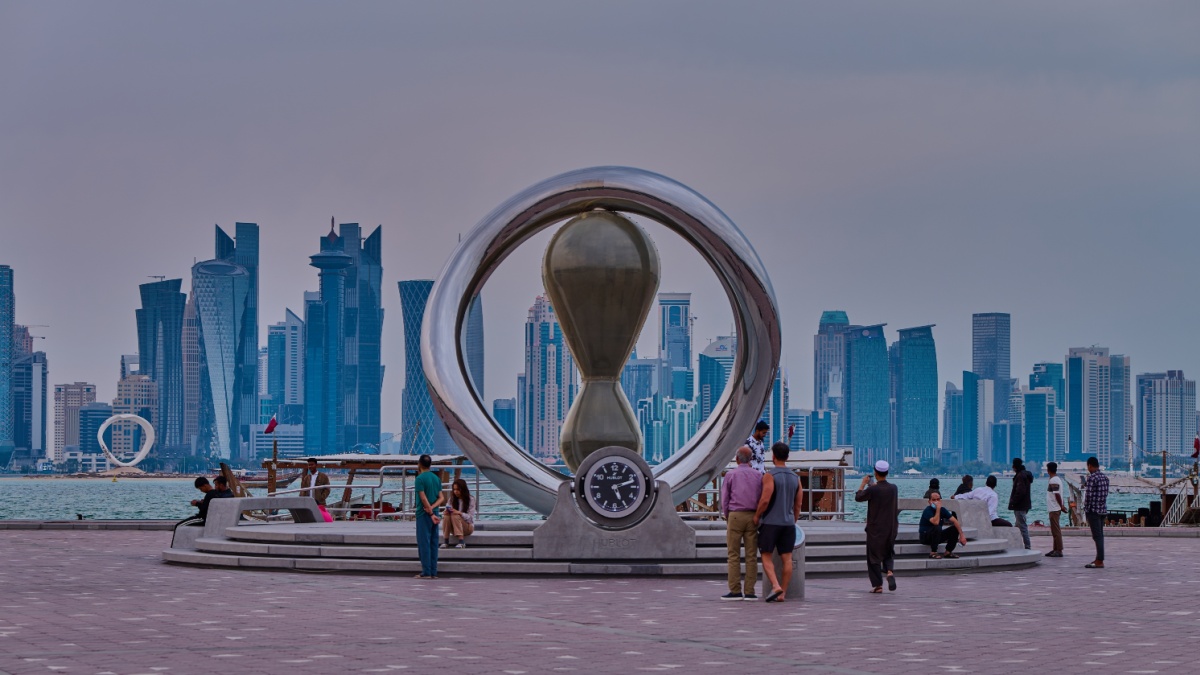
Beyond Hospitality explains why the Middle East offers a clear and efficient model for hosting large scale events, setting a benchmark ahead of the 2026 FIFA World Cup.
If you’re even mildly interested in football, there’s a good chance the 2026 FIFA World Cup, set to take place across the US, Canada and Mexico, has been clogging your social feeds recently.
And if you don’t like football, want nothing to do with it, and have actively curated your algorithm to avoid all mention of the sport, there’s still a very high probability the tournament has found a way into your life anyway.
Not because Scotland qualified and hasn’t stopped celebrating yet, but because FIFA tournaments now blend with politics, culture, and global affairs more than many people are comfortable admitting.
In the space of a few weeks we’ve had panic over visa rules for visiting fans, rumours of host cities being reshuffled at the last minute, and even talk of a FIFA peace prize, which reportedly already has a certain American’s name pencilled in.
Meanwhile, thousands of miles away, Qatar is hosting the 2025 FIFA Arab Cup and doing so with a level of calm and cohesion which feels noticeably different from the chaos surrounding the ‘big one’ next year.
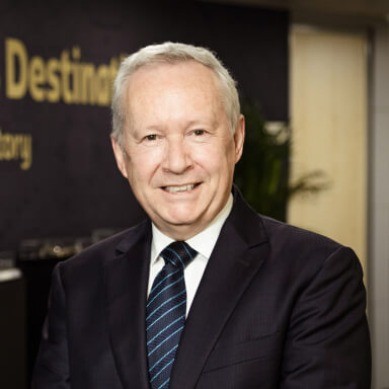
According to Beyond Hospitality Executive Chairman Jaime Byrom, the stability isn’t accidental, nor is it simply a luxury. It’s the product of a hosting model Qatar has spent more than a decade refining, which has quietly positioned the country among the world’s most efficient and dependable organisers of major sporting events.
Clarity at the Arab Cup
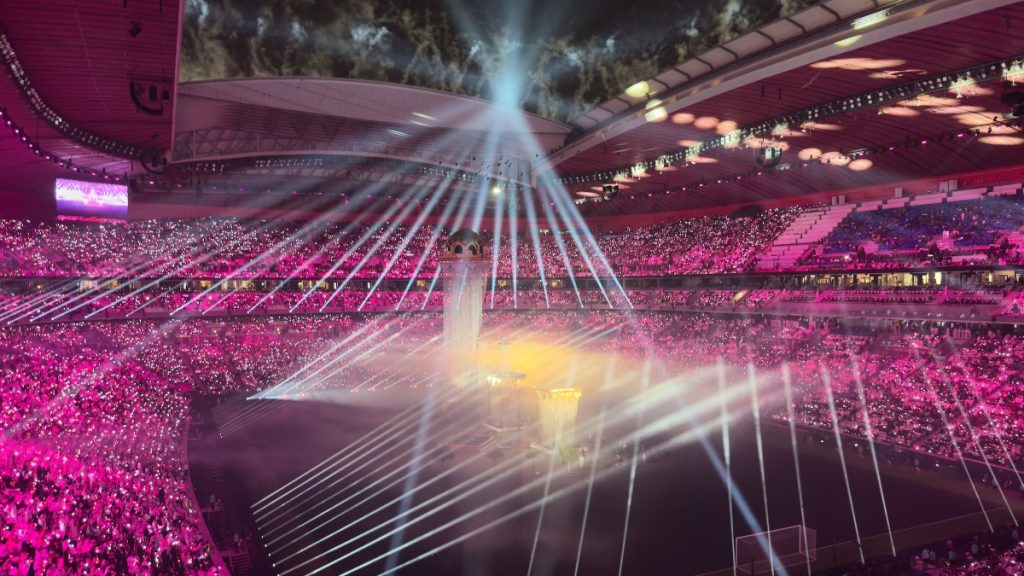
Beyond Hospitality is presenting the official hospitality programme at the FIFA Arab Cup, which kicked off on December 1 across six venues in Qatar.
The tournament features sixteen national teams from across the Middle East and North Africa, offering fans a chance to celebrate regional football at the highest level. Beyond Hospitality sees the Arab Cup as an opportunity to deliver a programme, including premium suites, fan packages and cultural experiences, as well as a way to take what it learns to future tournaments.
Byrom told Insider Sport he believes the Middle East offers something other FIFA tournaments cannot – clarity.
“Back in previous World Cups, you never really knew where your team would play until months before the tournament… and even then it only took you to the group stage matches. It didn’t really take you beyond the knockout stages,” he says.
He explains Qatar’s eight stadiums, all within driving distance of each other, meant “all the visitors, all the working groups, whether it was the broadcasters or the sponsors or the fans, they all knew where they had to be during the tournament.”
“That was what I referred to at one time as the strength of Qatar.”
This clarity began with the 2022 World Cup. “With all the uncertainty removed, everyone could plan months in advance. That’s why 2022 broke records in hospitality demand,” Byrom explains.
The 2026 FIFA World Cup will bring a very different challenge. Spanning three countries, sixteen host cities and more teams, Byrom acknowledges the scale will complicate logistics.
“You’re talking about an event of such magnitude that I think… FIFA and all the other parties involved will find it not only larger, but also much more complex than recent editions,” he says.
“Not only are the 16 host cities widespread geographically, but fans have to wait until the very end of the group stage matches before they can determine where they’re to watch their next match.”
Hospitality and fan experience
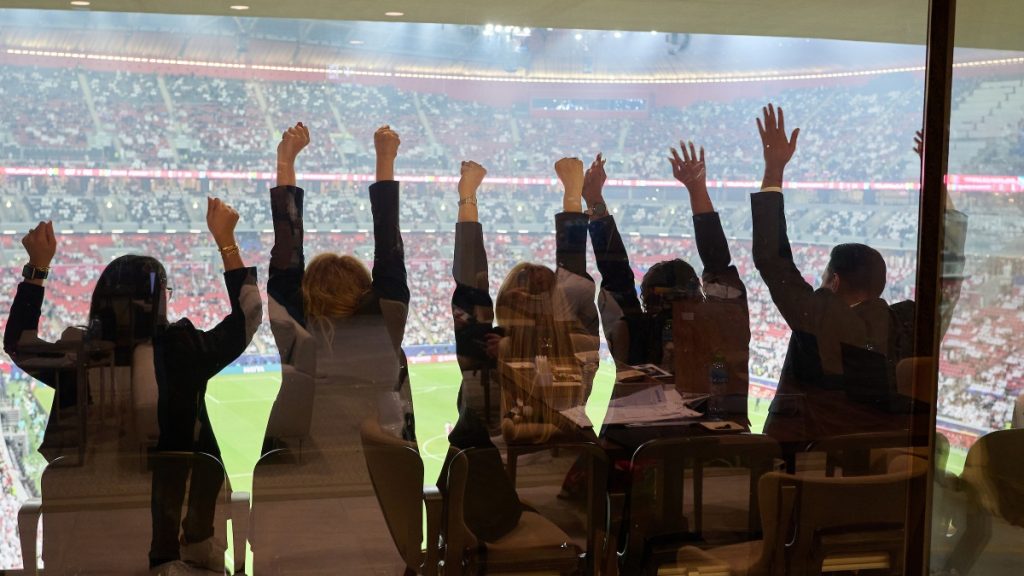
Hospitality has become central to football’s fan experience, and Beyond Hospitality has been delivering it at events including the FIFA Club World Cup, Liverpool FC matches and the UEFA Champions League Final.
Byrom explains the Middle East places higher expectations on service than other regions. “In the Gulf Cooperation Council, if someone acquires hospitality… they expect a level of service that perhaps is not something that, for example, in a country like the USA, the average fan goes into,” he says.
“It’s not just where they sit, but how they’re looked after. Food, beverage, guest support – even without alcohol, the service level doesn’t change.”
Beyond Hospitality has used these expectations to refine its “aspirational pyramid” of offerings, from ultra-premium packages to family-friendly tiers.
Byrom says the region’s standards may not have created global demand for hospitality, but they influence it: “There is an appetite for that, and they are accustomed to the best services… That combination of appetite and sophistication is what makes the Middle East attractive for delivering high-end fan experiences.”
The Middle East on the rise
While Qatar faced a lot of scrutiny ahead of the 2022 World Cup over allegations of sports washing and criticism of its human rights record, the wider Middle Eastern region has steadily established itself as a hub for global sports.
Saudi Arabia’s success in boxing, the region’s embrace of esports and a growing appetite for hosting major international tournaments are making the Middle East increasingly attractive compared with more complicated European bids, such as Italy and Turkey’s joint plan for the 2032 Euros, despite the two countries not even sharing a land border.
“It’s not just Beyond, I think it’s the region itself,” Byrom says. “You look ahead, you’ve already got the FIFA World Cup coming to the Kingdom of Saudi Arabia in 2034. We very much think that probably the best location for the next edition of the FIFA World Cup would be Qatar.
“And we know that obviously there are challenges in terms of the time of the year when it would be played. But on the other hand, we believe the same factors that led to a very successful World Cup in 2022 could support a very successful FIFA Club World Cup in 2029.”
It’s not just football-related events on the radar for the region, as Byrom notes to Insider Sport.
“Then if you look in a different direction, there’s going to be a decision for the host nation for the 2036 Olympic Games. Again, to the extent that Qatar was very successful in delivering the World Cup in 2022, why not the Olympics?
“In fact, the Olympics is probably more suitable to a one-city state than perhaps the World Cup was. So there’s a lot going to be happening in this region.”