


From the expansion of the FIFA Club World Cup to debates over ticket pricing for next year’s World Cup, FIFA events often make headlines for controversy. Too often, the focus is on negatives rather than the benefits these tournaments can bring.
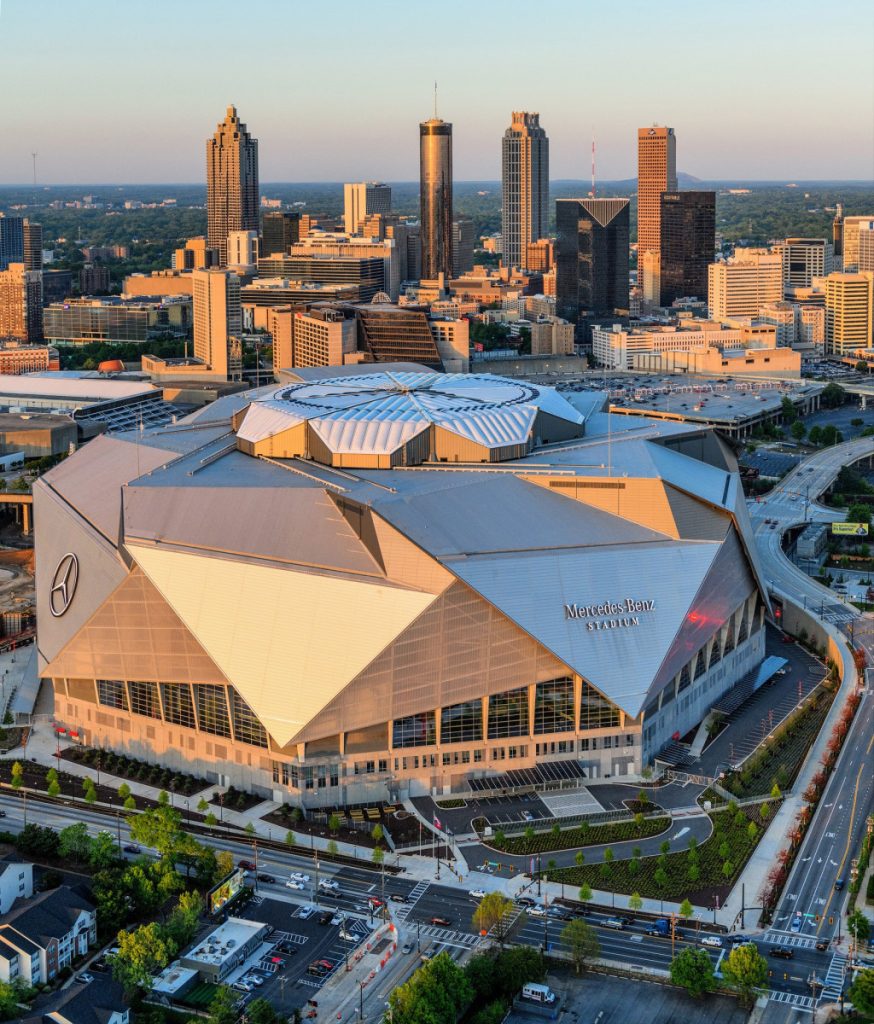
Atlanta clearly understands the upside. Having hosted this year’s Club World Cup matches, the city is set to play a central role in 2026, including a semi-final, at the state-of-the-art Mercedes-Benz Stadium.
To explore the positive impact these tournaments can have on a community, and the preparations needed to make them a success, Insider Sport sat down with Dan Corso, President of the Atlanta Sports Council and the Atlanta World Cup Host Committee.

The expanded FIFA Club World Cup faced criticism for its scheduling, format, and potential strain on players. What are your thoughts on these controversies, and how did Atlanta approach hosting such a debated event?
Atlanta approached the Club World Cup the same way we approach all major events. We prioritised coordination with FIFA, logistics, player experience, and fan engagement, which will be our same approach for 2026.
One of Atlanta’s key advantages is our compact and well-connected urban layout, which significantly reduces logistical burdens on teams and players. Mercedes-Benz Stadium’s downtown location provides proximity to top-tier hotels, and dining options, allowing teams to move efficiently without disruptions. Mercedes-Benz Stadium’s climate-controlled system and retractable roof also helped ensure players had the best possible playing conditions. MARTA’s direct airport connection and expanded public transit options ensure smooth transportation, minimising travel fatigue for fans.
What was the economic impact of hosting the FIFA Club World Cup in 2025, and what are the projections for the FIFA World Cup in 2026 in Atlanta?
The FIFA Club World Cup delivered great results for Atlanta, generating economic benefits across multiple sectors, including tourism, hospitality, retail, and infrastructure development. It also allowed us to have a fundamental understanding of how FIFA works and provided us with a roadmap to more success in 2026. Hosting the FIFA World Cup in 2026 is projected to generate an estimated economic impact of $503m+ to Atlanta and the entire state of Georgia.
The tournament will drive an unprecedented influx of international visitors to our region, with projections indicating significant increases in hotel occupancy rates across our 13,000+ downtown hotel rooms, substantial growth in restaurant business among our 300+ dining options within walking distance of Mercedes-Benz Stadium, and exponential increases in local spending patterns. The hope is that it will create a ripple effect that reaches beyond immediate visitor spending and supports long-term opportunities for the city and state.
What sets Atlanta apart is our strategic approach to maximising economic impact through our “one city, one jurisdiction” model, which enables efficient collaboration among the Atlanta World Cup Host Committee, local government, transportation authorities, and event partners. This unified approach ensures that economic benefits are distributed throughout our city and state, creating lasting value for communities across Georgia.
How does the Atlanta World Cup Host Committee plan to involve local communities in the lead-up to these major events?
The Club World Cup provided helpful insights into working effectively with FIFA. The Atlanta World Cup Host Committee is building on lessons learned to create impactful initiatives for 2026, ensuring residents can fully participate in the excitement surrounding the FIFA World Cup.
For 2026, our FIFA Fan Festival in Centennial Olympic Park will offer residents and visitors enhanced opportunities to experience the tournament atmosphere, whether they have tickets to a match or not. We look forward to featuring live match broadcasts, cultural programming, food vendors, interactive soccer activities, and celebrations of Atlanta’s diverse international communities.
In addition, Mayor Andre Dickens announced Showcase Atlanta – an initiative designed to elevate the city’s identity as a global hub of culture, commerce, transportation, education, and sport by highlighting its unique assets and diverse communities on the road to FIFA World Cup 2026 and other major sporting events and conventions. The program not only spotlights Atlanta on the global stage but also actively engages the local community, working with neighborhoods, small businesses, cultural institutions, and civic groups to help them prepare for the opportunities FIFA World Cup and other major events will bring. Through workshops, partnerships, and storytelling, Showcase Atlanta empowers residents and organisations to be part of the city’s global moment, ensuring that the benefits of hosting the world extend well beyond the stadium.
From a statewide perspective, the Atlanta World Cup Host Committee also announced a partnership with Boys & Girls Clubs of Georgia to create a lasting, statewide impact through a strategic partnership focused on delivering programmes and resources in communities including Albany, Athens, Augusta, Columbus, Dalton, Fayetteville, Gainesville, Macon, Rome, Savannah, Statesboro, Valdosta, Thomasville, Brunswick, and Blue Ridge — ensuring the spirit and legacy of the FIFA World Cup reach every corner of Georgia.
Are there initiatives in place to use these tournaments as a platform to grow grassroots soccer in Atlanta?
Atlanta has actually had programmes like Soccer in the Streets, which provides underprivileged communities access to soccer, since the early 2000s. Beyond just playing soccer, they focus on building community, teaching leadership, and opening new opportunities for young people across Atlanta.
Our innovative StationSoccer initiative has transformed public transit stations into hubs for soccer, complete with pitches that are accessible to everyone. These soccer fields located at Metropolitan Atlanta Rapid Transit Authority (MARTA) stations remove both financial and transportation barriers for youth across Atlanta’s diverse neighborhoods. We recently announced the FIFA World Cup 26 Legacy Project – the development of a new StationSoccer location at the Hamilton E. Holmes MARTA Station, which will serve communities in northwest Atlanta and provide year-round soccer programming.
The Arthur M. Blank U.S. Soccer National Training Center, which will open in 2026, will serve as the permanent home base for the U.S. Men’s National Team (USMNT) and provide world-class training facilities for not only elite player development but also community programming, coaching education, and referee training that strengthens the entire soccer ecosystem in Georgia.
Our goal is that the FIFA World Cup’s impact extends into every neighborhood, creating pathways for young people to engage with soccer regardless of their economic background or previous experience with the sport. The tournament will also serve as a platform for showcasing Atlanta’s soccer culture to the world, demonstrating how a market that wasn’t always known for soccer can develop authentic, sustainable grassroots programming that creates lasting community value.
FIFA has already announced several partnerships with global brands, However, what role do local businesses and organisations play in ensuring Atlanta’s success as a host city?
Atlanta’s strength as a host city lies in our exceptional business, entertainment and hospitality industry. Our culinary scene alone has garnered over 30 James Beard Award semifinalist nominations in recent years, establishing Atlanta as a premier food destination. This culinary excellence becomes particularly significant given Mercedes-Benz Stadium’s prime downtown location, surrounded by an array of high-quality dining options within walking distance.
Atlanta’s Michelin-starred dining scene has rapidly emerged as a culinary powerhouse. Since the launch of the inaugural Michelin Guide Atlanta in 2023, the city has seen impressive growth in fine dining recognition.
Atlanta’s business community plays a critical role in creating the infrastructure and services that support world-class event hosting. Our transportation network, retail establishments, entertainment venues, and professional services sectors all contribute to the seamless experience that international visitors and teams expect from a FIFA World Cup host city.
Are there any new partnerships being developed which focus specifically on the fan and/or team experience?
We’re excited about the partnerships we’ve established for the FIFA World Cup. The Atlanta World Cup Host Committee has secured five premier Atlanta-based companies as Host City Supporters: Cox Enterprises, Georgia-Pacific, The Home Depot, Southern Company, and NAPA Autoparts. These partnerships represent a combined commitment to creating world-class experiences that showcase Atlanta’s unique culture and capabilities.
Beyond corporate partnerships, we’re focusing heavily on community engagement. Mayor Dickens and the City of Atlanta created a new nonprofit called Showcase Atlanta to help small businesses prepare for and benefit from the massive crowds the event is expected to draw. This ensures that the World Cup doesn’t just benefit major sponsors but creates opportunities for local entrepreneurs and small business owners to participate in and profit from this global event.
These partnerships are designed to create authentic Atlanta experiences that go beyond traditional sponsorship activations, ensuring that fans get a true taste of what makes our city special while teams receive the world-class support they deserve.
Having hosted the Club World Cup in 2025 and the FIFA World Cup in 2026 is a rare honour but also a massive undertaking. How is Atlanta preparing for back-to-back tournaments of this scale?
Hosting the FIFA Club World Cup has helped position Atlanta for continued success at the FIFA World Cup in 2026. The Club World Cup provided real-time experience in managing the coordination required for a FIFA tournament, from security protocols and transportation logistics to broadcast operations and fan engagement.
Atlanta’s proven track record of hosting Super Bowls, International matches, college football championships, the 1996 Olympic Games, and now the Club World Cup, demonstrates our city’s expertise in world-class sports events.
Our strong collaboration between local, state, and federal agencies, combined with our strategic infrastructure and passionate sports community, makes Atlanta uniquely prepared to deliver an unforgettable World Cup experience for teams, fans, and the global soccer community.