



The $353 billion question: what’s really driving unprecedented growth in sports franchise values?
Six years ago, the world’s most valuable sports team was worth $5 billion. Today, that figure wouldn’t even crack the top 50. Welcome to the new economics of sports ownership, where the Dallas Cowboys command a $13 billion valuation, four franchises have crossed the $10 billion threshold, and the average team among the elite 50 is worth $7.1 billion – up 22% in just one year.
The collective value of the world’s 50 most valuable sports teams, compiled by Forbes, now stands at more than $353 billion, representing a market that has more than doubled in just four years. Eight franchises posted year-over-year increases of at least 30%, and Formula 1 teams Ferrari and Mercedes have surged 58% since 2023.
The explosive growth in sports franchise valuations can be traced to a single, powerful driver: unprecedented media rights deals which have fundamentally altered league economics.
Last year, the NBA secured 11-year broadcast agreements with ABC/ESPN, NBC/Peacock, and Amazon Prime Video totaling a reported $76 billion, an average of $6.9 billion annually. This represents a roughly $4 billion annual increase over previous agreements. The year prior, the NFL locked in a package guaranteeing at least $125.5 billion through 2033.
These contracts represent a sea change in how media companies value live sports content in an era of streaming fragmentation and declining linear television viewership. Sports remain one of the few guaranteed appointment viewing experiences, and networks are paying premium prices for that certainty.
The impact flows directly to franchise valuations. With larger distributions from leagues – and teams simultaneously making gains in sponsorship and premium seating – NBA and NFL franchises have seen average revenue climb 141% and 91% over the past decade, reaching an estimated $417 million and $662 million respectively. Because sports teams are generally valued on multiples of revenue, this extra income directly drives up sale prices.
In 2013, NBA teams traded at approximately 4.2 times the previous season’s revenue. Today, that multiple stands at 12.9x – a threefold increase that reflects not just growing revenues but also growing confidence in the stability and growth trajectory of those revenue streams.
The NFL’s unmatched dominance
If professional sports is experiencing a financial renaissance, the NFL is its Medici family. The league’s dominance of the valuation landscape is absolute: 30 of its 32 franchises rank among the world’s 50 most valuable sports teams. Only the New Orleans Saints at $5.3 billion and the Cincinnati Bengals at $5.25 billion miss the cut, and even they would have been top-10 franchises just a few years ago.
The NFL’s average franchise value now stands at $7.1 billion, up 25% year-over-year and 59% over three years. But these numbers only hint at the structural advantages which make NFL franchises the gold standard in sports ownership.
At the apex sits the Dallas Cowboys at $13 billion, maintaining their position as the world’s most valuable sports team for the ninth consecutive year. Last season, the Cowboys’ revenue surpassed $1.2 billion – a figure no other team from any sport came within $350 million of matching. The closest competitor, Real Madrid, trails by $105 million.
The Cowboys’ dominance reflects both Jerry Jones‘s aggressive approach to revenue generation and the NFL’s unique economic structure. Unlike other leagues where market size can be destiny, the NFL’s robust revenue sharing model ensures that even small-market teams benefit from national media contracts. This creates a rising tide effect where individual franchise management matters, but league-wide growth lifts all boats.
The NFL’s success creates interesting dynamics for prospective owners. Every transaction resets market expectations. Recent minority stake deals involving the New York Giants and other franchises are already driving valuations upward, as each sale provides new data points for the market to assess comparable values.
The NBA’s growth trajectory

While the NFL dominates in absolute terms, the NBA leads all major leagues in recent growth velocity.
Over the past three years, NBA franchises have seen their average value jump 87%, nearly doubling since fans returned to arenas following the pandemic. That dwarfs the NFL’s still-impressive 59% growth over the same period and dramatically outpaces both MLB and European soccer at approximately 25% and 24% respectively.
The NBA now boasts 12 teams among the world’s 50 most valuable, with the Golden State Warriors leading the charge at $11 billion – the only franchise besides the Cowboys to exceed $10 billion. The Los Angeles Lakers ($10 billion) and New York Knicks ($9.75 billion) round out the NBA’s elite tier, with the Miami Heat making this year’s top 50 in place of the Dallas Mavericks.
Several factors explain the NBA’s exceptional growth trajectory. The league’s new media rights deals, while smaller in absolute terms than the NFL’s, represent a more dramatic percentage increase and signal confidence in the NBA’s upward trajectory. The league’s success in building global audiences, particularly in China and across Asia, provides growth levers unavailable to more domestically focused sports.
Recent transactions are also resetting valuation expectations. Majority stake sales for the Lakers and Boston Celtics this year provided real-world data points that confirmed – and in some cases exceeded – Forbes‘ estimated valuations. The Celtics, valued at $6.7 billion, saw only 12% year-over-year growth, but that masks the significance of an actual transaction at that level providing a floor for comparable teams.
The NBA’s urban orientation also plays a crucial role. Unlike NFL teams, which can succeed in markets like Green Bay, NBA franchises concentrate in major metropolitan areas where real estate values, corporate sponsorship opportunities, and high-net-worth season ticket holder bases create natural advantages. The New York Knicks’ $9.75 billion valuation, despite decades of on-court mediocrity, underscores how much location matters in basketball.
Baseball and soccer: A tale of two challenged leagues
Not every major sport is riding the valuation wave with equal success. MLB and European soccer face structural headwinds that have resulted in significantly slower growth and reduced representation among the world’s most valuable franchises.
MLB’s presence in the top 50 has contracted to just two teams: the New York Yankees at $8.2 billion and the Los Angeles Dodgers at $6.8 billion. The Boston Red Sox, previously a mainstay, have fallen out of the ranking entirely. The league’s average franchise value of $2.6 billion has grown only 8% year-over-year and 25% over three years – respectable in most contexts but anemic compared to the NBA’s 87% three-year surge.
Baseball’s challenges center on media rights complexity and market size dependency. Unlike the NFL and NBA, where national deals dominate revenue, MLB teams have historically relied heavily on regional sports networks. The spectacular collapse of Diamond Sports Group, operator of the Bally Sports RSNs, has exposed the vulnerability of this model. Several teams face significant uncertainty about local media revenue – historically a major value driver – while navigating a fragmented streaming landscape.
Market size also matters more in baseball than football or basketball. The Yankees and Dodgers maintain their valuations because they operate in the two largest US media markets with passionate fan bases and stadium economics that work. Mid-market teams lack these advantages, and the sport’s older demographic profile raises questions about long-term growth trajectories.
The Dodgers’ $6.8 billion valuation, up 25% year-over-year, reflects both the Los Angeles market’s strength and ownership’s aggressive investment in player payroll, most notably the historic Shohei Ohtani contract. But even this growth pales next to NFL teams in similar market; the Los Angeles Rams are worth $10.5 billion, more than 50% higher.
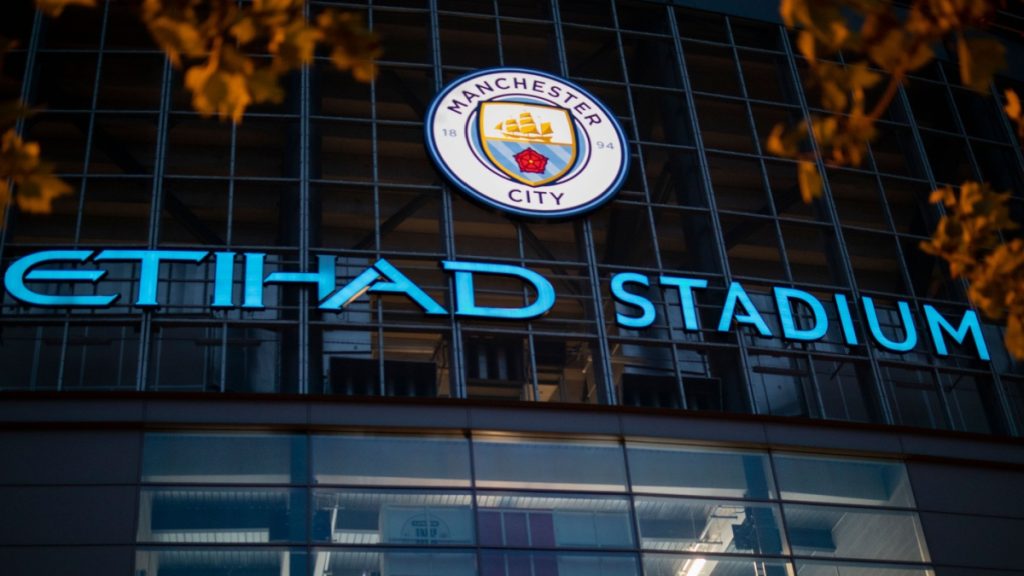
European soccer’s retreat from the valuation rankings is even more pronounced. The sport now accounts for just four of the top 50 teams, down from seven in each of the past two years. Manchester City, Bayern Munich, and Paris Saint-Germain have all dropped off the list.
The top 20 European clubs averaged just 5% year-over-year growth, with an average value of $3.1 billion. Real Madrid, at $6.75 billion, and Barcelona, at $5.65 billion, represent La Liga. Manchester United ($6.6 billion) and Liverpool ($5.4 billion) carry the flag for the Premier League. Notably, all four showed minimal growth: Real Madrid up 2%, Barcelona up 1%, Manchester United up 1%, and Liverpool up 1%.
Several interconnected challenges explain soccer’s struggles, including the fact media rights fees in key European markets have stagnated as the continent’s economic growth has slowed and competition for viewers has intensified. The Premier League’s most recent domestic broadcast deal actually declined from previous agreements.
Rising operational costs compound the problem. Player wages continue to escalate as clubs compete for talent in a global marketplace, while transfer fees remain astronomical. Many clubs carry significant debt loads, with some major teams leveraged to concerning levels. UEFA’s Financial Fair Play regulations attempt to impose discipline, but enforcement remains inconsistent.
The structural differences between European soccer and American sports leagues also matter. The promotion and relegation system, while beloved by fans, creates uncertainty that American franchise owners never face. A single bad season can result in relegation to a lower division, devastating both revenue and valuation. American leagues’ closed systems guarantee participation in the top tier regardless of on-field performance.
Formula 1’s dramatic return
Formula 1’s return to the Forbes ranking represents one of the year’s most compelling sports business stories. Ferrari, valued at $6.5 billion, and Mercedes, at $6 billion, both rank among the top 50 after the series took a year off from Forbes’ analysis. More remarkably, both teams are up 58% since 2023, demonstrating growth rates that rival the hottest NBA franchises.
F1’s resurgence in valuation reflects a carefully orchestrated transformation of the sport’s business model and brand positioning, particularly in North America. Liberty Media‘s acquisition of Formula 1 in 2017 catalysed changes which have fundamentally altered the sport’s economics and appeal.
The Netflix documentary series “Drive to Survive” proved transformative, introducing Formula 1 to American audiences who had largely ignored the sport. The show’s behind-the-scenes access and character-driven storytelling created new fan engagement, particularly among younger and more diverse audiences. This expanded demographic appeal made F1 more attractive to sponsors and media partners seeking to reach these coveted groups.

F1’s North American expansion has been aggressive and successful. The addition of races in Miami and Las Vegas, alongside the existing Austin Grand Prix, created a three-race American swing that generates substantial revenue. The Las Vegas Grand Prix, despite first-year operational challenges, demonstrated the sport’s ability to create spectacle and command premium pricing in the US market.
The sport’s luxury brand positioning also drives valuations. F1 teams partner with premium automotive, watch, and fashion brands in ways other motorsports cannot match. Ferrari’s valuation reflects not just its racing success but its position as a luxury lifestyle brand. Mercedes leverages its F1 presence to reinforce its automotive brand’s performance credentials.
The 58% growth in team values since 2023 suggests the market believes F1’s transformation is sustainable rather than a temporary surge.