


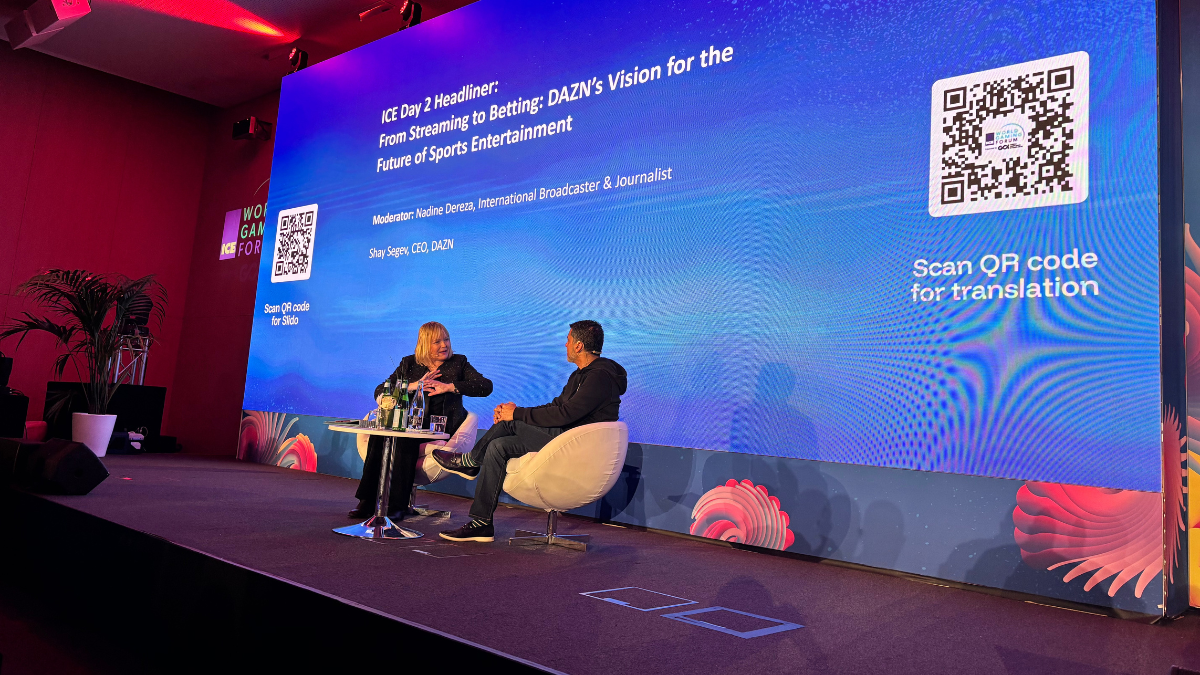
The streaming giant is building a single global destination for sport as shifting fan behaviour, piracy pressures and the rise of integrated betting reshape the sports media landscape.
DAZN CEO Shay Segev says the streaming giant is building a single global destination for sport – a platform designed to do for live sport what Spotify did for music.
Speaking at ICE today (January 20), Segev argued the industry is at a pivotal moment, with consumer behaviour, technology and piracy reshaping how fans engage with sport.
Segev described DAZN as “relatively a young business”, but one created with a clear vision: to lead the shift from traditional broadcast models to a personalised, digital‑first ecosystem. “Our vision in DAZN is that we want every customer around the world to use DAZN as the go‑to, as the destination platform for sport,” he said.
He drew a direct comparison with the transformation of the music industry, where Spotify’s subscription model and frictionless user experience helped eliminate piracy and redefine consumption. “What solved [music] piracy was actually the user experience,” he said. “Spotify just becomes a convenient product… you pay nine, ten dollars a month, you get all the music you want. You didn’t need to download illegal songs.”
Sport, he argued, is now at the same inflection point.
A single platform for a fragmented fan journey
Segev said today’s sports fan is forced to navigate a fragmented landscape consisting of streaming apps, betting apps, ticketing platforms, merchandise stores and social channels. DAZN’s long‑term strategy is to collapse that fragmentation into one unified experience.
“If you think about sport, you want to watch live content, you want to watch news, you want to get pictures, you want real‑time stats, you want communities and social – everything in one destination,” he said. “We’re building the global daily destination of a global platform for sport fans.”
This shift is driven by changing consumption habits. Fans increasingly watch on mobile, prefer short‑form formats, and expect personalised feeds. “With technology, with AI, we can create a lot of formats which are short formats, which are more relevant for consumers who don’t have 90 minutes to watch the game,” Segev said.
DAZN is also pushing into interactive features, moving sport from a “lean‑back” to a “lean‑forward” experience. Products like Fanzone – which combines watch‑along chats, prediction games and community features – are designed to deepen engagement.
DAZN Bet: convergence, not a bolt‑on
Segev positioned DAZN Bet as a natural extension of the platform rather than a standalone sportsbook. “People who bet on sport are watching sport. What do they watch? They watch on DAZN,” he said.
He stressed DAZN Bet is not intended to replicate traditional operators. “We don’t want to create just another betting site,” he said. Instead, the aim is to build a more social, contextual betting experience that complements viewing rather than interrupts it.
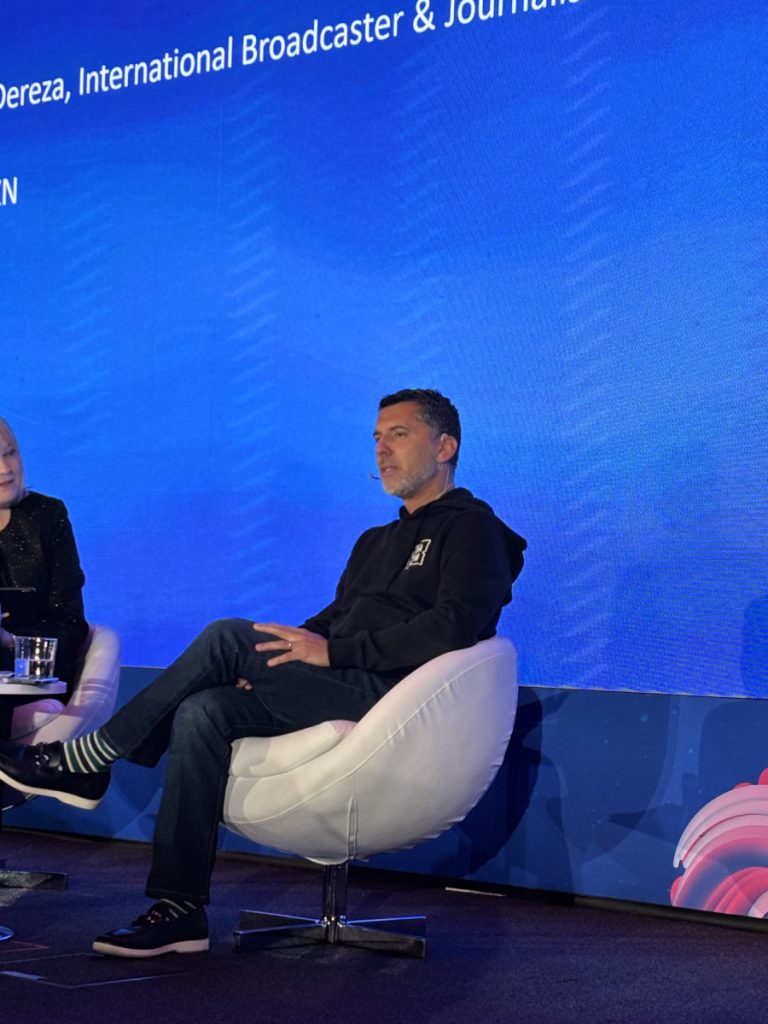
“When you go to many of the brands in this event… you go because you want to bet. When you go to DAZN, you go because you like sports,” he said. “If you want to bet, it’s a completely optional product.”
Segev also argued that betting revenues – alongside subscriptions and advertising – ultimately strengthen the wider sports ecosystem. “The more we can monetise our platform, the more we can invest back to the league,” he said. “It’s actually a very positive cycle.”
Piracy: the industry’s biggest threat?
Segev was blunt about the scale of the piracy problem. “Piracy is by far the biggest threat for the sport rights and sport media industry,” he said.
But again, he returned to the Spotify analogy: enforcement alone won’t solve it. The answer is a better product.
“We want to make sure we build DAZN to a place where the user experience is such that even if you try to pirate the content, you will lose a lot,” he said. Features like personalisation, interactivity and community are “things that piracy will never be able to replicate”.
While DAZN operates localised services in more than 20 countries, Segev said the company is increasingly shifting toward global partnerships with leagues and federations. He cited boxing, the NFL, NHL, FIBA and DAZN’s joint venture with FIFA as examples of rights holders seeking a single digital partner with worldwide reach.
“We have today paying and not paying customers from every country around the world,” he said. “We help leagues and organisations reach more customers on a global scale.”