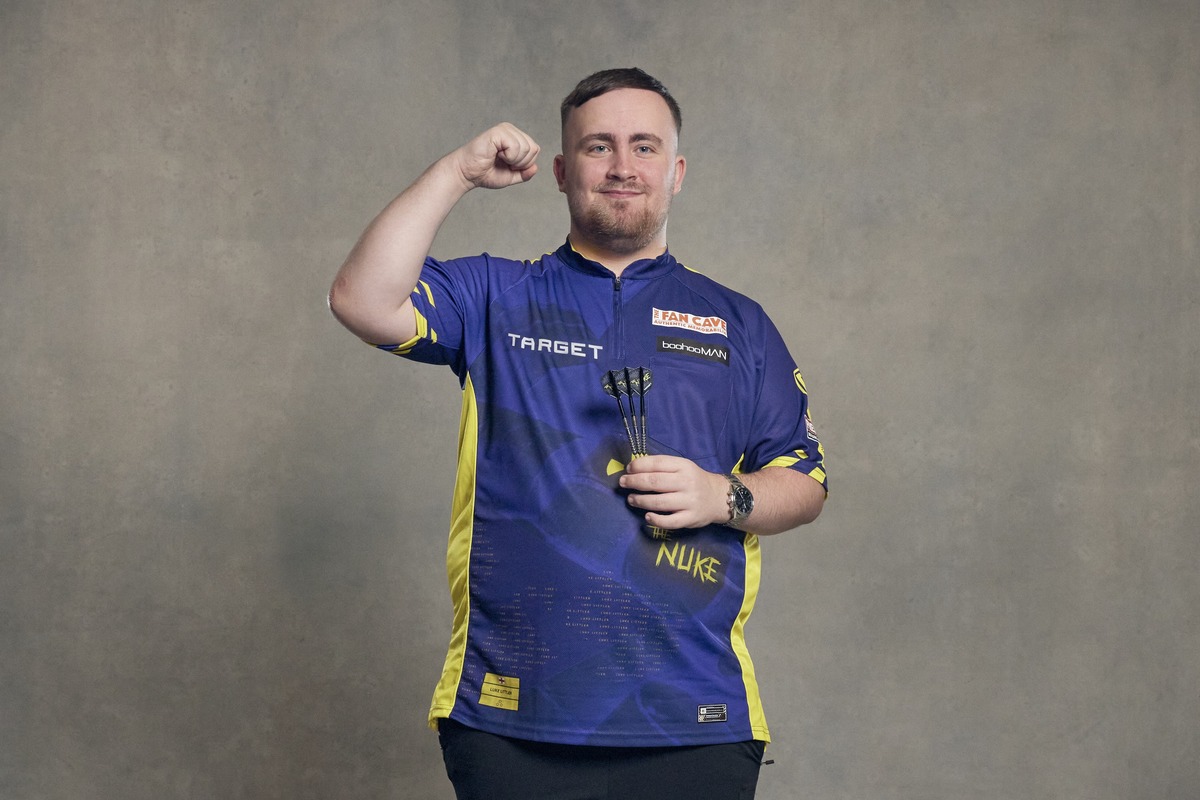



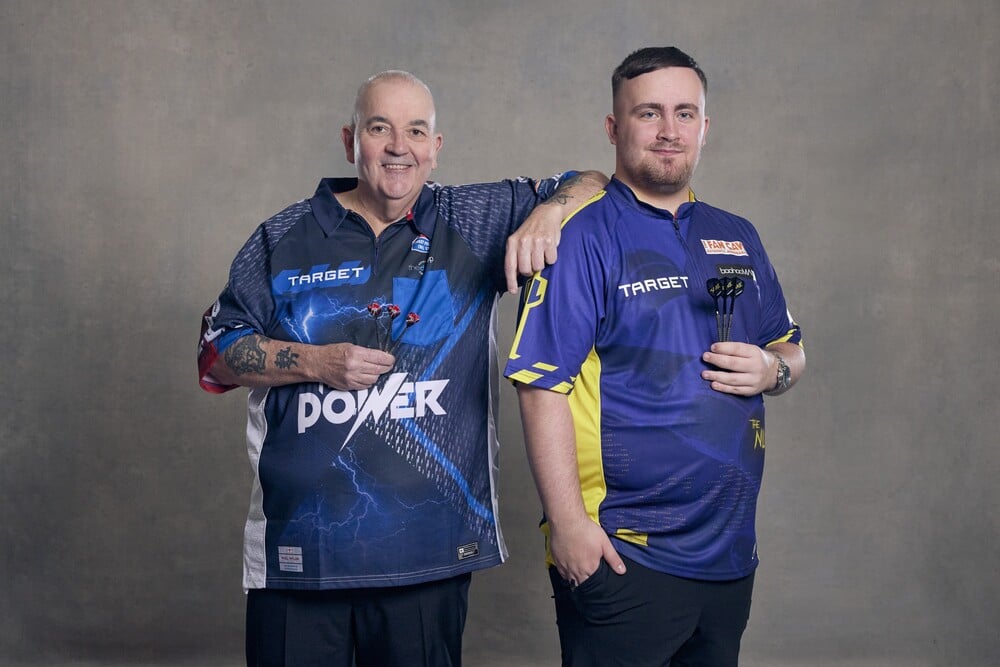
Luke Littler may be the face of darts’ new era, but he is far from the only reason behind the sport’s explosive rise. As younger stars, broadcasters and brands reshape its image, darts is becoming a global entertainment business built for the digital age.
Dart’s isn’t a proper sport.
A few years ago, this line of thinking would have been common among the professional sporting world. But with the likes of Luke Littler and Gian van Veen leading a youthful resistance, darts has become a commercial powerhouse with broadcasting and commercial revenue rising exponentially.
On 3 January 2026, Littler cemented his position as the global face of darts by winning his second consecutive World Championship against van Veen 7-1 at Alexandra Palace.
With a combined age of just 41, Littler (18) and van Veen (23) became the youngest pair of finalists in the tournament’s history.
Darts is beginning to shed its pub-sport aesthetic. While the sport still thrives on the showmanship and authenticity of its crowds, its competitors are younger, more prolific and increasingly valuable marketing brands.
It may have taken darts longer than other sports to embrace a commercial makeover, but the sport is now experiencing arguably the most successful growth period in its history; and it does not rest solely on Littler’s shoulders.
While the now 19-year-old is a generational phenomenon in the mould of LeBron James or Lamine Yamal, darts has simultaneously grown its audiences via digital and social platforms, with many of its leading stars, including Littler and van Veen, still under the age of 25.
These young players have become the poster boys for darts’ digital and commercial transformation, with the Professional Darts Corporation (PDC) at the centre of the sport’s rapid growth.
Speaking to Insider Sport, Matthew Porter, CEO of the PDC, notes the 2026 World Darts Championship Finals recorded five million viewership, sold 110,000 tickets in total and hit new international audiences as the sport sets about to grow its global and digital footprint.
“The fact that we have younger players now helps us to hit a younger digital-first audience,” says Porter.
“The organic content that they produce is very authentic and that resonates with young people. It helps us to evolve our own content strategy and make sure our own content stays relevant to the new audience to the sport, but also bear in mind that we also have a strong legacy audience that needs serving as well.”
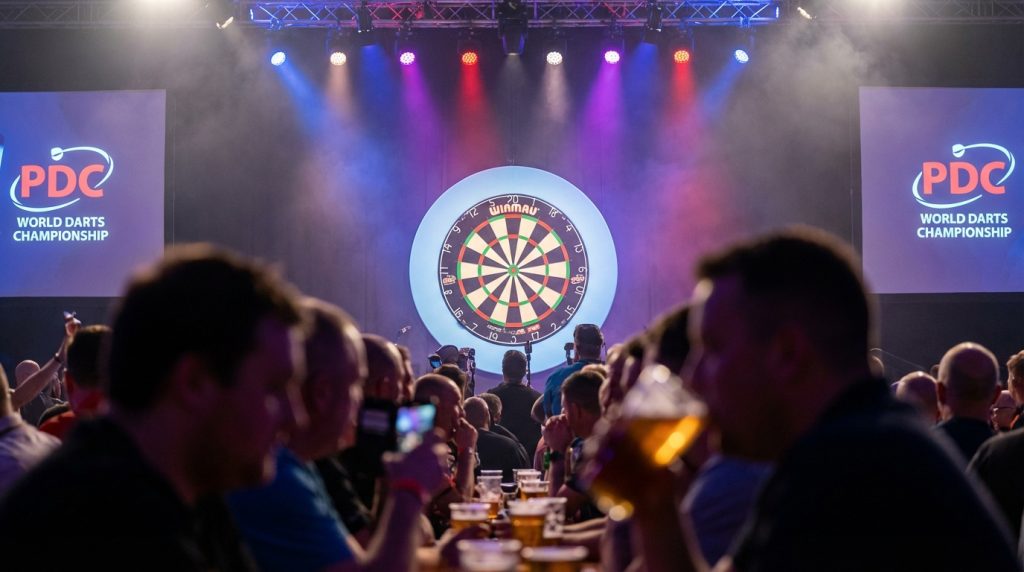
Broadcasting: darts’ biggest advert?
While Porter champions the explosion of short-form digital content as a key driver of darts’ latest growth phase, he also stressed the importance of maintaining long-form programming to avoid alienating traditional audiences
“It’s important to make sure your content hits on both levels,” explains Porter. “You don’t want to dumb it all down and make it too disposable, you still need long-form content and serious content, so it’s hitting it on both levels.”
Sky Sports has been a PDC broadcaster partner since 1993, televising its first World Championships that same year. The UK broadcaster currently holds rights to the World Championships, Premier League, World Matchplay, World Grand Prix and Grand Slam of Darts under a deal running until 2030.
To broaden its reach across the UK, the PDC also maintains a free-to-air broadcast agreement with ITV, which broadcasts events including the UK Open and the World Masters.
As Porter explains, broadcast remains the PDC’s “biggest advert” for growing the sport, not just in the UK, but increasingly across the US, Europe and new emerging markets like the Middle East and South Africa.
“When we go into a new country with an event or launch domestic content there, it will be because of the success of our own broadcast in that territory,” says Porter.
“It’s vitally important for our growth, it’s been the reason over the last two decades our sport has grown from being a predominantly UK-based sport to a genuine international/global sport. It’s the tool that we still use the most for spreading the word into countries where they know what darts is but don’t necessarily know what professional darts is.”
Professionalisation of darts players
Cast your mind back to the 1980s and some of the sports’ greatest players were competing in the World Championships on national TV while drinking alcohol on stage. Figures such as Eric Bristo and Jocky Wilson would often be seen consuming alcohol near the oche to settle the nerves of performing in front of thousands.
But it was also because it was simply part of darts culture at the time.
Although alcohol consumption on stage was banned in 1989, many players still drank before televised matches. One notable player was Andy Fordham, who admitted to drinking 24 bottles of beer before his 2004 British Darts Organisation (BDP) World Championship victory to help maintain his concentration.
Despite attempts to clean up darts’ image for broadcasters and commercial partners, many players remained tied to the lifestyle traditionally associated with the sport.
But as darts attracted larger broadcast deals and sponsorship opportunities, a new generation of younger and more professional players began to emerge.
The average age of the top 10 seeds at the 2004 PDC World Championship was 39.4. By 2026, that figure had fallen to 34.9. To put this into perspective, Littler was not born until 2007, while van Veen was only two-years old when Phil Taylor won his 9th World Championship.
Much like elite football academies that begin developing players from the age of four or five, stars such as Littler and van Veen began training seriously at similarly young ages.

Speaking to Insider Sport in December 2025, James Tattersall, CEO of Target Darts, revealed the darts manufacturer and management company had recognised Littler’s potential as early as 12-years-old.
His meteoric rise as a relative unknown to World Championship runner-up at the 2024 World Championships at 16-years-old was not only one of the biggest star-making performances in sports of the last decade, but was also emblematic of the sports’ professionalisation.
Now, Target Darts is aiming to usher in the next generation of darts players with their academies. Tattersall explains the investment is being driven by “genuine interest and demand” from younger audiences.
“It is crucial for the sport’s long-term growth that there is genuine interest and demand coming from the younger generations,” says Tattersall.
“We are investing heavily in our youth programmes to help identify and support the next wave of talent. Our Target Darts Academies are training future stars across the UK. We have ambitious plans to expand globally too. Our academy in Shanghai is already helping over 200 kids develop a career in darts.”
Are you not entertained?
Not only are darts players getting younger, they are also getting faster – producing checkouts at rates previous generations could scarcely match.
The 2026 World Championships saw the most 170 checkouts, also known as the ‘Big Fish’, in PDC history at 17. van Veen registered the most with three, followed by Littler and Nathan Aspinall (34-years-old) with two.
The tournament also produced a record 1,127 maximum 180s, while Littler posted a 106.02 average in the final against van Veen, the sixth-highest average ever recorded in a World Championship final.

Lee Huxtable, Chief Manufacturing Officer at Nodor International, the largest dart board manufacturer in the world, believes these rapid checkouts from younger players is a result of the professionalisation of the sport.
“Today’s elite players are practising more hours than ever and playing in a competitive calendar that demands consistent repetition,” explains Huxtable. “That level of muscle memory naturally produces quicker, more fluent throwing rhythms – especially in finishing moments where confidence is high and the target is clear.
“Improved density, better‑engineered sisal in boards, even under heavy use. The darts thrown today have more stable flight systems – including high precision moulded designs – helping to reduce wobble and improve trajectory reliability.
“The top professionals are more rhythm‑driven than ever, and the reliability of modern boards and darts – including the innovations we’ve brought to the market – gives them the confidence to finish legs quickly without sacrificing accuracy.”
Young players also benefit from access to elite-level equipment far earlier than previous generations. Where dartboards were once largely confined to pubs, companies such as Winmau (a subsidiary of Nodor) and Target Darts have identified an opportunity to make advanced equipment more accessible to younger players entering the sport.
“The rise of young stars is no coincidence,” says Huxtbale. “They’ve grown up in a technological ecosystem that gives them better equipment, better data, better practice environments, and a clearer pathway to elite competition. Modern innovations haven’t created their talent – but they’ve certainly accelerated how quickly that talent can reach world-class standards.”
Tattersall adds: “Ultimately our goal is to make darts accessible to everyone regardless of age or experience.”
The speed and intensity of modern darts, combined with the rise of short-form digital content consumed by younger audiences, has helped transform this new generation of players into mainstream sporting personalities.
The commercialisation of darts
As darts continues its professional evolution, commercial interest has naturally followed. With audiences now reaching into the millions, brands are increasingly investing in the sport’s expanding reach and younger demographic.
The ongoing 2026 Premier League Darts season is currently backed by BetMGM through a five-year sponsorship agreement, while Paddy Power recently renewed its title sponsorship of the PDC World Darts Championship; a deal which now sees more than £1m awarded to the tournament winner.
That prize money helped make Littler a teenage millionaire in January, although many would have assumed he already was one.
“Luke Littler has definitely put darts on the map for younger audience groups”
Beyond prize earnings, Littler and his management team at Target Darts have secured partnerships with brands including Xbox, BoohooMAN andKP Nuts. However, it was his long-term deal with Target which arguably best symbolised the commercial growth of both Littler and the sport itself.
The teenager signed a multi-million-pound management agreement with the company in what was widely described as the largest commercial deal ever struck between a darts player and a brand.
“Luke Littler has definitely put darts on the map for younger audience groups, and that momentum gave us the opportunity to work on growing this sport even more,” says Tattersall.
Who’s next?
While Littler appears destined to remain the face of darts for years to come – potentially even challenging Phil Taylor’s record of 16 world titles – he is far from the only young player benefitting from the sport’s digital and commercial rise.
Van Veen entered the mainstream with his runner-up performance at the 2026 World Championships and currently ranked third in the world. Meanwhile, Luke Humphries – at the young age of 31 – has won nearly every major championship there is to win.
There is also Beau Greaves, the 22-year-old widely regarded as one of the brightest stars in the women’s game. Greaves mirrored Littler’s rapid ascent by defeating the men’s world champion during the semi-finals of the 2025 PDC World Youth Championship.
With Greaves, Littler and talents like Josh Rock all part of the Target Darts roster, Tattersall says the company now feels a responsibility not only to support players competitively, but also help develop their commercial profiles as the sport grows.
“In the same way that we believed in and invested in Luke when he was a young player, we continue to support both our pro level players and those emerging through our youth development programmes,” says Tattersall.
“Our sport team works closely with every member of Team Target to ensure they are supported as players and as professionals. On top of this, our Junior Darts Series is also aimed at finding the future stars and supporting them from a young age, so we can elevate the development systems seen in other sports to the new standard within darts.”