


Record levy income has provided short-term reassurance for British racing, yet the Levy Board’s latest report suggests regulatory-driven changes in betting behaviour are quietly reshaping the sport’s financial foundations
British horse racing may have recorded its strongest betting levy return since the 2017 reforms, but the latest annual report from the Horserace Betting Levy Board suggests that regulatory pressure on gambling is already altering the economics that underpin the sport’s finances.
According to the Board’s latest report, levy income for the year to March 31, 2025 reached almost £109m, marking a fourth consecutive annual increase and the highest yield since the current levy framework was introduced. On the surface, that looks like welcome stability for a sport whose commercial fortunes remain closely tied to betting activity.
Dig deeper, however, and the report carries a clear warning that the amount bet on British horse racing continues to fall, and the Board points directly to risk-based financial checks as one of the factors reshaping betting behaviour.
According to the HBLB, average betting turnover per race fell by around 8% compared with 2023–24, extending a longer-term decline that now amounts to a 19% drop versus 2021–22. This erosion has occurred even as levy receipts have grown, a divergence that the Board describes as increasingly difficult to ignore when planning long-term funding for the sport.
“With Levy income having risen for a fourth consecutive period, it may seem counter-intuitive that the Board continues to express caution about the sustainability of this trend,” said Alan Delmonte, CEO of the HBLB.
A Levy boost built on margins, not volume
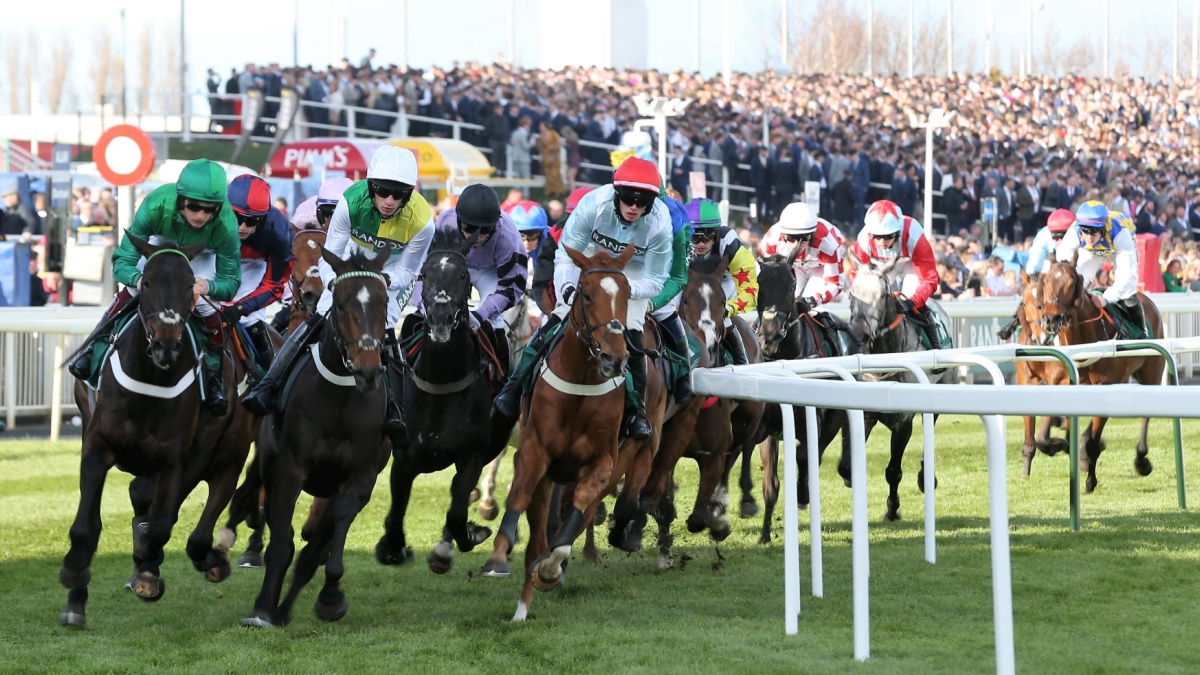
The explanation for this apparent contradiction lies in bookmaker margins. Levy income is calculated as a percentage of gross profits on British racing, not on total turnover. In 2024–25, those profits were bolstered by a combination of bookmaker-friendly results, particularly at the Cheltenham Festival, and wider shifts in how operators manage risk and customer exposure.
“The last two months, February and March 2025, saw bookmakers’ gross profits well above recent norms, with March’s outturn reflecting particularly bookmaker-friendly results at the Cheltenham Festival,” Said Delmonte.
“This is not the first time in recent years that Cheltenham has had a significant impact on yield, a reflection of the essential unpredictability of the sport.”
The Board notes that “risk-based and other financial checks” implemented by betting operators are said to be having a particular effect on higher-staking customers. Combined with changes to promotional strategies and the rising cost of turnover-based commercial rights deals, the result has been a betting market generating more profit from less volume.
For horse racing, this matters as a funding model which depends on margins rather than participation is inherently more volatile. It is also more sensitive to regulatory and policy intervention, something the Board repeatedly alludes to when explaining its continued caution despite rising income.
Why regulators matter to sports funding
The Gambling Act review and the Gambling Commission’s programme of financial risk checks are often framed as consumer protection measures. What the HBLB report shows is that their impact extends beyond compliance and into the mechanics of sports funding.
While the Board stops short of drawing firm causal conclusions, it notes risk checks are listed alongside rights inflation and promotional changes as material factors influencing betting activity. For a statutory body which relies on bookmaker data it does not fully control, this acknowledgement signals a growing awareness that regulatory policy is becoming a structural variable in racing’s commercial outlook.
This has implications beyond racing. Football, esports and other sports with significant betting-linked revenues are exposed to similar dynamics. If high-staking activity is constrained and operators respond by tightening promotions or reshaping product mix, the downstream effects may not show up immediately in headline revenues but will still alter funding profiles over time.
Prudence over expansion
Despite the higher-than-expected levy yield, the HBLB has resisted calls to materially increase annual distributions. Year-end reserves stood at £58.7m, well above the Board’s preferred range, yet the report argues that releasing additional funds on the back of short-term income swings would be unsustainable.
This caution reflects the unpredictability baked into racing’s betting-driven model. Levy performance can be heavily influenced by a small number of events late in the financial year, Cheltenham chief among them. As the Board notes, the sport’s flagship festival can have an outsized effect on annual yield depending on results, underlining the difficulty of forecasting income with confidence.
Instead, the Board continues to emphasise “smoothing” expenditure and maintaining reserves as a buffer against downturns. For 2025–26, it is budgeting on levy income of £103m, implying a planned operating deficit that it considers manageable given current cash levels.
Funding a sport under scrutiny
Nowhere is this tension more visible than in prize money and fixture funding. HBLB increased its prize money contribution in 2024, aligning with the launch of Premier Racing, a major restructuring designed to concentrate value around the sport’s most commercially attractive fixtures. But even here, the Board insists that funding must increasingly be justified by measurable outcomes rather than tradition.
The report makes clear that future investment, whether in fixtures, marketing or innovation, will require clearer objectives and post-funding evaluation.