


Tour de Suisse has terminated its sponsorship agreement with cryptocurrency exchange Zondacrypto following reports of operational and financial difficulties
You would be forgiven for not hearing much about Zondacrypto within sporting circles until recently. Unlike Crypto.com’s F1 branding blitz or the now-infamous collapse of FTX’s global sports empire, the Polish-founded cryptocurrency exchange has largely built its sporting footprint quietly, focusing on European football, cycling and Olympic partnerships rather than stadium naming rights or Super Bowl commercials.
Yet over the past week, the company has found itself at the centre of growing scrutiny after reports emerged linking financial and operational difficulties to sponsorship uncertainty across several sports properties. Most visibly, the Tour de Suisse has now confirmed it has terminated its partnership with the crypto firm with immediate effect.
The development is one of the clearest examples yet of a sports organisation publicly distancing itself from a crypto sponsor during the post-FTX era, a period in which rights holders have become increasingly sensitive to financial stability, regulatory scrutiny and reputational risk within the digital asset sector.
Tour de Suisse pulls sponsorship
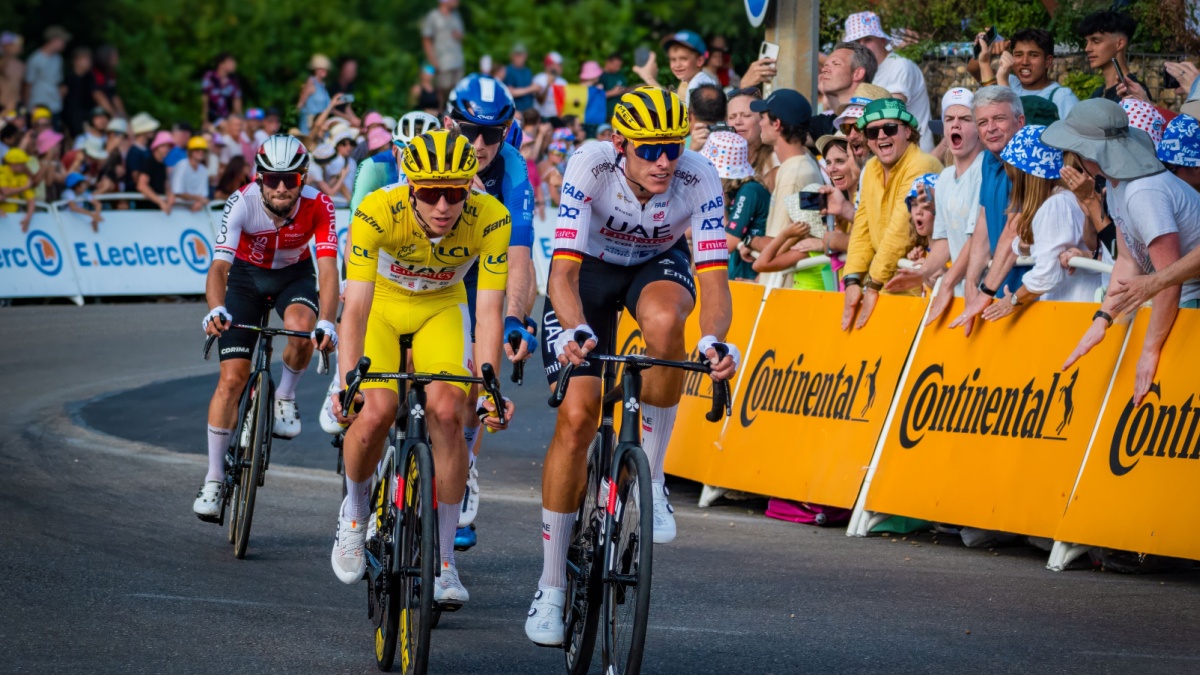
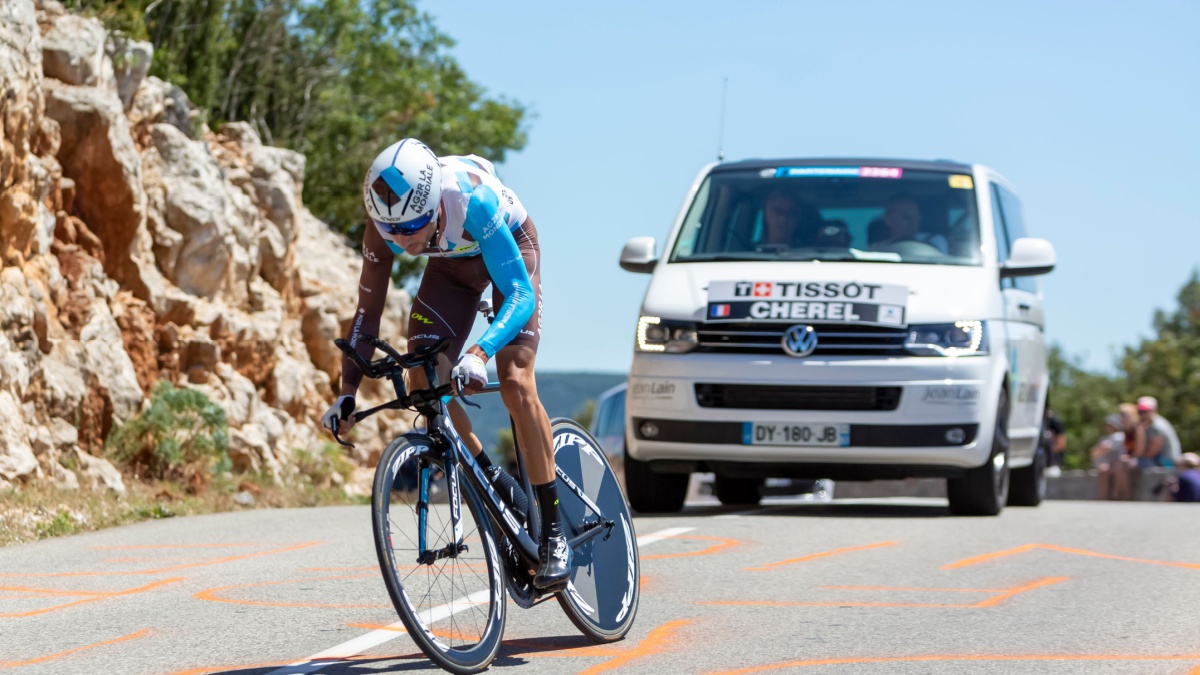
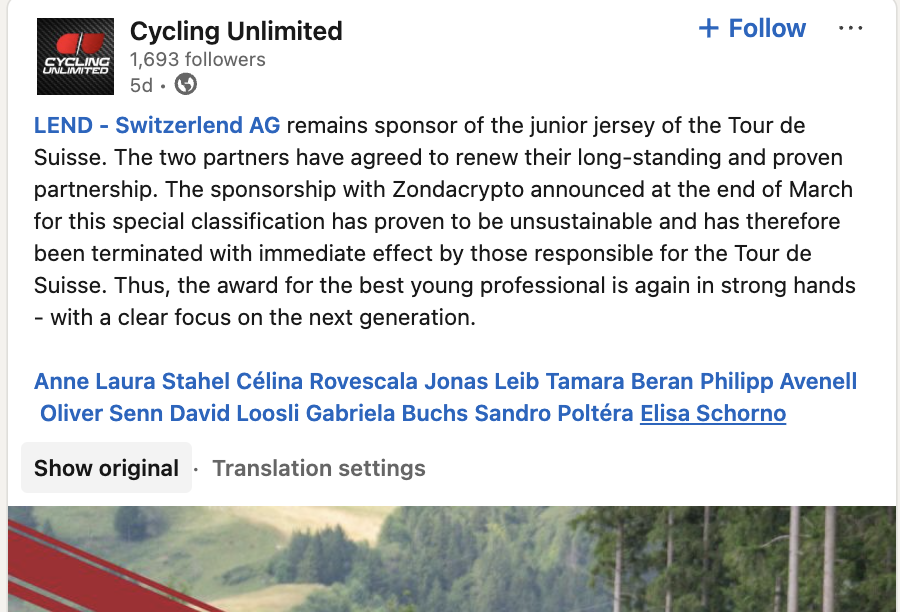
Swiss cycling organisers confirmed to multiple media outlets that the Tour de Suisse had ended its sponsorship arrangement with Zondacrypto after only a matter of weeks. The exchange had been announced in March 2026 as sponsor of the race’s young rider classification jersey.
In a statement cited by cycling publication Escape Collective, organisers said the partnership had “proved unsustainable and was therefore terminated with immediate effect”.
The sponsorship has reportedly now reverted back to Switzerland Tourism AG.
The speed of the termination is notable given the relatively short duration between announcement and cancellation. In cycling, where sponsorship turnover is common but often negotiated months or years in advance, abrupt exits can create logistical and reputational complications for event organisers.
The move also places fresh attention on crypto’s relationship with professional cycling, a sport which has increasingly relied on non-traditional sponsors as financial pressures across media rights and team funding have intensified.
Questions emerge around broader sports portfolio
While the Tour de Suisse termination is the clearest confirmed withdrawal so far, questions are now emerging around Zondacrypto’s wider sports sponsorship portfolio.
The company has spent recent years aggressively expanding across European sport, particularly in football and cycling. Partnerships listed by the company include Italian football clubs Parma Calcio and Atalanta BC, alongside cycling involvement through Canyon//SRAM zondacrypto and other endurance sport initiatives.
Reports from Polish and cycling media have also suggested the Polish Olympic Committee (PKOl) has begun distancing itself from the exchange after alleged payment issues. German cycling publication Tour Magazin reported that branding associated with the exchange had been removed from the committee’s headquarters.
However, at the time of writing, there does not appear to be a publicly available formal statement from PKOl confirming termination of the partnership itself. Likewise, there is currently no evidence that football partners such as Parma or Atalanta have publicly suspended or withdrawn from agreements with the exchange. zondacrypto’s website continues to list several sporting relationships as active.
Canyon//SRAM zondacrypto has also not publicly announced any changes to its naming rights arrangement.
Regulatory scrutiny compounds pressure
The sponsorship concerns have emerged alongside growing scrutiny surrounding the company’s operations.
In May 2026, Estonia’s Financial Supervision Authority issued a public investor warning connected to alleged disclosure concerns relating to the “TeamPL” token associated with the platform.
Separately, Polish media reports have alleged customer withdrawal difficulties and issues involving access to cold wallets reportedly containing approximately 4,500 Bitcoin. zondacrypto has publicly denied insolvency concerns.
The exchange has historically attempted to distinguish itself from offshore crypto competitors by heavily emphasising its European regulatory positioning. Since rebranding from BitBay to Zondacrypto in 2021, the company has marketed itself as a compliance-focused exchange prepared for Europe’s incoming Markets in Crypto-Assets (MiCA) regulatory framework.
That positioning may explain why the recent scrutiny has attracted disproportionate attention relative to the company’s overall market size. Unlike some global exchanges which have historically operated outside Europe’s regulatory perimeter, Zondacrypto’s commercial identity has been built around trust, regulation and institutional credibility.
Crypto sponsorship enters another stress test
The situation also reflects wider tensions surrounding crypto sponsorship in sport following the collapse of several major digital asset firms over recent years.
Between 2020 and 2022, sports organisations across football, F1, basketball and esports rapidly embraced cryptocurrency partnerships as exchanges and token platforms competed for mainstream visibility. The collapse of FTX in late 2022, alongside broader market instability, triggered a significant pullback across the sector.
Since then, sports properties have generally become more selective about digital asset partnerships, with increased emphasis placed on licensing, compliance structures and long-term financial sustainability.
Cycling, however, has remained comparatively exposed to sponsorship volatility because of its economic structure. Unlike closed-league sports with centralised commercial revenues, professional cycling teams and races remain heavily dependent on sponsorship agreements for operational funding.
That dependence has made the sport both attractive and vulnerable to emerging sectors seeking rapid international visibility.