


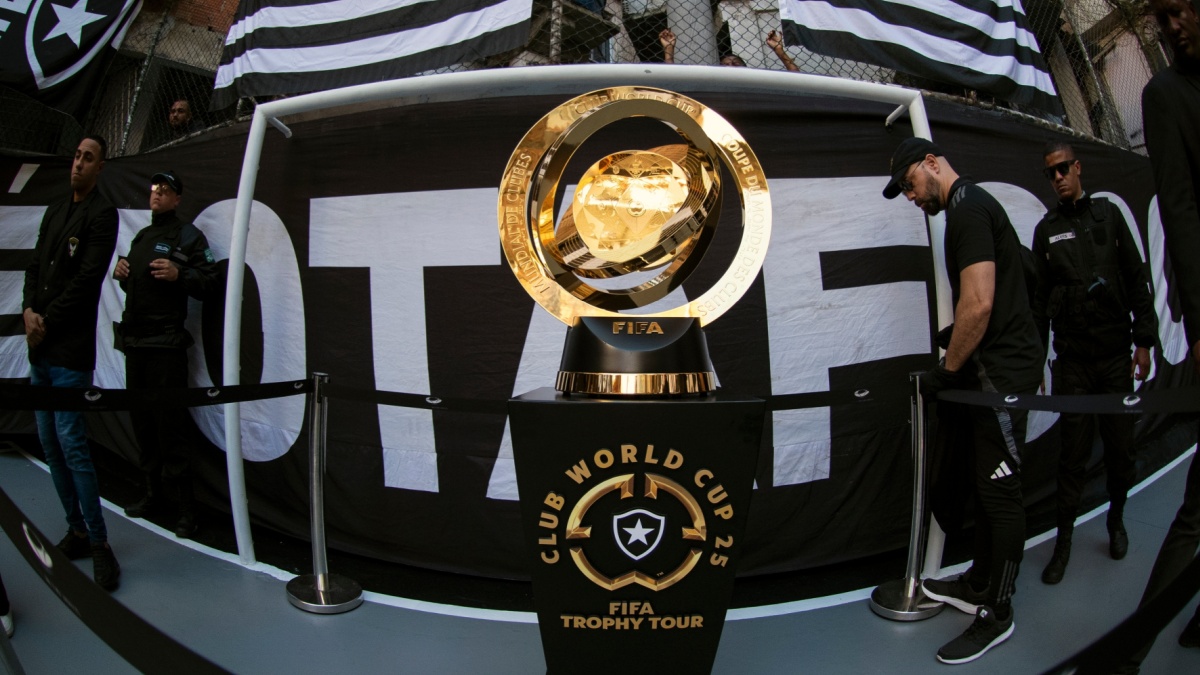
Initial scepticism around the Club World Cup was tempered by its promise to be staged every four years, but with clubs eyeing the financial rewards, pressure is growing to make it a more regular fixture.
FIFA could potentially make the Club World Cup a biannual competition instead of the initial plans to hold it every four years, according to a report from The Guardian.
Chelsea FC became the inaugural winners of the reformed Club World Cup in the US last July, defeating Paris Saint-Germain 3-0 in the final and pocketing $114m (£85m) in total prize money.
That windfall, greater than the Champions League payout, reportedly caught the attention of both participants and non-participants in the 2025 edition.
At a FIFA meeting in Miami last June, word of the total prize money began circulating, with Real Madrid among those said to have pushed for the tournament to be staged every two years instead of four.
Held during the summer transfer window, the $114m prize gave Chelsea a significant financial advantage in player recruitment, helping offset pressures linked to Profit & Sustainability Rules (PSR).
Clubs which missed out, including FC Barcelona, Manchester United, Liverpool and Napoli, have also voiced support for a shift to a biennial l basis.
Qualification process for 2029 Club World Cup
There were also questions raised by media and TV pundits, including Sky Sports’ Jamie Carragher, over why recent domestic champions such as Liverpool, FC Barcelona and Napoli did not qualify for the Club World Cup.
For the 2029 edition, 12 European clubs will be granted entry. Four spots are reserved for Champions League winners from the 2024/25 through to 2027/28, with Paris Saint Germain already securing their place after lifting the trophy earlier this year.
The remaining eight positions will be determined by UEFA’s coefficient rankings. If a club wins the Champions League more than once during the qualifying window, the spare spot will go to the next highest-ranked team in the coefficient table.
UEFA’s ranking system is based on performances across the Champions League, UEFA Europa League and UEFA Conference League. Clubs earn two points for a win, one point for a draw, and one point for qualifying to the next round of a UEFA competition.
This structure means the 2028/29 Champions League winners will not book a ticket to the 2029 Club World Cup but instead face a four-year wait until 2033.
Or FIFA may choose to tweak the format once again.
The mounting football schedule
Any proposal to hold the Club World Cup every two years is contingent upon an agreement between FIFA, the European Clubs Association and the World Leagues Association.
The current footballing schedule is fixed up until 2030, comprising the regular domestic leagues and continental competitions across the world. This also includes the 2028 EUROS and the FIFA World Cup in 2026 and 2030.
Yet recent reforms, including the expanded Champions League and the revamped Club World Cup, have already added extra fixtures to an increasingly congested schedule.
FIFPro, the global players’ union, has repeatedly warned against the growing demands placed on athletes. High-profile stars such as Ballon d’Or winner Rodri and England captain Harry Kane have voiced concern, with Kane admitting he doesn’t believe players are being heard when it comes to welfare.
“I don’t think the players are listened to that much, if I’m totally honest,” said Kane. “But also everyone wants their piece, their tournament, their prize, and the players are kind of the people who have to get on with it.”