


Ahead of FIFA World Cup 2026, EMW Global’s Athlete Brand Economy Report maps where athlete brand value is being built, and where it isn’t. Petr Čech has a view on what makes the difference
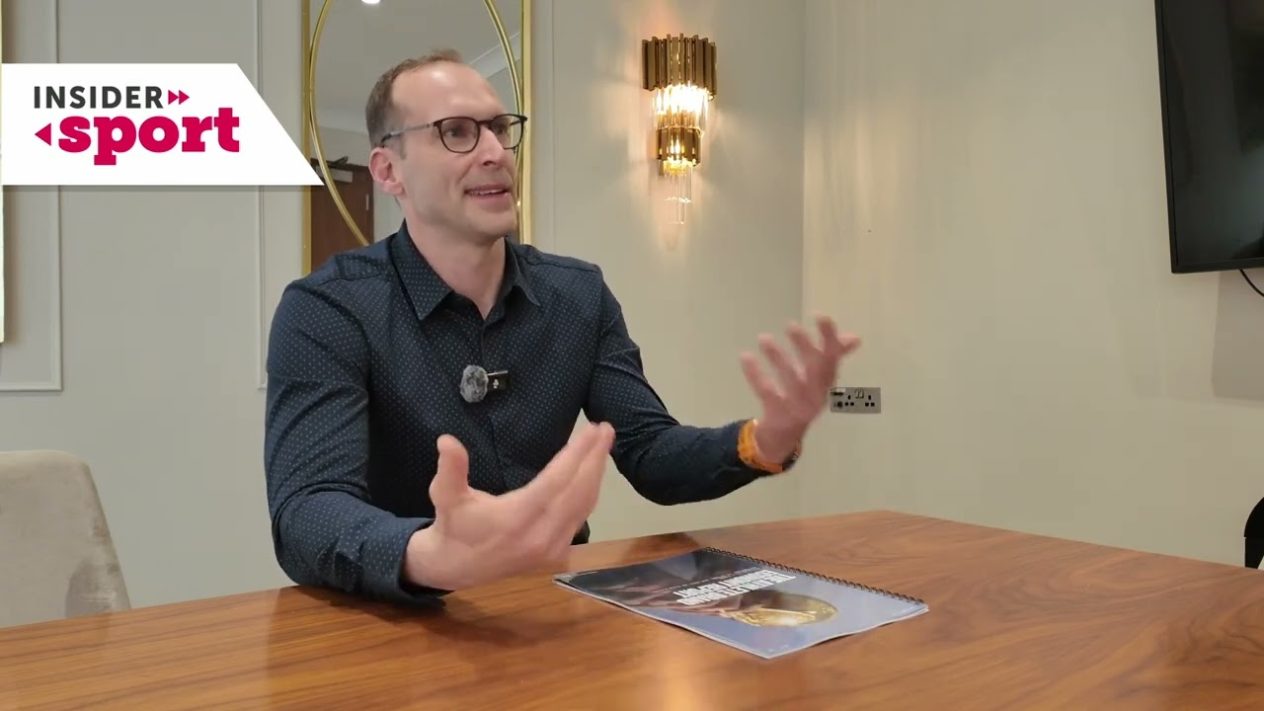
Former Chelsea and Arsenal goalkeeper Petr Čech has warned over-manufactured content risks undermining the commercial value athletes are working to build, arguing authenticity remains the most powerful tool a player has going into the 2026 FIFA World Cup.
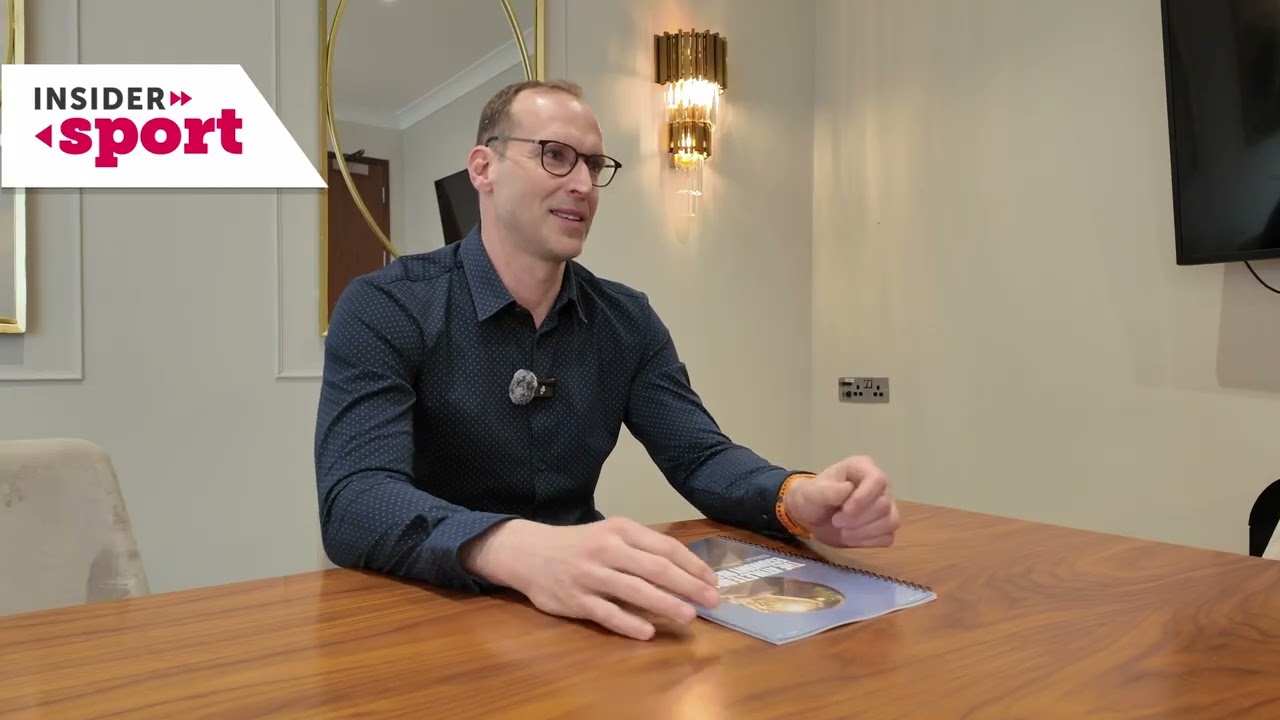
“I always believe that you should be authentic to yourself,” Čech told Insider Sport on 23 April. “That’s probably the most powerful — when people see that you’re real, no matter if they agree with you, what you do and how you do it. If it becomes too manufactured, you can tell.”
Čech spoke to Insider Sport following the release of the Athlete Brand Economy Report, produced by sports marketing agency EMW Global, in partnership with data intelligence firm x+y Market Intelligence. The report analyses the digital performance of elite footballers ahead of FIFA World Cup 2026, using x+y’s proprietary VIE Score and Media Equivalency Value (EQV) framework to measure how effectively players convert online attention into commercial output.
The gap between visibility and value
Its core finding is a significant portion of the world’s most visible footballers generate far less commercial value than their digital reach suggests they could. The report attributes this gap to posting cadence, platform discipline, the quality of brand partnerships, and whether the content infrastructure is in place before big player moments arrive.
Cristiano Ronaldo‘s $124m EQV against Kylian Mbappé‘s $22m is a telling example. While Ronaldo is at the twilight of his career, his EVQ is higher thanks to consistent output, whereas Mbappé, at the peak of his powers as Real Madrid’s forward, lags considerably, suggesting gaps in his output vs brand infrastructure.
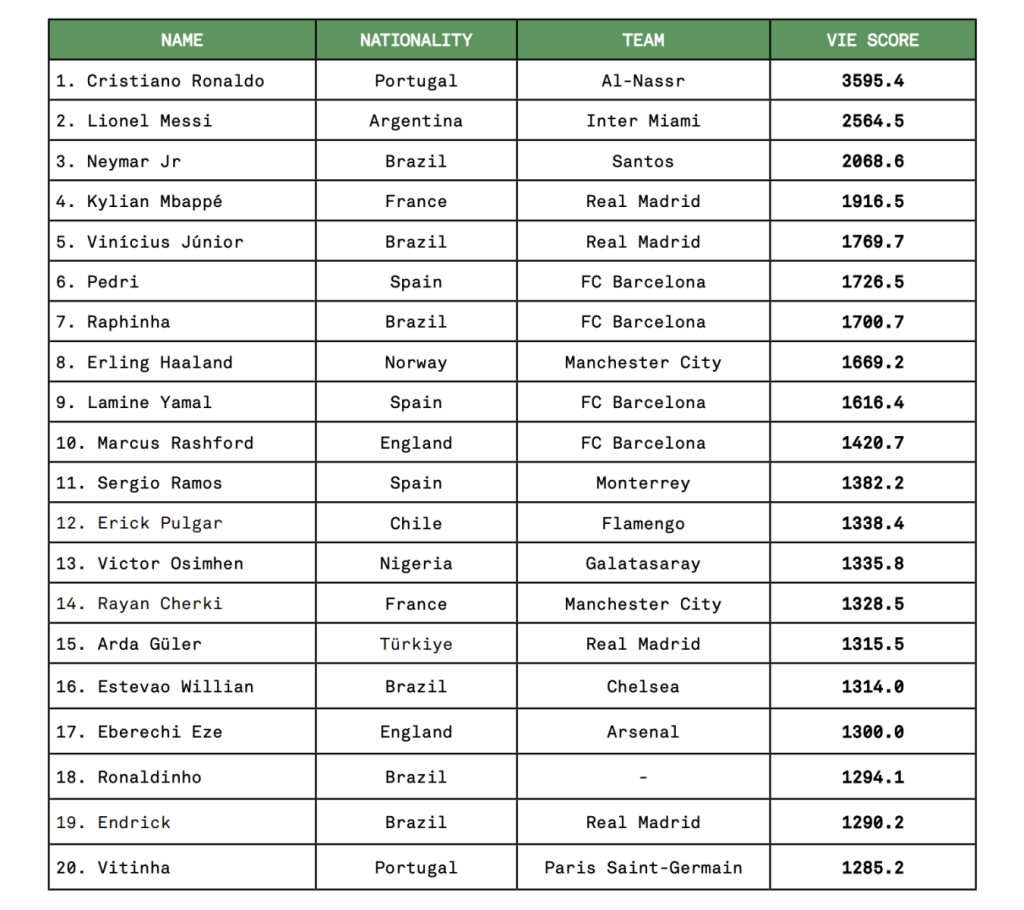
Ronaldo leads both rankings – a VIE score of 3,595.4 and that $124m EQV – having added approximately 12 million Instagram followers since August 2025, a figure no other athlete in the cohort comes close to, while his YouTube viewership leads the dataset by a wide margin.
Marcus Rashford ranks tenth by VIE Score but drops out of the EQV top ten entirely. Attention built around his move to FC Barcelona rather than deliberate content strategy, the report notes, is inherently unstable.
“What’s your vision, what’s your mission, and how you want to achieve that – it’s your choice,” Čech said. “You need to find the right balance – how much you spend with your performance and professional life, and how much you spend with the stuff beyond that.”
Evolving player branding comes down to changing behaviours, with Nielsen Sports data cited in the findings showing Gen Z football fans follow individual athletes on social platforms more actively than they follow leagues or federations. Today, audience attachment is increasingly personality-led, so commercial weight is moving that way too.
Infrastructure before the moment
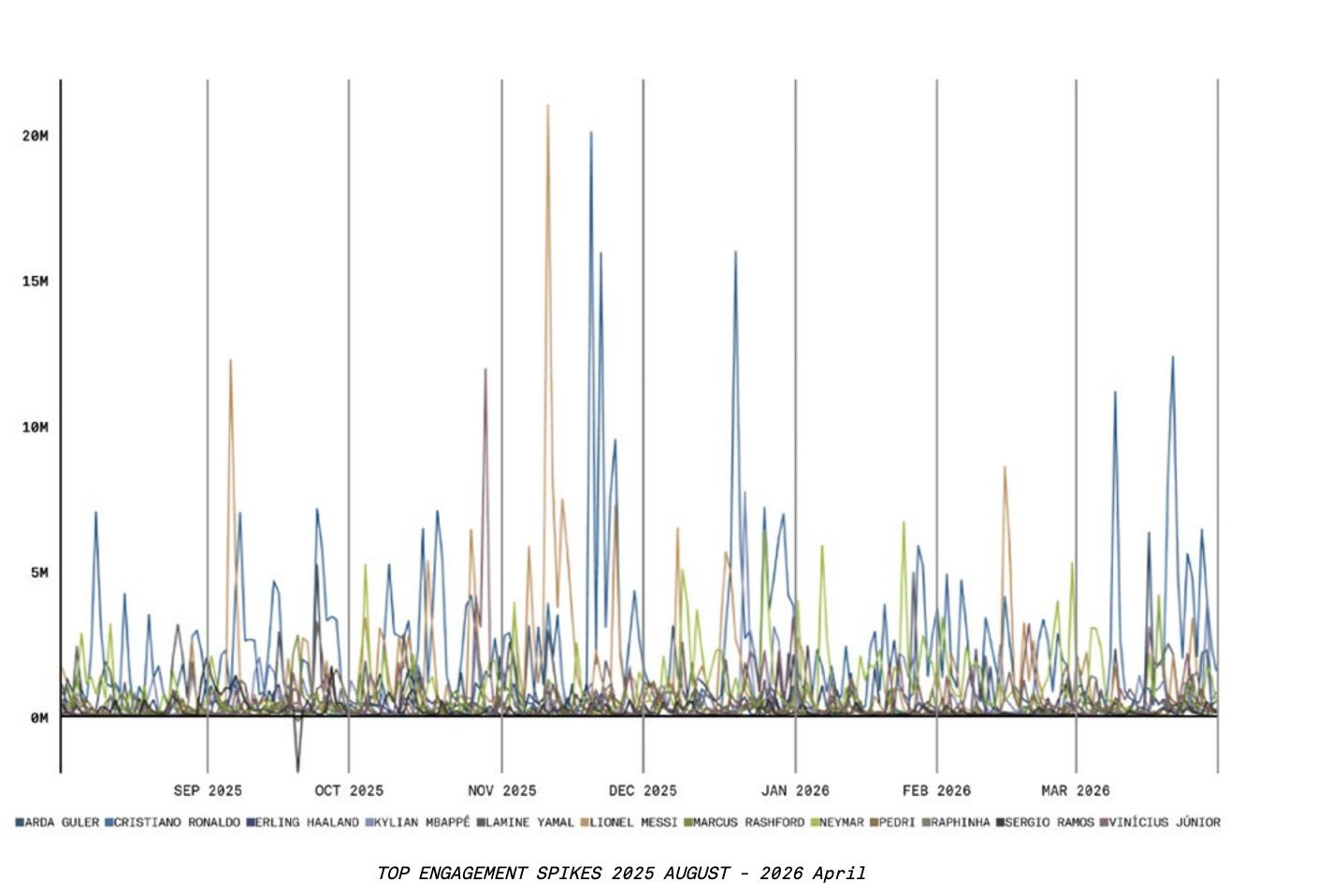
Arda Güler‘s halfway-line goal for Real Madrid against Elche in March produced the largest single-day follower acquisition spike in the reported dataset, a 1.5% daily growth rate on one day, while Lionel Messi‘s return to the Camp Nou generated the single largest engagement spike overall. None were campaign moments, but they also were not predictable.
What separated the athletes who converted them was having the content architecture already in place when they arrived. Javier Hernandez is offered as a prime example of good architecture, activating his YouTube channel for long-form content for the first time while simultaneously driving strong Instagram engagement. This helped him meet audience demand across platforms at once rather than leaving it to dissipate.
“Nowadays it’s easier, because people remember you and know you exactly from what you were on the pitch. And if you are an active player, you can still build that up,” Čech said. “If things go wrong, [the outcome] can go the other way.”
Čech: Account builders ‘are just as important’
For Čech, none of that infrastructure builds itself, and the people behind it carry as much responsibility as the athletes in front of it. “The people who help [players] create the accounts, the content, the branding, they are just as important. If players choose the wrong direction, you can end up on the wrong side [of fan engagement].”
The report found Instagram remains the primary channel for athlete brand-building, but YouTube – when activated strategically, as the likes of Lamine Yamal and Erling Haaland are demonstrating – opens a more durable commercial conversation. The athletes diversifying across both without losing focus are the ones building brand equity that compounds beyond any single tournament window.
Our full interview with Petr Čech will be live on Insider Sport on April 29. Make sure you’re signed up for our newsletter to receive updates.