Your article was successfully posted to your social media. Want to share more? Go ahead!
Simon Wilson, Chief Technology Solutions Leader at HPE Aruba Networking, on AI, zero-touch infrastructure, and the phone-first transformation of live sport
HPE Aruba Networking’s Simon Wilson. Image credit: LinkedIn
Simon Wilson has spent nearly 30 years in networking and over 10 at Hewlett-Packard Enterprise (HPE), with a sporting CV that spans the London 2012 Olympics, the Commonwealth Games, and multiple Ryder Cups.
As Chief Technology Solutions Leader at HPE Aruba Networking, and previously Chief Technology Officer (CTO) for UK&I, he oversees deployments at some of the most demanding venues and events on the calendar – from Tottenham Hotspur Stadium to major championship golf courses.
Insider Sport spoke with him about how connectivity expectations at live sport have been transformed, what agentic AI actually means on the ground, and why the biggest challenge at a FIFA World Cup isn’t the technology.
How has the role of technology at sporting events changed?
“Technology has become a much bigger part of delivering sporting events than it was in the past. The Ryder Cup is a good example. Back when we were first involved – around 2014, 2015 – they actively said don’t bring your phone to the course. They didn’t want the interruption.
“Then you fast forward a decade, and all of a sudden it’s the only thing you need to bring. Payments, ticketing, finding your way around the map, looking at the standings – literally everything is done by your phone.
“The spectator experience has changed immeasurably. With golf in particular, there was always a view that you come for the visceral experience – you can smell the grass, you can hear the cheers, you get the hair standing up on the back of your neck.
“But when it comes to actually watching the sport itself, you probably get a better experience at home in front of your TV, because it cuts from hole to hole. What venues wanted to do was make sure the experience on the course was as good as you’d get at home, with all the other benefits of being there in person. That was the objective.”
Ryder Cup: HPE provides the connectivity. Image credit: Andre61/Shutterstock/
Beyond the fan-facing side, how many different technology partners would HPE work with at a major event?
“It’s a very different world for a temporary event compared to a fixed location like a stadium. You have to build relationships with all the different technology partners that parachute in. It might be Fortress running the turnstiles, Wiz Team running accreditation, a different company running food and beverage.
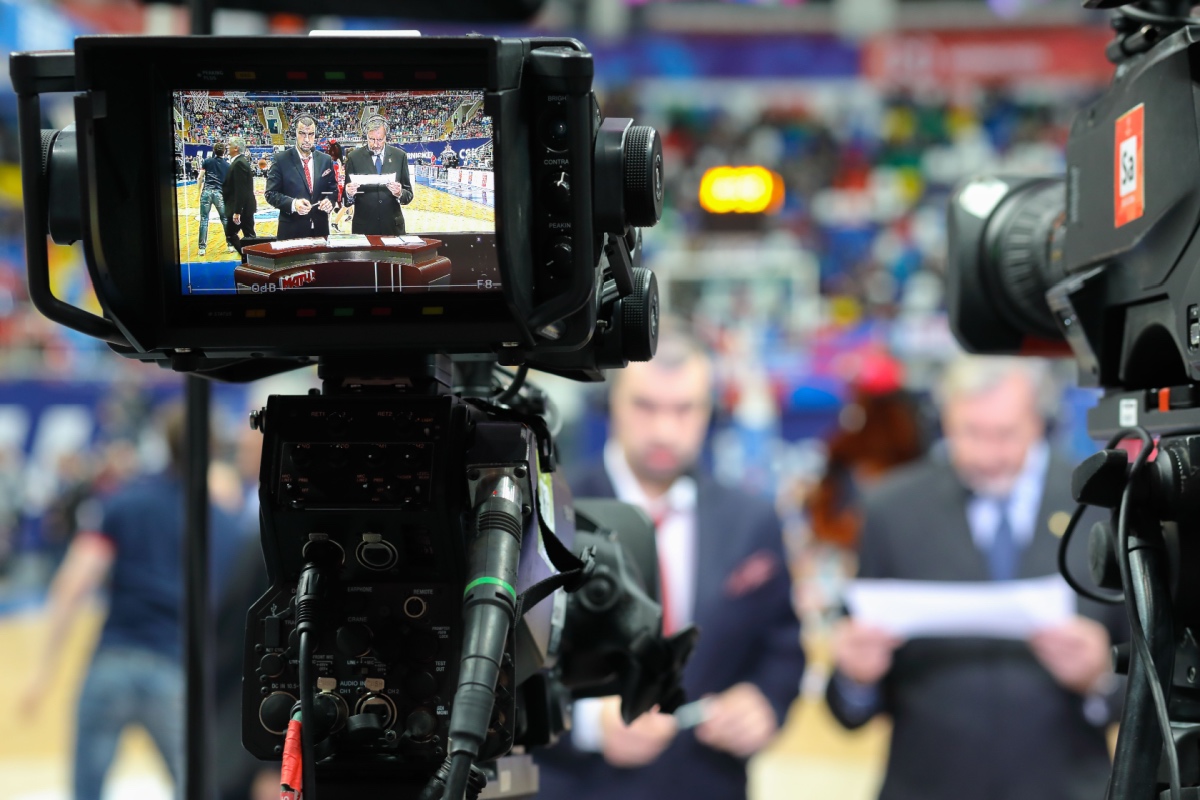
“Then you have to make sure the press facilities are good, and for commentators, right? They desperately rely on information systems for those statistics and tidbits they share on air. They don’t carry all that in their head. If a commentator needs a piece of information on a runner who’s hit the front with a lap to go, that needs to come from somewhere, and the timing of it really matters.”
How do you guarantee zero failures when you’ve had two weeks to set the whole thing up?
“It comes down to good design. When you have temporary events, a lot of suppliers will turn up with their own Wi-Fi infrastructure, so you have to make sure you’re not interfering with each other. Radio frequency (RF) planning and cooperation are really important there.
“The second thing is monitoring the experience proactively. A few years ago we switched the focus from looking at dashboards to looking at the experience: is this person actually getting a good experience?
“We don’t necessarily care that an access point has gone down, because the design should handle that without anyone noticing. By focusing on the experience rather than the technology, you prevent a lot of problem tickets from arising in the first place.
“Not everybody complains when something goes wrong, and those who do complain don’t always go through the right channels. It’s always Wi-Fi that gets the blame, regardless of what the problem actually is.”
Where does AI sit in all of this? How deep is it embedded into planning sporting events?
“It’s a massive part of operations. In fact, we’ve had AI built into our platform for a number of years, though quite a few things we’ve been doing for a long time are now branded by the industry as AI when we always thought of them as automation. There’s a bit of AI washing that happens.
“But there are genuine AI elements in the platform that make the job of the IT team delivering the event easier. One of the realities of these events is that there’s only a limited number of people who truly know how to put one on technically. They’re almost nomadic – they go from event to event and they tend to be expensive. So you have to bolster them with local resources who don’t necessarily know the latest technology.
“What AI does is subsidise that knowledge gap. It will direct technicians to what they need to do to fix a problem, or sift through telemetry coming from thousands of different points, identify an issue, and raise awareness of it before it causes a problem.”
HPE Aruba Networking. Image credit: LinkedIn.
You mentioned agentic AI specifically – what does that mean in practice at an event?
“We operate off our own telemetry and our own data lake, so it’s a closed language model. What agentic AI allows is for a slightly less experienced technician to ask a question in plain English about what’s going on – are there any issues on the 14th hole, are any applications performing badly? And then it surfaces that information for them.
“It’s like having an engineer inside the box. It allows that slightly less skilled person, which you have to rely upon at temporary events, to deliver a good outcome because the AI is helping them get to the answer more quickly. I like to think of it as standing on its shoulders – it makes everyone a little bit taller so they can see a bit further.”
The World Cup spans 16 cities across the US. What does that scale mean for network planning?
“In terms of methodology, all you’re really doing is taking what you’d do for four venues and multiplying it up. If you want communication between venues, that adds some complexity, but most of the time it’s hub and spoke – from the venues into a central technical operations centre. What does complicate it is scale, and specifically the human element.
“Think about the pool of people experienced enough to be a venue technology manager at an event like this. If you’ve got half a dozen venues, you can find the right people. At 16 venues, not everyone who can do that job is going to be available at the times you need them. And these are nomadic people – they don’t always want to travel to a specific location for a specific project.
“That’s part of the reason why simplifying the methodology for setting up and running infrastructure is so important. The self-driving network concept takes a lot of the mundane tasks that IT would have had to do manually and automates them – through intelligent automation or through AI.”
What’s the biggest logistical headache events planners encounter on the ground today?
“Honestly, it’s the last-minute requests. Every event sets timelines for when you need to submit your requirements – wire drops, wireless coverage, radio mic systems, all of it. And of course, people always come in with something they absolutely can’t live without after the deadline.
“Even then, deploying the service itself is usually straightforward. What tends to be the challenge is the process and the logistics – getting an extra piece of equipment through the security gate, or finding out that all the food and beverage carts have been moved two metres left of where they were in the original diagram, and all your cabling runs are now in the wrong place.
“Those aren’t really technical problems. They’re logistical ones. So the human element is arguably still the issue.”





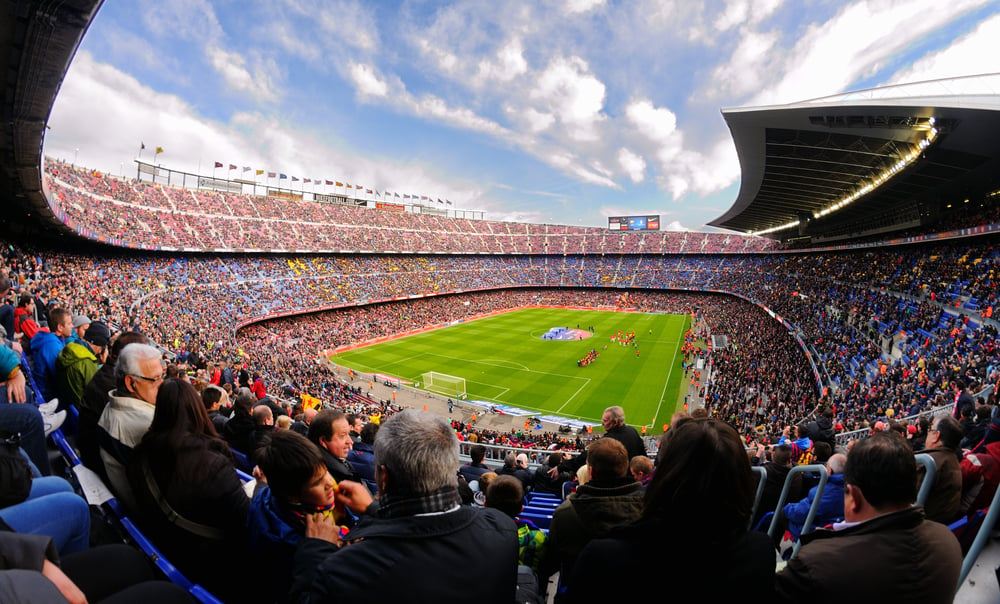
How HPE keeps the world’s biggest sports events connected
You’ve shared it!
Simon Wilson, Chief Technology Solutions Leader at HPE Aruba Networking, on AI, zero-touch infrastructure, and the phone-first transformation of live sport
Simon Wilson has spent nearly 30 years in networking and over 10 at Hewlett-Packard Enterprise (HPE), with a sporting CV that spans the London 2012 Olympics, the Commonwealth Games, and multiple Ryder Cups.
As Chief Technology Solutions Leader at HPE Aruba Networking, and previously Chief Technology Officer (CTO) for UK&I, he oversees deployments at some of the most demanding venues and events on the calendar – from Tottenham Hotspur Stadium to major championship golf courses.
Insider Sport spoke with him about how connectivity expectations at live sport have been transformed, what agentic AI actually means on the ground, and why the biggest challenge at a FIFA World Cup isn’t the technology.
How has the role of technology at sporting events changed?
“Technology has become a much bigger part of delivering sporting events than it was in the past. The Ryder Cup is a good example. Back when we were first involved – around 2014, 2015 – they actively said don’t bring your phone to the course. They didn’t want the interruption.
“Then you fast forward a decade, and all of a sudden it’s the only thing you need to bring. Payments, ticketing, finding your way around the map, looking at the standings – literally everything is done by your phone.
“The spectator experience has changed immeasurably. With golf in particular, there was always a view that you come for the visceral experience – you can smell the grass, you can hear the cheers, you get the hair standing up on the back of your neck.
“But when it comes to actually watching the sport itself, you probably get a better experience at home in front of your TV, because it cuts from hole to hole. What venues wanted to do was make sure the experience on the course was as good as you’d get at home, with all the other benefits of being there in person. That was the objective.”
Beyond the fan-facing side, how many different technology partners would HPE work with at a major event?
“It’s a very different world for a temporary event compared to a fixed location like a stadium. You have to build relationships with all the different technology partners that parachute in. It might be Fortress running the turnstiles, Wiz Team running accreditation, a different company running food and beverage.
“Then you have to make sure the press facilities are good, and for commentators, right? They desperately rely on information systems for those statistics and tidbits they share on air. They don’t carry all that in their head. If a commentator needs a piece of information on a runner who’s hit the front with a lap to go, that needs to come from somewhere, and the timing of it really matters.”
How do you guarantee zero failures when you’ve had two weeks to set the whole thing up?
“It comes down to good design. When you have temporary events, a lot of suppliers will turn up with their own Wi-Fi infrastructure, so you have to make sure you’re not interfering with each other. Radio frequency (RF) planning and cooperation are really important there.
“The second thing is monitoring the experience proactively. A few years ago we switched the focus from looking at dashboards to looking at the experience: is this person actually getting a good experience?
“We don’t necessarily care that an access point has gone down, because the design should handle that without anyone noticing. By focusing on the experience rather than the technology, you prevent a lot of problem tickets from arising in the first place.
“Not everybody complains when something goes wrong, and those who do complain don’t always go through the right channels. It’s always Wi-Fi that gets the blame, regardless of what the problem actually is.”
Where does AI sit in all of this? How deep is it embedded into planning sporting events?
“It’s a massive part of operations. In fact, we’ve had AI built into our platform for a number of years, though quite a few things we’ve been doing for a long time are now branded by the industry as AI when we always thought of them as automation. There’s a bit of AI washing that happens.
“But there are genuine AI elements in the platform that make the job of the IT team delivering the event easier. One of the realities of these events is that there’s only a limited number of people who truly know how to put one on technically. They’re almost nomadic – they go from event to event and they tend to be expensive. So you have to bolster them with local resources who don’t necessarily know the latest technology.
“What AI does is subsidise that knowledge gap. It will direct technicians to what they need to do to fix a problem, or sift through telemetry coming from thousands of different points, identify an issue, and raise awareness of it before it causes a problem.”
You mentioned agentic AI specifically – what does that mean in practice at an event?
“We operate off our own telemetry and our own data lake, so it’s a closed language model. What agentic AI allows is for a slightly less experienced technician to ask a question in plain English about what’s going on – are there any issues on the 14th hole, are any applications performing badly? And then it surfaces that information for them.
“It’s like having an engineer inside the box. It allows that slightly less skilled person, which you have to rely upon at temporary events, to deliver a good outcome because the AI is helping them get to the answer more quickly. I like to think of it as standing on its shoulders – it makes everyone a little bit taller so they can see a bit further.”
The World Cup spans 16 cities across the US. What does that scale mean for network planning?
“In terms of methodology, all you’re really doing is taking what you’d do for four venues and multiplying it up. If you want communication between venues, that adds some complexity, but most of the time it’s hub and spoke – from the venues into a central technical operations centre. What does complicate it is scale, and specifically the human element.
“Think about the pool of people experienced enough to be a venue technology manager at an event like this. If you’ve got half a dozen venues, you can find the right people. At 16 venues, not everyone who can do that job is going to be available at the times you need them. And these are nomadic people – they don’t always want to travel to a specific location for a specific project.
“That’s part of the reason why simplifying the methodology for setting up and running infrastructure is so important. The self-driving network concept takes a lot of the mundane tasks that IT would have had to do manually and automates them – through intelligent automation or through AI.”
What’s the biggest logistical headache events planners encounter on the ground today?
“Honestly, it’s the last-minute requests. Every event sets timelines for when you need to submit your requirements – wire drops, wireless coverage, radio mic systems, all of it. And of course, people always come in with something they absolutely can’t live without after the deadline.
“Even then, deploying the service itself is usually straightforward. What tends to be the challenge is the process and the logistics – getting an extra piece of equipment through the security gate, or finding out that all the food and beverage carts have been moved two metres left of where they were in the original diagram, and all your cabling runs are now in the wrong place.
“Those aren’t really technical problems. They’re logistical ones. So the human element is arguably still the issue.”