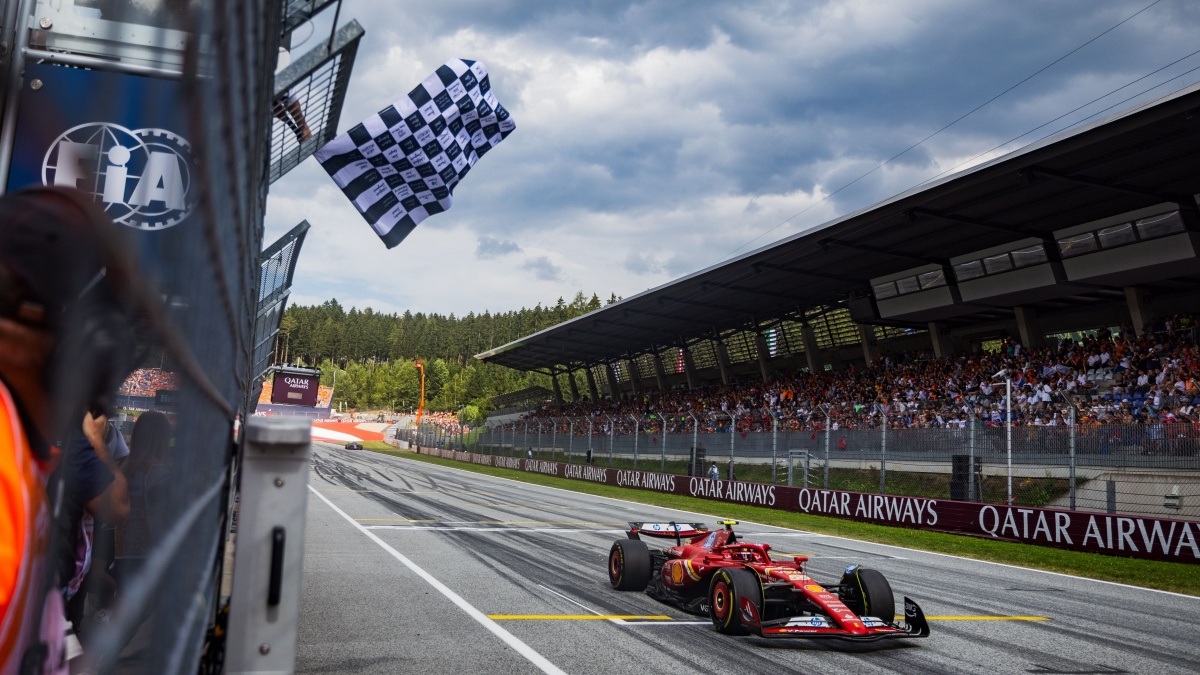



Lenovo has become a global partner of F1, aiming to redefine how the sport delivers innovation, broadcast performance, and global growth.
The crowds are beginning to grow restless in the 35-degree heat.
As a drop of sweat falls at your feet, you notice your legs shaking. Could it be nerves? Of course not, it’s just the helicopter’s buzz vibrating through the ground.
Everything has been leading to this moment – well, at least the 48 hours you’ve had to prepare. You shut your eyes, take a deep breath, trying to find a moment of peace amid the chaos. Then your team’s final words echo around your mind: “There’s zero capacity for failure.”
If this sounds like a driver’s nightmare, think again. This is the world of Formula 1 broadcasting and you are one of the engineers ensuring the race reaches millions of fans around the globe.
Just like how a car can make the difference between a podium finish and the back of the grid, the engineers behind the cameras rely on technology built to perform under the same pressure.
Their equipment belongs to Lenovo, a silent powerhouse ensuring every shot, sound and split-second of data makes it from the track to screens across the world.
Lenovo has been part of the F1 ecosystem since 2022, initially as an official technology partner, before stepping up in 2024 to become a Global Partner.
This pressure isn’t just for dramatic effect – Formula 1 now has Hollywood for that. Instead it’s a reflection of the partnership, as Insider Sport discovered last week during a visit to F1’s Media and Technology Centre at Biggin Hill.
Lara Rodini, Lenovo’s Global Sponsorships and Activation Director, and Jonny Haworth, F1’s Director of Commercial Partnerships, explained how the relationship has evolved from a transactional sponsorship into a deep collaboration.
“We are always looking for partners or situations where technology is a real need, where we can work together to develop something completely new and put our customers at the centre,” Rodini explained.
“Formula 1 does that too. It’s a very similar DNA. We are mirroring our DNA.”
It’s all about action
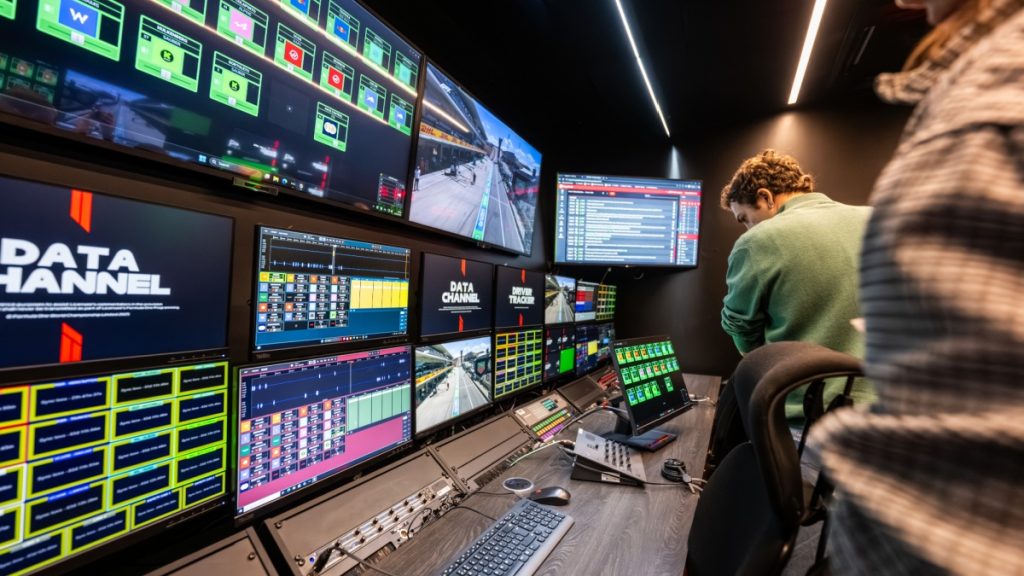
Since joining forces, Lenovo’s technology has become deeply embedded in F1’s operations. Its servers and workstations power everything from trackside broadcast units to the Media and Technology Centre itself.
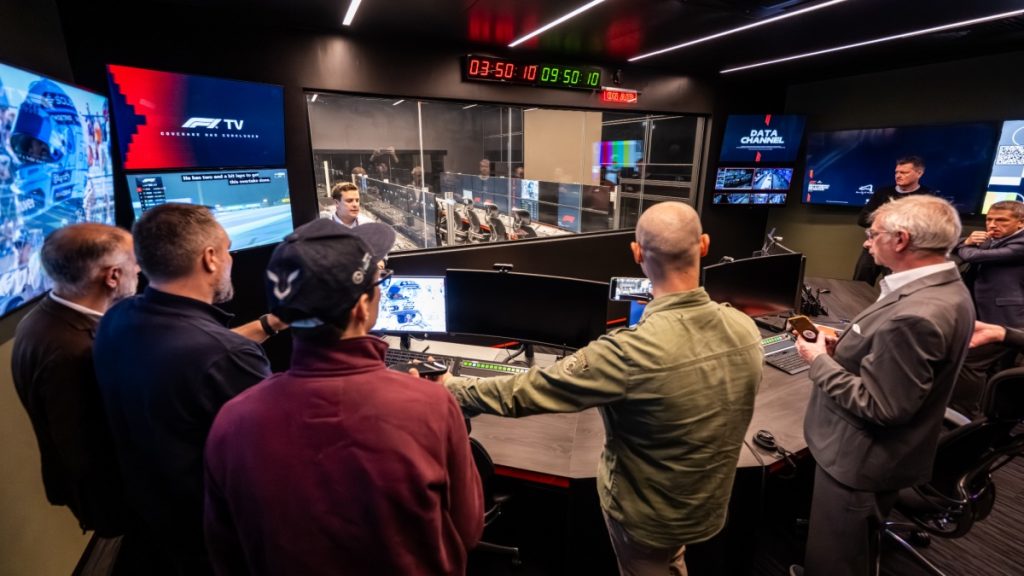
Dean Locke, Director of Broadcast & Media at F1, said while the control room at Biggin Hill may appear calm, behind the scenes “there is zero capacity for failure.” Every stream of data, every picture and audio feed must function flawlessly.
Chris Roberts, Director of IT at F1, echoed this, explaining teams often have as little as 36 to 48 hours between arriving at a circuit and achieving F1 certification for all broadcast systems. “There’s no leeway, no time to swap components or fix anything,” he said. “Everything has to work as soon as we turn up, and that’s where Lenovo’s global reach and hardware resiliency are a massive plus for us.”
He also added how Lenovo’s scalable infrastructure allows Formula 1 to roll out new services quickly. Pace isn’t just something Lenovo has to adapt to because of the cars, but it’s now part of the day-to-day demands that come from F1 itself.
One of the best examples came ahead of the 2022 season, when Roberts set Lenovo an ambitious challenge just ten weeks before lights out.
“It was probably the middle of December and I took a rather brave, or maybe stupid, decision to virtualise the whole of our Media & Technology Centre prior to the start of the season, which at that stage was 10 weeks away,” Roberts recalled.
He explained how, in the short window, Lenovo’s team worked around the clock to deliver and deploy new hardware, virtualising and containerising the entire infrastructure which runs F1’s core broadcast systems.
“We had an order rushed through, engineers on site, and in the space of a few weeks, the hardware was commissioned,” Roberts said. “About three weeks later, that system was up and running.”
This virtualisation has streamlined operations and transformed what’s possible for F1. With the sport travelling to more than 20 countries each year, evolving systems once meant physically moving and rebuilding hardware between events.
As the team explained to Insider Sport, virtualising the Media and Technology Centre has allowed F1 to develop, test and deploy new broadcast innovations without the constraints of travel or setup time.
One example is Team Radio, a fan-favourite feature which has grown increasingly sophisticated in recent seasons, and which Insider Sport heard more about from Locke.
The new infrastructure enables F1 to experiment and enhance its coverage on a race-by-race basis, whether that’s real-time transcription of team communications, advanced graphics or new data visualisations for fans.
A two-way street
So what does Lenovo get from this partnership, aside from the occasional last-minute phone call to complete a mammoth task under immense pressure? Well, not far off. As Rodini pointed out, the harsh environments, high-pressure moments and “zero tolerance” for error make F1 a great testing ground for Lenovo’s technology.
“Just consider that the technology is also moving around with the team,” she explained. “It’s under different weather conditions, humidity, a lot of travel and so on. But it’s a great opportunity for us to test all the products and services we make available. And whatever remains available for our partner is also available to all our customers in the markets where we are present.”
Rodini described a feedback loop which ensures the learnings from Formula 1 feed directly into product development.
“Any feedback that F1 provides us with is extremely important. It’s something we bring back to the company and to our factories, and we implement it to improve development.”
Of course, another benefit for Lenovo is the global visibility which comes with being an F1 partner. The Netflix Drive to Survive series and F1: The Movie have both helped attract a younger, more diverse audience, a shift some traditional fans might have viewed with scepticism.
However, Haworth stressed the sport’s growth isn’t about replacing one audience with another, but expanding its reach.
“It’s not about one or the other,” he said. “We’ve always had a traditional audience focused on technology and engineering, but our growth has come from people who are drawn to the social aspect of the sport.
“Our role is to give them ways to enjoy F1 in their own way, through the movie, Drive to Survive, or sprint races, while continuing to engage the traditional audience. Partnerships like Lenovo’s help us do that.”
This strategy appears to be paying off. Rodini noted when Lenovo first joined forces with F1, the sport had around 450 million fans worldwide. “Four years later,” she said, “we’re over 800 million and definitely getting to a billion.”
Haworth agreed, emphasising the mutual nature of the success.
“We grow together,” he told Insider Sport. “Lenovo continues to grow, and so do we. As long as there’s a shared focus on delivering innovation, it helps us improve our product. Improving our product helps grow the fanbase, which in turn supports Lenovo’s business growth. As long as that cycle continues, both sides develop.”